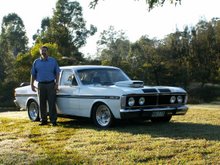
ANN ARBOR, Mich. -- The 1951 Ford pickup truck spent 20 years standing in a field in Dansville, sinking into the ground up to its frame. When Justin Lilly was about 13, he started pestering his dad about it. The truck had been in the family a long time _ Doug Lilly's dad bought it in 1975; Doug and his wife, Shawn, used it for dates decades before their youngest son took an interest in it. Eventually, Doug Lilly agreed to haul the old truck over to his father-in-law's barn in Pleasant Lake so Justin and his grandpa could work on it.
The truck was in woeful shape, and 1951 Ford truck parts are hard to come by. Progress was slow _ until Justin made a wish.
Because of a condition called bronchopulmonary dysplasia, Justin's lungs never fully developed. While most people use about 75 percent of their lung capacity, Justin, now 18, has _ at best _ 30 percent lung capacity.
When he was 16, his doctor referred him to another specialist, anticipating a lung transplant. Instead of getting Justin on a transplant list right away, the new doctor suggested physical therapy to strengthen Justin's lungs. An administrator at the hospital where Justin was doing his therapy remembered him from when he was a little boy and told the family that Justin was eligible for a wish from the Make-A-Wish Foundation of Michigan. Eventually, Make-A-Wish agreed to grant a wish for Justin. After some thought, he asked ask to have the truck painted. He wasn't looking for anything fancy; he just knew he couldn't do it himself because of the chemicals involved in the process.
In December 2005, the Lillys, who live near Jackson, received a call from Make-A-Wish. The automotive services department at Washtenaw Community College was interested in working on the truck _ and not just painting it. A crew from the college picked the truck up in February for an extreme makeover.
"It looks like it's been sitting in a junkyard or a farmer's field for about 100 years," said college instructor and adviser Gary Sobbry in April. "We're basically going to build the baddest '51 Ford truck that's ever roamed the streets."
In the end, Sobbry's students used just two parts from the Lillys' truck _ the front grille and the metal piece between the fenders and hood. The rest is a testament to what can happen when creativity and generosity collide.
With $5,500 from the Make-A-Wish Foundation, $5,000 from Haggerty Insurance Agency, a handful of private donations and lots of donated parts, time and expertise the students at the college will turn out a tricked-out replica '51 Ford truck worth about $100,000. It should be finished in time for the 2007 Detroit Autorama March 9-11.
Ford Motor Co. donated a $40,000 drivetrain that includes a 4.6-litre, 608-horsepower prototype racing engine. Justin got to go to Ford's prototype shop and help put the engine together.
When Doug Lilly asked if they were going to give Justin driving lessons, too, he was only half joking. The truck weighs about as much as a Chevrolet Cavalier, with an engine akin to what's under the hood of a new Mustang GT.
"It's going to make that truck crazy," Sobbry says. "We're going to have to de-tune it a little just so Justin's mom doesn't kill us."
Copyright 2006 Associated Press.
Tuesday, November 07, 2006

Monday, November 06, 2006
The smaller beatitudes by Joseph Folliet
Blessed are those who can laugh at themselves: they will have no end of fun. Blessed are those who can tell a mountain from a molehill: they will be saved a lot of bother.
Blessed are those who know how to relax without looking for excuses: they are on the way to becoming wise.
Blessed are those who know when to be quiet and listen: they will learn a lot of new things.
Blessed are those who are sane enough not to take themselves too seriously: they will be valued by those about them.
Happy are you if you can appreciate a smile and forget a frown: you will walk on the sunny side of the street.
Happy are you if you can be kind in understanding the attitude of others: you may be taken for a fool, but this is the price of charity.
Happy are you if you know when to hold your tongue and smile: the Gospel has begun to seep into your heart.
Blessed are they who think before acting and pray before thinking: they will avoid many blunders.
Blessed are those who know how to relax without looking for excuses: they are on the way to becoming wise.
Blessed are those who know when to be quiet and listen: they will learn a lot of new things.
Blessed are those who are sane enough not to take themselves too seriously: they will be valued by those about them.
Happy are you if you can appreciate a smile and forget a frown: you will walk on the sunny side of the street.
Happy are you if you can be kind in understanding the attitude of others: you may be taken for a fool, but this is the price of charity.
Happy are you if you know when to hold your tongue and smile: the Gospel has begun to seep into your heart.
Blessed are they who think before acting and pray before thinking: they will avoid many blunders.
BOSS 302 Engines for 2007
Ford today announced at the Specialty Equipment Market Association (SEMA) show that it is reviving the legendary 5.0-liter 302 cubic inch V-8 engine for the aftermarket with a new line of BOSS 302 crate engines, which will go on sale in early 2007.
“The original BOSS 302 was a race winning engine. Sharing the DNA from the original BOSS 302, the new BOSS 302 begins with a block designed with racing in mind from the beginning,” said Jamie Allison, manager, Ford Racing Performance Group. “Whether racing in a sealed engine class, building an all-out drag racing engine or looking for a street performer, the BOSS 302 block and engine family meets the needs of all Ford 302 enthusiasts at a price that is comparable to a performance-prepped stock 302.”
The new Ford Racing Performance Parts BOSS 302 line was conceived because there was an unmet need for engines built from a block stronger than original regular production 302 blocks but more affordable than full race-prepped blocks. The new BOSS 302 engine block features greater strength than most race blocks and offers a street-capable cooling system design, something that race specific blocks tend to sacrifice.
Despite its strength and capability, the new BOSS 302 line is surprisingly affordable because of its high volume production. And since it was designed within Ford Motor Company, the engine also benefits from the improved quality and durability that comes with a production type engine.
“The original BOSS 302 delivered less than 300 hp. Today, enthusiasts are making 500 hp street cars and they need a robust block. Race-specific blocks offer the strength required but cool poorly for street use and are very expensive for the average enthusiast,” says Allison.
Built from the all new BOSS 302 block, the BOSS crate engines feature performance and packaging that accommodate displacements from 302 to 363 cubic inches. Entry level engines feature the Ford Racing GT-40X Xtra Performance Turbo Swirl aluminum heads to retain stock exhaust locations and are rated at 340 and 345 hp. Higher performance versions include Ford Racing’s “Z”-head equipped 302 and 347 cubic inch engines rated between 360 and 450 hp, depending on configuration. The BOSS engine series is capped by a 500 hp 331 cubic inch engine that showcases the capability of the new block by breathing through all new ported Z-heads.
Features that separate the new BOSS 302 from its competition include:
* 4-bolt mains for lower-end stability at high power outputs
* High-tin 41,000 PSI tensile strength iron alloy for ultimate strength
* Nodular iron main caps for additional strength
* Screw-in freeze plugs for additional more strength and stability
* Front cross-over lifter oiling for high RPM valvetrain capability
* Siamese bores with specifically engineered drillings between cylinders for maximum wall stability and gasket sealing with street capable cooling performance
The suggested retail price for the BOSS 302 block is and affordable $1,759, with BOSS engines ranging from $4,650 to $10,000 for the 500 hp BOSS 331 cubic inch engines. The engines come with a 12 month/12,000 mile limited warranty.
Like the original Boss 302 that was engineered for Trans Am racing, the new BOSS 302 features trickle down performance from racing in the American Speed Association (ASA) Late Model circle track series. A sealed circle track version of a 347 cubic inch BOSS engine will be available both for ASA and NASCAR circle track racers in time for the 2007 season.
“The original BOSS 302 was a race winning engine. Sharing the DNA from the original BOSS 302, the new BOSS 302 begins with a block designed with racing in mind from the beginning,” said Jamie Allison, manager, Ford Racing Performance Group. “Whether racing in a sealed engine class, building an all-out drag racing engine or looking for a street performer, the BOSS 302 block and engine family meets the needs of all Ford 302 enthusiasts at a price that is comparable to a performance-prepped stock 302.”
The new Ford Racing Performance Parts BOSS 302 line was conceived because there was an unmet need for engines built from a block stronger than original regular production 302 blocks but more affordable than full race-prepped blocks. The new BOSS 302 engine block features greater strength than most race blocks and offers a street-capable cooling system design, something that race specific blocks tend to sacrifice.
Despite its strength and capability, the new BOSS 302 line is surprisingly affordable because of its high volume production. And since it was designed within Ford Motor Company, the engine also benefits from the improved quality and durability that comes with a production type engine.
“The original BOSS 302 delivered less than 300 hp. Today, enthusiasts are making 500 hp street cars and they need a robust block. Race-specific blocks offer the strength required but cool poorly for street use and are very expensive for the average enthusiast,” says Allison.
Built from the all new BOSS 302 block, the BOSS crate engines feature performance and packaging that accommodate displacements from 302 to 363 cubic inches. Entry level engines feature the Ford Racing GT-40X Xtra Performance Turbo Swirl aluminum heads to retain stock exhaust locations and are rated at 340 and 345 hp. Higher performance versions include Ford Racing’s “Z”-head equipped 302 and 347 cubic inch engines rated between 360 and 450 hp, depending on configuration. The BOSS engine series is capped by a 500 hp 331 cubic inch engine that showcases the capability of the new block by breathing through all new ported Z-heads.
Features that separate the new BOSS 302 from its competition include:
* 4-bolt mains for lower-end stability at high power outputs
* High-tin 41,000 PSI tensile strength iron alloy for ultimate strength
* Nodular iron main caps for additional strength
* Screw-in freeze plugs for additional more strength and stability
* Front cross-over lifter oiling for high RPM valvetrain capability
* Siamese bores with specifically engineered drillings between cylinders for maximum wall stability and gasket sealing with street capable cooling performance
The suggested retail price for the BOSS 302 block is and affordable $1,759, with BOSS engines ranging from $4,650 to $10,000 for the 500 hp BOSS 331 cubic inch engines. The engines come with a 12 month/12,000 mile limited warranty.
Like the original Boss 302 that was engineered for Trans Am racing, the new BOSS 302 features trickle down performance from racing in the American Speed Association (ASA) Late Model circle track series. A sealed circle track version of a 347 cubic inch BOSS engine will be available both for ASA and NASCAR circle track racers in time for the 2007 season.
Sunday, November 05, 2006
Ford Shelby GT 500 Wins Vehicle Design Award
LAS VEGAS, Nov. 1 /PRNewswire/ -- The high-performance Ford Shelby GT 500 was recognized as the most accessory friendly car at the 2006 SEMA Show in Las Vegas, capturing one of four SEMA Vehicle Design Awards and joining a prestigious list of past winners.
Each SEMA Vehicle Design Award recipient was part of a selection process that encompassed several SEMA member companies and automakers who regularly participate in technology sharing programs. These programs consist of various data sharing, measurement sessions and technology transfer initiatives which provide valuable information for each specialty equipment manufacturer to be in sync with the launch of new vehicles.
The SEMA Vehicle Design Awards were established to honor those newly introduced vehicles that best exemplify the alliance between the OEMs and SEMA-member companies. The awards recognize and celebrate the vehicles that a select group of voting members has chosen as the most accessory-friendly vehicles of the year. The Ford Shelby GT 500 received nearly 22 percent of the votes for 2006.
"The value of the increased collaboration with SEMA members is good for both our businesses and it's good for the customer," said John Clinard, Western Regional Manager, Ford Motor Company. "Our attitude about vehicle personalization is just pure enthusiasm, we share that with the people who buy our cars and with those who buy SEMA accessories and parts to put on our cars."
"Our participating manufacturing members had early access to the Ford Shelby GT and discovered that its unique design and muscular engineering provides several options for customer personalization," said Carl Sheffer, SEMA vice president, OEM Relations. "Based on feedback from the automakers, we are having a positive impact on the design and marketing of future vehicles."
SEMA reveals the winners of the Accessory Friendly Car, Truck, SUV and Hybrid categories at the SEMA Show in Las Vegas, the largest automotive specialty equipment trade event where thousands of new products are unveiled to visiting trade professionals.
.
SEMA (Specialty Equipment Market Association)
Copyright © 2006 PR Newswire. All rights reserved.
Each SEMA Vehicle Design Award recipient was part of a selection process that encompassed several SEMA member companies and automakers who regularly participate in technology sharing programs. These programs consist of various data sharing, measurement sessions and technology transfer initiatives which provide valuable information for each specialty equipment manufacturer to be in sync with the launch of new vehicles.
The SEMA Vehicle Design Awards were established to honor those newly introduced vehicles that best exemplify the alliance between the OEMs and SEMA-member companies. The awards recognize and celebrate the vehicles that a select group of voting members has chosen as the most accessory-friendly vehicles of the year. The Ford Shelby GT 500 received nearly 22 percent of the votes for 2006.
"The value of the increased collaboration with SEMA members is good for both our businesses and it's good for the customer," said John Clinard, Western Regional Manager, Ford Motor Company. "Our attitude about vehicle personalization is just pure enthusiasm, we share that with the people who buy our cars and with those who buy SEMA accessories and parts to put on our cars."
"Our participating manufacturing members had early access to the Ford Shelby GT and discovered that its unique design and muscular engineering provides several options for customer personalization," said Carl Sheffer, SEMA vice president, OEM Relations. "Based on feedback from the automakers, we are having a positive impact on the design and marketing of future vehicles."
SEMA reveals the winners of the Accessory Friendly Car, Truck, SUV and Hybrid categories at the SEMA Show in Las Vegas, the largest automotive specialty equipment trade event where thousands of new products are unveiled to visiting trade professionals.
.
SEMA (Specialty Equipment Market Association)
Copyright © 2006 PR Newswire. All rights reserved.
Saturday, November 04, 2006
What Kind of Beer Do You Drink? Ford Marketing Wants to Know.
According to an article from CNN.com, Ford’s “extreme” marketing effort profiles potential cars buyers by the clothes they buy and the beer they drink. While profiling is a legitimate technique used to get an entire marketing team in sync with the customer they are after, something makes me wonder if we’d finally get what we want if Ford profiled a dude who drinks Pabst and shops at Mervyn’s.
NEW YORK (CNNMoney.com) — Greg is a 30-year-old regional manager for Rite-Aid, and he and his wife make about $60,000. They don’t have any children, but they plan to soon. Greg shops at The Gap and Target.
Phil, a marketing manager, is a little older than Greg and a little better educated. He and his wife pull in $85,000. Phil buys his clothes at Banana Republic and drinks Samuel Adams beer.
When Ford unveils the redesigned Escape in Los Angeles next month, think of Greg - Ford designed it just for him.
When you see a Ford Edge, a new car-like crossover SUV, that’s Phil’s car. Everything about the Edge was made specifically with Phil in mind.
America is filled with Phils and Gregs - and also Mikes, Ricks, Jennifers and Kellys.
Ford has a car designed specifically for each of them. It’s not unusual for a car company to design cars and trucks with specific demographic groups in mind. A new SUV might be targeted at men between the ages of 25 and 35 with a household income of $70,000 and an interest in outdoor sports, for example.
Companies also engage in field research, riding around with potential customers in their cars.
See complete article at www.cnn.com
NEW YORK (CNNMoney.com) — Greg is a 30-year-old regional manager for Rite-Aid, and he and his wife make about $60,000. They don’t have any children, but they plan to soon. Greg shops at The Gap and Target.
Phil, a marketing manager, is a little older than Greg and a little better educated. He and his wife pull in $85,000. Phil buys his clothes at Banana Republic and drinks Samuel Adams beer.
When Ford unveils the redesigned Escape in Los Angeles next month, think of Greg - Ford designed it just for him.
When you see a Ford Edge, a new car-like crossover SUV, that’s Phil’s car. Everything about the Edge was made specifically with Phil in mind.
America is filled with Phils and Gregs - and also Mikes, Ricks, Jennifers and Kellys.
Ford has a car designed specifically for each of them. It’s not unusual for a car company to design cars and trucks with specific demographic groups in mind. A new SUV might be targeted at men between the ages of 25 and 35 with a household income of $70,000 and an interest in outdoor sports, for example.
Companies also engage in field research, riding around with potential customers in their cars.
See complete article at www.cnn.com
Australian Ford Site
Find specifications, desktops, wallpapers etc.
http://www.ford.com.au/servlet/ContentServer?cid=1137384250199&pagename=FOA%2FDFYPage%2FDefault1024&c=DFYPage
This is from the Australian Ford page.
Cheers
http://www.ford.com.au/servlet/ContentServer?cid=1137384250199&pagename=FOA%2FDFYPage%2FDefault1024&c=DFYPage
This is from the Australian Ford page.
Cheers
Blog change
Well, things have blogged, er, bogged down a bit of late, so I thought I'd introduce a new theme to what I've been doing.
In the interests of a more dynamic experience, along with all things Ford, I thought that this blog could be a bit more like a message board around Ford cars and life as well.
All things being equal, it will take submissions for this to happen, but it's worth a try.
Feel most welcome in contributing and I'll attempt to do the same.
Cheers
In the interests of a more dynamic experience, along with all things Ford, I thought that this blog could be a bit more like a message board around Ford cars and life as well.
All things being equal, it will take submissions for this to happen, but it's worth a try.
Feel most welcome in contributing and I'll attempt to do the same.
Cheers
Monday, October 30, 2006
PAY SPECIAL ATTENTION TO THE WORDING AND SPELLING. IF YOU KNOW THE BIBLE EVEN A LITTLE, YOU'LL FIND THIS HILARIOUS! IT COMES FROM A CATHOLIC ELEMENTARY SCHOOL TEST KIDS WERE ASKED QUESTIONS ABOUT THE OLD AND NEW TESTAMENTS. THE FOLLOWING STATEMENTS ABOUT THE BIBLE WERE WRITTEN BY CHILDREN. THEY HAVE NOT BEEN RETOUCHED OR CORRECTED. INCORRECT SPELLING HAS BEEN LEFT IN.
1. IN THE FIRST BOOK OF THE BIBLE, GUINESSIS. GOD GOT TIRED OF CREATING THE WORLD SO HE TOOK THE SABBATH OFF.
2. ADAM AND EVE WERE CREATED FROM AN APPLE TREE. NOAH'S WIFE WAS JOAN OF ARK. NOAH BUILT AND ARK AND THE ANIMALS CAME ON IN PEARS.
3. LOTS WIFE WAS A PILLAR OF SALT DURING THE DAY, BUT A BALL OF FIRE DURING THE NIGHT.
4. THE JEWS WERE A PROUD PEOPLE AND THROUGHOUT HISTORY THEY HAD TROUBLE WITH UNSYMPATHETIC GENITALS.
5. SAMPSON WAS A STRONGMAN WHO LET HIMSELF BE LED ASTRAY BY A JEZEBEL LIKE DELILAH.
6. SAMSON SLAYED THE PHILISTINES WITH THE AXE OF THE APOSTLES.
7. MOSES LED THE JEWS TO THE RED SEA WHERE THEY MADE UNLEAVENED BREAD WHICH IS BREAD WITHOUT ANY INGREDIENTS.
8, THE EGYPTIANS WERE ALL DROWNED IN THE DESSERT. AFTERWARDS, MOSES WENT UP TO MOUNT CYANIDE TO GET THE TEN COMMANDMENTS.
9. THE FIRST COMMANDMENTS WAS WHEN EVE TOLD ADAM TO EAT THE APPLE.
10. THE SEVENTH COMMANDMENT IS THOU SHALT NOT ADMIT ADULTERY.
11. MOSES DIED BEFORE HE EVER REACHED CANADA. THEN JOSHUA LED THE HEBREWS IN THE BATTLE OF GERITOL.
12. THE GREATEST MIRICLE IN THE BIBLE IS WHEN JOSHUA TOLD HIS SON TO STAND STILL AND HE OBEYED HIM.
13. DAVID WAS A HEBREW KING WHO WAS SKILLED AT PLAYING THE LIAR. HE FOUGHT THE FINKELSTEINS, A RACE OF PEOPLE WHO LIVED IN BIBLICAL TIMES.
14. SOLOMON, ONE OF DAVIDS SONS, HAD 300 WIVES AND 700 PORCUPINES.
15. WHEN MARY HEARD SHE WAS THE MOTHER OF JESUS, SHE SANG THE MAGNA CARTA.
16. WHEN THE THREE WISE GUYS FROM THE EAST SIDE ARRIVED THEY FOUND JESUS IN THE MANAGER.
17. JESUS WAS BORN BECAUSE MARY HAD AN IMMACULATE CONTRAPTION.
18. ST. JOHN THE BLACKSMITH DUMPED WATER ON HIS HEAD.
19. JESUS ENUNCIATED THE GOLDEN RULE, WHICH SAYS TO DO UNTO OTHERS BEFORE THEY DO ONE TO YOU. HE ALSO EXPLAINED A MAN DOTH NOT LIVE BY SWEAT ALONE.
20. IT WAS A MIRICLE WHEN JESUS ROSE FROM THE DEAD AND MANAGED TO GET THE TOMBSTONE OFF THE ENTRANCE.
21. THE PEOPLE WHO FOLLOWED THE LORD WERE CALLED THE 12 DECIBELS.
22. THE EPISTELS WERE THE WIVES OF THE APOSTLES.
23. ONE OF THE OPPOSSUMS WAS ST. MATTHEW WHO WAS ALSO A TAXIMAN.
24. ST. PAUL CAVORTED TO CHRISTIANITY, HE PREACHED HOLY ACRIMONY WHICH IS ANOTHER NAME FOR MARRAIGE.
25. CHRISTIANS HAVE ONLY ONE SPOUSE. THIS IS CALLED MONOTONY.
1. IN THE FIRST BOOK OF THE BIBLE, GUINESSIS. GOD GOT TIRED OF CREATING THE WORLD SO HE TOOK THE SABBATH OFF.
2. ADAM AND EVE WERE CREATED FROM AN APPLE TREE. NOAH'S WIFE WAS JOAN OF ARK. NOAH BUILT AND ARK AND THE ANIMALS CAME ON IN PEARS.
3. LOTS WIFE WAS A PILLAR OF SALT DURING THE DAY, BUT A BALL OF FIRE DURING THE NIGHT.
4. THE JEWS WERE A PROUD PEOPLE AND THROUGHOUT HISTORY THEY HAD TROUBLE WITH UNSYMPATHETIC GENITALS.
5. SAMPSON WAS A STRONGMAN WHO LET HIMSELF BE LED ASTRAY BY A JEZEBEL LIKE DELILAH.
6. SAMSON SLAYED THE PHILISTINES WITH THE AXE OF THE APOSTLES.
7. MOSES LED THE JEWS TO THE RED SEA WHERE THEY MADE UNLEAVENED BREAD WHICH IS BREAD WITHOUT ANY INGREDIENTS.
8, THE EGYPTIANS WERE ALL DROWNED IN THE DESSERT. AFTERWARDS, MOSES WENT UP TO MOUNT CYANIDE TO GET THE TEN COMMANDMENTS.
9. THE FIRST COMMANDMENTS WAS WHEN EVE TOLD ADAM TO EAT THE APPLE.
10. THE SEVENTH COMMANDMENT IS THOU SHALT NOT ADMIT ADULTERY.
11. MOSES DIED BEFORE HE EVER REACHED CANADA. THEN JOSHUA LED THE HEBREWS IN THE BATTLE OF GERITOL.
12. THE GREATEST MIRICLE IN THE BIBLE IS WHEN JOSHUA TOLD HIS SON TO STAND STILL AND HE OBEYED HIM.
13. DAVID WAS A HEBREW KING WHO WAS SKILLED AT PLAYING THE LIAR. HE FOUGHT THE FINKELSTEINS, A RACE OF PEOPLE WHO LIVED IN BIBLICAL TIMES.
14. SOLOMON, ONE OF DAVIDS SONS, HAD 300 WIVES AND 700 PORCUPINES.
15. WHEN MARY HEARD SHE WAS THE MOTHER OF JESUS, SHE SANG THE MAGNA CARTA.
16. WHEN THE THREE WISE GUYS FROM THE EAST SIDE ARRIVED THEY FOUND JESUS IN THE MANAGER.
17. JESUS WAS BORN BECAUSE MARY HAD AN IMMACULATE CONTRAPTION.
18. ST. JOHN THE BLACKSMITH DUMPED WATER ON HIS HEAD.
19. JESUS ENUNCIATED THE GOLDEN RULE, WHICH SAYS TO DO UNTO OTHERS BEFORE THEY DO ONE TO YOU. HE ALSO EXPLAINED A MAN DOTH NOT LIVE BY SWEAT ALONE.
20. IT WAS A MIRICLE WHEN JESUS ROSE FROM THE DEAD AND MANAGED TO GET THE TOMBSTONE OFF THE ENTRANCE.
21. THE PEOPLE WHO FOLLOWED THE LORD WERE CALLED THE 12 DECIBELS.
22. THE EPISTELS WERE THE WIVES OF THE APOSTLES.
23. ONE OF THE OPPOSSUMS WAS ST. MATTHEW WHO WAS ALSO A TAXIMAN.
24. ST. PAUL CAVORTED TO CHRISTIANITY, HE PREACHED HOLY ACRIMONY WHICH IS ANOTHER NAME FOR MARRAIGE.
25. CHRISTIANS HAVE ONLY ONE SPOUSE. THIS IS CALLED MONOTONY.
Sunday, October 29, 2006
Bad and Worse
IT COULD BE WORSE...
Bad: You can't use your classroom after school because parents and administrators are meeting in there.
Worse: They are meeting to talk about you.
Bad: Eight of your students complained of nausea and had to go to the nurse's office.
Worse: Six other nauseous students didn't make it that far.
Bad: Someone keeps calling the principal to complain about how poorly supervised your students are.
Worse: The phone calls are coming from your classroom.
Bad: A parent is driving you crazy with her endless complaints about your classroom and your teaching.
Worse: She already has requested you for her younger child next year.
Bad: You can't use your classroom after school because parents and administrators are meeting in there.
Worse: They are meeting to talk about you.
Bad: Eight of your students complained of nausea and had to go to the nurse's office.
Worse: Six other nauseous students didn't make it that far.
Bad: Someone keeps calling the principal to complain about how poorly supervised your students are.
Worse: The phone calls are coming from your classroom.
Bad: A parent is driving you crazy with her endless complaints about your classroom and your teaching.
Worse: She already has requested you for her younger child next year.
Saturday, October 28, 2006
Quotable quotes
“When a boy or girl thrust their small hand into yours, it may be smeared with chocolate ice cream, or grimy from patting a dog. There may be a wart under the right thumb and a bandage around the little finger. But the important thing about their hand is, that it is the hand that one day will be holding a bible or a revolver.... play a piano or spin a gambling wheel... gently dress a lepers wound or tremble uncontrolled by an alcoholic mind.. right now that hand is yours... - It asks for help and guidance” - (Unknown).
Monday, October 23, 2006
Slow Dance
The following inspirational poem was written by a teenager with cancer for her doctor. It’s message is one for us all to ponder when we consider what is really important in our lives…..
SLOW DANCE
Have you ever watched kids on a merry go round?
Or listened to the rain slapping on the ground?
Or ever followed a butterfly’s erratic flight?
Or gazed at the sun into the fading night?
You better slow down. Don’t dance too fast.
Time is short. The music won’t last.
Do you run through each day on the fly?
When you ask “How are you?”
Do you hear the reply?
When the day is done, do you lie in your bed
With the next hundred chores running through your head?
You’d better slow down – don’t dance too fast.
Time is short. The music won’t last.
Ever told your child, “We’ll do it tomorrow”?
And in your haste, not seen his sorrow?
Ever lost touch, let a good friendship die,
Cause you never had time to call and say “Hi.”
You’d better slow down – don’t dance too fast.
Time is short. The music won’t last.
When you run so fast to get somewhere
You miss half the fun of getting there.
When you worry and hurry through your day,
It is like an unopened gift…… thrown away.
Life is not a race. Do take it slower.
Hear the music, before the song is over.
SLOW DANCE
Have you ever watched kids on a merry go round?
Or listened to the rain slapping on the ground?
Or ever followed a butterfly’s erratic flight?
Or gazed at the sun into the fading night?
You better slow down. Don’t dance too fast.
Time is short. The music won’t last.
Do you run through each day on the fly?
When you ask “How are you?”
Do you hear the reply?
When the day is done, do you lie in your bed
With the next hundred chores running through your head?
You’d better slow down – don’t dance too fast.
Time is short. The music won’t last.
Ever told your child, “We’ll do it tomorrow”?
And in your haste, not seen his sorrow?
Ever lost touch, let a good friendship die,
Cause you never had time to call and say “Hi.”
You’d better slow down – don’t dance too fast.
Time is short. The music won’t last.
When you run so fast to get somewhere
You miss half the fun of getting there.
When you worry and hurry through your day,
It is like an unopened gift…… thrown away.
Life is not a race. Do take it slower.
Hear the music, before the song is over.
Thursday, October 19, 2006
Learn to be aware
“You can live a lifetime and, at the end of it, know more about other people than you know about yourself.” -- Beryl Markham
Who am I? To answer this, we must first learn to become more aware of ourselves. To be aware, we must STOP and PAY ATTENTION! We need to STOP and objectively watch ourselves in action. We live most of our lives by habit. These habits keep us stuck in patterns that limit our experience of life. Once we detect a pattern we were previously unconscious of, we can choose differently, if we want. With awareness comes choice and with choice, we gain freedom.
“To be authentic is literally to be your own author …, to discover your own native energies and desires, and then to find your own way of acting on them.” -- Warren G. Bennis
“Self-knowledge is the great power by which we comprehend and control our lives.” -- Vernon Howard
Who am I? To answer this, we must first learn to become more aware of ourselves. To be aware, we must STOP and PAY ATTENTION! We need to STOP and objectively watch ourselves in action. We live most of our lives by habit. These habits keep us stuck in patterns that limit our experience of life. Once we detect a pattern we were previously unconscious of, we can choose differently, if we want. With awareness comes choice and with choice, we gain freedom.
“To be authentic is literally to be your own author …, to discover your own native energies and desires, and then to find your own way of acting on them.” -- Warren G. Bennis
“Self-knowledge is the great power by which we comprehend and control our lives.” -- Vernon Howard
Wednesday, October 18, 2006
Thursday, October 12, 2006
Belief
"What you believe yourself to be, you are."
-- Claude M. Bristol
Do you believe, deep down inside of you, that you can succeed in what you want to do? Beliefs are strong, and they have the power to attract what is believed to us. If we doubt our ability to succeed, if we in fact believe we WON'T succeed, then sure enough, that’s what will happen.
What do you believe about yourself? You have the power to change your beliefs, and that will change your outcome. Set goals you believe you can accomplish. Your beliefs will shape your actions. As you achieve these goals, you'll begin to believe you are capable of succeeding and of doing even more.
"It is better to believe than to disbelieve; in so doing you bring everything to the realm of possibility."-- Albert Einstein
"Believe it can be done. When you believe something can be done, really believe, your mind will find the ways to do it. Believing a solution paves the way to solution."-- Dr. David Schwartz
Henri Frederic Amiel "We could hardly wait to get up in the morning”
-- Claude M. Bristol
Do you believe, deep down inside of you, that you can succeed in what you want to do? Beliefs are strong, and they have the power to attract what is believed to us. If we doubt our ability to succeed, if we in fact believe we WON'T succeed, then sure enough, that’s what will happen.
What do you believe about yourself? You have the power to change your beliefs, and that will change your outcome. Set goals you believe you can accomplish. Your beliefs will shape your actions. As you achieve these goals, you'll begin to believe you are capable of succeeding and of doing even more.
"It is better to believe than to disbelieve; in so doing you bring everything to the realm of possibility."-- Albert Einstein
"Believe it can be done. When you believe something can be done, really believe, your mind will find the ways to do it. Believing a solution paves the way to solution."-- Dr. David Schwartz
Henri Frederic Amiel "We could hardly wait to get up in the morning”
Wednesday, October 04, 2006
Education Article
The Age, Melbourne, April 24, 2006 A new study reveals what makes a great teacher, reports Caroline Milburn.
THE difference between the best teachers of young children and ineffective teachers is not what they do, but how they do it. A landmark study of Australia's primary schools has revealed that all prep and grade 1 teachers tend to teach the same literacy activities, such as shared book reading, modelled writing and phonics. But their success depends on how they present the activities.
The study, commissioned by the Federal Government, sought to identify effective teaching practices that lead to improved literacy of students in the first two years of school. The literacy skills of 2000 children in every state and territory were assessed at the start and the end of the year. A team of researchers then visited schools in Victoria, NSW, Queensland and Tasmania to observe children and their teachers in the classroom.
The study found all of the teachers were able to get their students to take part in classroom activities and have some fun. However, the most effective teachers - those whose students made the biggest literacy gains over the year - drew on a much wider repertoire of teaching practices. They explained activities more clearly, had deeper subject knowledge, maintained a high level of intellectual challenge for their students and had more fun than did less-effective teachers. "Good teachers are able to figure out where every child is at and set them a task that's hard for them," said Professor William Louden, dean of education at the University of Western Australia, who led the team of researchers, together with Associate Professor Mary Rohl, of Edith Cowan University.
"Good teachers had the most fun in their classrooms: the lessons were lively, fast-paced, and full of jokes and little classroom games. Good teachers put on a fabulous show and clearly they're the best thing to look at in their classroom. "Some of the other teachers could get their kids' attention but they did not secure that deep engagement that the most effective teachers did."
The study, In Teachers' Hands, revealed all teachers paid attention to the teaching of letter-sound relationships or phonics. But the less effective teachers were more likely to teach phonics as an isolated activity without linking it to books and themes the children were studying. Their understanding of phonics was weak and their explanations often confused their students.
Overall, the less effective teachers had a limited view of early literacy teaching and tended to rely on "busy-work" activities that were not tailored to their students' different abilities and needs.
THE difference between the best teachers of young children and ineffective teachers is not what they do, but how they do it. A landmark study of Australia's primary schools has revealed that all prep and grade 1 teachers tend to teach the same literacy activities, such as shared book reading, modelled writing and phonics. But their success depends on how they present the activities.
The study, commissioned by the Federal Government, sought to identify effective teaching practices that lead to improved literacy of students in the first two years of school. The literacy skills of 2000 children in every state and territory were assessed at the start and the end of the year. A team of researchers then visited schools in Victoria, NSW, Queensland and Tasmania to observe children and their teachers in the classroom.
The study found all of the teachers were able to get their students to take part in classroom activities and have some fun. However, the most effective teachers - those whose students made the biggest literacy gains over the year - drew on a much wider repertoire of teaching practices. They explained activities more clearly, had deeper subject knowledge, maintained a high level of intellectual challenge for their students and had more fun than did less-effective teachers. "Good teachers are able to figure out where every child is at and set them a task that's hard for them," said Professor William Louden, dean of education at the University of Western Australia, who led the team of researchers, together with Associate Professor Mary Rohl, of Edith Cowan University.
"Good teachers had the most fun in their classrooms: the lessons were lively, fast-paced, and full of jokes and little classroom games. Good teachers put on a fabulous show and clearly they're the best thing to look at in their classroom. "Some of the other teachers could get their kids' attention but they did not secure that deep engagement that the most effective teachers did."
The study, In Teachers' Hands, revealed all teachers paid attention to the teaching of letter-sound relationships or phonics. But the less effective teachers were more likely to teach phonics as an isolated activity without linking it to books and themes the children were studying. Their understanding of phonics was weak and their explanations often confused their students.
Overall, the less effective teachers had a limited view of early literacy teaching and tended to rely on "busy-work" activities that were not tailored to their students' different abilities and needs.
Wednesday, September 20, 2006
The Rules of Chocolate
If you get melted chocolate all over your hands, you're eating it too slowly. Chocolate covered raisins, cherries, orange slices and strawberries all count as fruit, so eat as many as you want.
The problem: How to get two pounds of chocolate home from the store in a hot car. The solution: Eat it in the parking lot.
Diet tip: Eat a chocolate bar before each meal. It'll take the edge off your appetite and you'll eat less. A nice box of chocolates can provide your total daily intake of calories in one place. Isn't that handy? If you can't eat all your chocolate, it will keep in the freezer. But if you can't eat all your chocolate, what's wrong with you?
If calories are an issue, store your chocolate on top of the fridge. Calories are afraid of heights, and they will jump out of the chocolate to protect themselves. Money talks. Chocolate sings. Chocolate has many preservatives. Preservatives make you look younger. Why is there no such organization as Chocoholics Anonymous? Because no one wants to quit. Put "eat chocolate" at the top of your list of things to do today. That way, at least you'll get one thing done. Chocolate is a health food. Chocolate is derived from cacao beans. Bean = vegetable. Sugar is derived either from sugar beets or cane, both vegetables. And, of course, the milk/cream is dairy. So eat more chocolate to meet the dietary requirements for daily vegetable and dairy intake.
The problem: How to get two pounds of chocolate home from the store in a hot car. The solution: Eat it in the parking lot.
Diet tip: Eat a chocolate bar before each meal. It'll take the edge off your appetite and you'll eat less. A nice box of chocolates can provide your total daily intake of calories in one place. Isn't that handy? If you can't eat all your chocolate, it will keep in the freezer. But if you can't eat all your chocolate, what's wrong with you?
If calories are an issue, store your chocolate on top of the fridge. Calories are afraid of heights, and they will jump out of the chocolate to protect themselves. Money talks. Chocolate sings. Chocolate has many preservatives. Preservatives make you look younger. Why is there no such organization as Chocoholics Anonymous? Because no one wants to quit. Put "eat chocolate" at the top of your list of things to do today. That way, at least you'll get one thing done. Chocolate is a health food. Chocolate is derived from cacao beans. Bean = vegetable. Sugar is derived either from sugar beets or cane, both vegetables. And, of course, the milk/cream is dairy. So eat more chocolate to meet the dietary requirements for daily vegetable and dairy intake.
Tuesday, September 19, 2006
Saving the Easter Bunny
A man was blissfully driving along the highway, when he saw the Easter Bunny hopping across the middle of the road. He swerved to avoid hitting the Bunny, but unfortunately the rabbit jumped in front of his car and was hit. The basket of eggs went flying all over the place. The driver, being a sensitive man as well as an animal lover, pulled over to the side of the road, and got out to see what had become of the Bunny carrying the basket. Much to his dismay, the colorful Bunny was dead. The driver felt guilty and began to cry.
A woman driving down the same highway saw the man crying on the side of the road and pulled over. She stepped out of her car and asked the man what was wrong. "I feel terrible," he explained, "I accidentally hit the Easter Bunny and killed it. There may not be an Easter because of me. What should I do?" The woman told the man not to worry. She knew exactly what to do. She went to her car trunk, and pulled out a spray can. She walked over to the limp, dead Bunny, and sprayed the entire contents of the can onto the little furry animal.
Miraculously the Easter Bunny came to back life, jumped up, picked up the spilled eggs and candy, waved its paw at the two humans and hopped on down the road. 50 yards away the Easter Bunny stopped, turned around, waved and hopped on down the road another 50 yards, turned, waved, hopped another 50 yards and waved again!
The man was astonished. He said to the woman, "What in heaven's name is in your spray can? What was it that you sprayed on the Easter Bunny?" The woman turned the can around so that the man could read the label. It said: "Hair spray. Restores life to dead hair. Adds permanent wave."
A woman driving down the same highway saw the man crying on the side of the road and pulled over. She stepped out of her car and asked the man what was wrong. "I feel terrible," he explained, "I accidentally hit the Easter Bunny and killed it. There may not be an Easter because of me. What should I do?" The woman told the man not to worry. She knew exactly what to do. She went to her car trunk, and pulled out a spray can. She walked over to the limp, dead Bunny, and sprayed the entire contents of the can onto the little furry animal.
Miraculously the Easter Bunny came to back life, jumped up, picked up the spilled eggs and candy, waved its paw at the two humans and hopped on down the road. 50 yards away the Easter Bunny stopped, turned around, waved and hopped on down the road another 50 yards, turned, waved, hopped another 50 yards and waved again!
The man was astonished. He said to the woman, "What in heaven's name is in your spray can? What was it that you sprayed on the Easter Bunny?" The woman turned the can around so that the man could read the label. It said: "Hair spray. Restores life to dead hair. Adds permanent wave."
Friday, September 08, 2006
Satan goes to church
People were in their pews talking at church when suddenly, Satan appeared at the front of the church. Everyone started screaming and running for the front entrance, trampling each other in a frantic effort to get away from evil incarnate. Soon everyone had exited the church except for one elderly gentleman who sat calmly in his pew without moving, seeming oblivious to the fact that God's ultimate enemy was in his presence.
Satan walked up to the old man and said, "Don't you know who I am?"
The man replied, "Yes."
"Aren't you afraid of me?" Satan asked.
"No" said the man.
"Don't you realize I can kill with a word?" asked Satan.
"Don't doubt it for a minute," returned the old man, in an even tone.
"Did you know that I could cause you profound horrifying agony for all eternity?" persisted Satan.
"Yes," came the calm reply.
"And you're still not afraid?" asked Satan.
"No," said the old man.
More than a little perturbed, Satan asked, "Well, why aren't you afraid of me?"
The old man calmly replied, "Been married to your sister for 44 years."
Satan walked up to the old man and said, "Don't you know who I am?"
The man replied, "Yes."
"Aren't you afraid of me?" Satan asked.
"No" said the man.
"Don't you realize I can kill with a word?" asked Satan.
"Don't doubt it for a minute," returned the old man, in an even tone.
"Did you know that I could cause you profound horrifying agony for all eternity?" persisted Satan.
"Yes," came the calm reply.
"And you're still not afraid?" asked Satan.
"No," said the old man.
More than a little perturbed, Satan asked, "Well, why aren't you afraid of me?"
The old man calmly replied, "Been married to your sister for 44 years."
Monday, September 04, 2006
Experience stillness
"My greatest wealth is the deep stillness in which I strive and grow and win what the world cannot take from me with fire or sword." -- Johann Wolfgang Von Goethe
If our minds are always busy, they don’t get time to do basic maintenance – to sort, tidy up and take out the trash. If we don’t periodically clear out space in our minds, there’s no room for new ideas to take root.
Where do you find stillness each day and each week? Plan for quiet time, relaxation and stillness daily, even if it’s only for 5 or 10 minutes. “For peace of mind, we need to resign as general manager of the universe.” -- Larry Eisenberg
If our minds are always busy, they don’t get time to do basic maintenance – to sort, tidy up and take out the trash. If we don’t periodically clear out space in our minds, there’s no room for new ideas to take root.
Where do you find stillness each day and each week? Plan for quiet time, relaxation and stillness daily, even if it’s only for 5 or 10 minutes. “For peace of mind, we need to resign as general manager of the universe.” -- Larry Eisenberg
Friday, August 11, 2006
Quotable ideas
"Ordinarily, everything we do is in our self-interest. Everything." -- Anthony de Mello
"Remember, most of the things you think you need are ego trips designed to bolster your image and your perception of security.... You'll waste a lot of energy satisfying your ego only to find that, as soon as it's got what it wants, it ignores all your efforts and promptly nails another list of demands to your forehead. The ego will always try to force you to slave for its vision. I wouldn't stand for that BS if I were you." -- Stuart Wilde
"We have no need to teach pure motives to the mind. All that is necessary to make the mind pure is to undo the negative conditioning to which it has been subjected; then we will be left with pure, unconditioned awareness." -- Eknath Easwaran
"Remember, most of the things you think you need are ego trips designed to bolster your image and your perception of security.... You'll waste a lot of energy satisfying your ego only to find that, as soon as it's got what it wants, it ignores all your efforts and promptly nails another list of demands to your forehead. The ego will always try to force you to slave for its vision. I wouldn't stand for that BS if I were you." -- Stuart Wilde
"We have no need to teach pure motives to the mind. All that is necessary to make the mind pure is to undo the negative conditioning to which it has been subjected; then we will be left with pure, unconditioned awareness." -- Eknath Easwaran
Friday, August 04, 2006
Child's Definition of LOVE.
Read the following and try to control the lump in your throat….
A group of professional people posed this question to a group of 4 to 8 year-olds, "What does love mean?" The answers they got were broader and deeper than anyone could have imagined.
See what you think:
"When my grandmother got arthritis, she couldn't bend over and paint her toenails anymore. So my grandfather does it for her all the time, even when his hands got arthritis too. That's love." Rebecca - age 8
When someone loves you, the way they say your name is different. You know that your name is safe in their mouth." Billy - age 4
"Love is when a girl puts on perfume and a boy puts on shaving cologne and they go out and smell each other." Karl - age 5"
Love is when you go out to eat and give somebody most of your French fries without making them give you any of theirs." Chrissy - age 6
"Love is what makes you smile when you're tired." Terri - age 4
Love is when my mummy makes coffee for my daddy and she takes a sip before giving it to him, to make sure the taste is OK." Danny - age 7
"Love is what's in the room with you at Christmas if you stop opening presents and listen," Bobby - age 7
"If you want to learn to love better, you should start with a friend who you hate," Nikka - age 6"
There are two kinds of love. Our love. God's love. But God makes both kinds of them." Jenny - age 8
"Love is when you tell a guy you like his shirt, then he wears it everyday." Noelle - age 7
"Love is like a little old woman and a little old man who are still friends even after they know each other so well." Tommy - age 6
"During my piano recital, I was on a stage and I was scared. I looked at all the people watching me and saw my daddy waving and smiling. He was the only one doing that. I wasn't scared anymore," Cindy - age 8
"My mummy loves me more than anybody. You don't see anyone else kissing me to sleep at night." Clare - age 6
"Love is when Mummy gives Daddy the best piece of chicken." Elaine -age 5"Love is when Mummy sees Daddy smelly and sweaty and still says he is handsomer than Robert Redford." Chris - age 7
"Love is when your puppy licks your face even after you left him alone all day." Mary Ann - age 4
"I know my older sister loves me because she gives me all her old clothes and has to go out and buy new ones." Lauren - age 4
"When you love somebody, your eyelashes go up and down and little stars come out of you." Karen - age 7
"Love is when Mummy sees Daddy on the toilet and she doesn't think it's gross." Mark - age 6
"You really shouldn't say 'I love you' unless you mean it. But if you mean it, you should say it a lot. People forget," Jessica - age 8
Author and lecturer Leo Buscaglia once talked about a contest he was asked to judge. The purpose of the contest was to find the most caring child. The winner was a four year old child whose next door neighbour was an elderly gentleman who had recently lost his wife. Upon seeing the man cry, the little boy went into the old gentleman's yard, climbed onto his lap, and just sat there. When his Mother asked him what he had said to the neighbour, the little boy said, "Nothing, I just helped him cry."
A group of professional people posed this question to a group of 4 to 8 year-olds, "What does love mean?" The answers they got were broader and deeper than anyone could have imagined.
See what you think:
"When my grandmother got arthritis, she couldn't bend over and paint her toenails anymore. So my grandfather does it for her all the time, even when his hands got arthritis too. That's love." Rebecca - age 8
When someone loves you, the way they say your name is different. You know that your name is safe in their mouth." Billy - age 4
"Love is when a girl puts on perfume and a boy puts on shaving cologne and they go out and smell each other." Karl - age 5"
Love is when you go out to eat and give somebody most of your French fries without making them give you any of theirs." Chrissy - age 6
"Love is what makes you smile when you're tired." Terri - age 4
Love is when my mummy makes coffee for my daddy and she takes a sip before giving it to him, to make sure the taste is OK." Danny - age 7
"Love is what's in the room with you at Christmas if you stop opening presents and listen," Bobby - age 7
"If you want to learn to love better, you should start with a friend who you hate," Nikka - age 6"
There are two kinds of love. Our love. God's love. But God makes both kinds of them." Jenny - age 8
"Love is when you tell a guy you like his shirt, then he wears it everyday." Noelle - age 7
"Love is like a little old woman and a little old man who are still friends even after they know each other so well." Tommy - age 6
"During my piano recital, I was on a stage and I was scared. I looked at all the people watching me and saw my daddy waving and smiling. He was the only one doing that. I wasn't scared anymore," Cindy - age 8
"My mummy loves me more than anybody. You don't see anyone else kissing me to sleep at night." Clare - age 6
"Love is when Mummy gives Daddy the best piece of chicken." Elaine -age 5"Love is when Mummy sees Daddy smelly and sweaty and still says he is handsomer than Robert Redford." Chris - age 7
"Love is when your puppy licks your face even after you left him alone all day." Mary Ann - age 4
"I know my older sister loves me because she gives me all her old clothes and has to go out and buy new ones." Lauren - age 4
"When you love somebody, your eyelashes go up and down and little stars come out of you." Karen - age 7
"Love is when Mummy sees Daddy on the toilet and she doesn't think it's gross." Mark - age 6
"You really shouldn't say 'I love you' unless you mean it. But if you mean it, you should say it a lot. People forget," Jessica - age 8
Author and lecturer Leo Buscaglia once talked about a contest he was asked to judge. The purpose of the contest was to find the most caring child. The winner was a four year old child whose next door neighbour was an elderly gentleman who had recently lost his wife. Upon seeing the man cry, the little boy went into the old gentleman's yard, climbed onto his lap, and just sat there. When his Mother asked him what he had said to the neighbour, the little boy said, "Nothing, I just helped him cry."
Wednesday, August 02, 2006
Quotable ideas
"What saves a man is to take a step. Then another step." -- Antoine De Saint-Exupery
Does the prospect of changing and growing seem monumental to you? Just too much to tackle?
Then consider this approach. Take a simple step of affirming your openness to experience more or something new. Or a different first step might be to let go of judgment by embracing the neutral. Begin to see the people, activities and things around you as neither good nor bad. A journey is made of many small steps. Don’t focus on a far-off destination if you’re not clear how to get there. Build a foundation that is solid for you. We get to new places one step at a time.
"You don't have to see the whole staircase, just take the first step." -- Martin Luther King, Jr.
"One may walk over the highest mountain one step at a time."-- John Wanamaker
Does the prospect of changing and growing seem monumental to you? Just too much to tackle?
Then consider this approach. Take a simple step of affirming your openness to experience more or something new. Or a different first step might be to let go of judgment by embracing the neutral. Begin to see the people, activities and things around you as neither good nor bad. A journey is made of many small steps. Don’t focus on a far-off destination if you’re not clear how to get there. Build a foundation that is solid for you. We get to new places one step at a time.
"You don't have to see the whole staircase, just take the first step." -- Martin Luther King, Jr.
"One may walk over the highest mountain one step at a time."-- John Wanamaker
Monday, July 24, 2006
Teaching manners and fair play are key to making pupils behave
By Richard Garner, Education Editor Published: 23 February 2006
Teaching good manners and fair play can be more effective than the smack of firm discipline in improving pupils' behaviour, government research has found.
The research, published today, looked at 250 primary schools involved in a pilot aimed at curbing unruly behaviour. The team from London University's Institute of Education foundthat the "softly, softly" approach had achieved a remarkable success in reducing poor behaviour and improving attendance.
It also led to improved performance in national curriculum English and maths tests for 11-year-olds.
Teachers were encouraged to focus on improving behaviour in all subjects - instead of just relying on a rule book. In PE lessons, for instance, they taught children the concept of fair play, working in teams and how to be good winners or losers.
The results were that - in one local education authority, Southend in Essex - 90 per cent of schools reported a reduction in exclusions and 80 per cent improved attendance. In another, Plymouth, one school recorded a drop in the number of serious playground incidents from 15 to none in the first year of the scheme.
The Government has tended to concentrate on the "zero tolerance" approach. But as a result of the study, ministers are to offer the programme to every primary school.
Teaching good manners and fair play can be more effective than the smack of firm discipline in improving pupils' behaviour, government research has found. The research, published today, looked at 250 primary schools involved in a pilot aimed at curbing unruly behaviour. The team from London University's Institute of Education found that the "softly, softly" approach had achieved a remarkable success in reducing poor behaviour and improving attendance.
It also led to improved performance in national curriculum English and maths tests for 11-year-olds. Teachers were encouraged to focus on improving behaviour in all subjects - instead of just relying on a rule book. In PE lessons, for instance, they taught children the concept of fair play, working in teams and how to be good winners or losers. The results were that - in one local education authority, Southend in Essex - 90 per cent of schools reported a reduction in exclusions and 80 per cent improved attendance. In another, Plymouth, one school recorded a drop in the number of serious playground incidents from 15 to none in the first year of the scheme. The Government has tended to concentrate on the "zero tolerance" approach. But as a result of the study, ministers are to offer the programme to every primary school.
Teaching good manners and fair play can be more effective than the smack of firm discipline in improving pupils' behaviour, government research has found.
The research, published today, looked at 250 primary schools involved in a pilot aimed at curbing unruly behaviour. The team from London University's Institute of Education foundthat the "softly, softly" approach had achieved a remarkable success in reducing poor behaviour and improving attendance.
It also led to improved performance in national curriculum English and maths tests for 11-year-olds.
Teachers were encouraged to focus on improving behaviour in all subjects - instead of just relying on a rule book. In PE lessons, for instance, they taught children the concept of fair play, working in teams and how to be good winners or losers.
The results were that - in one local education authority, Southend in Essex - 90 per cent of schools reported a reduction in exclusions and 80 per cent improved attendance. In another, Plymouth, one school recorded a drop in the number of serious playground incidents from 15 to none in the first year of the scheme.
The Government has tended to concentrate on the "zero tolerance" approach. But as a result of the study, ministers are to offer the programme to every primary school.
Teaching good manners and fair play can be more effective than the smack of firm discipline in improving pupils' behaviour, government research has found. The research, published today, looked at 250 primary schools involved in a pilot aimed at curbing unruly behaviour. The team from London University's Institute of Education found that the "softly, softly" approach had achieved a remarkable success in reducing poor behaviour and improving attendance.
It also led to improved performance in national curriculum English and maths tests for 11-year-olds. Teachers were encouraged to focus on improving behaviour in all subjects - instead of just relying on a rule book. In PE lessons, for instance, they taught children the concept of fair play, working in teams and how to be good winners or losers. The results were that - in one local education authority, Southend in Essex - 90 per cent of schools reported a reduction in exclusions and 80 per cent improved attendance. In another, Plymouth, one school recorded a drop in the number of serious playground incidents from 15 to none in the first year of the scheme. The Government has tended to concentrate on the "zero tolerance" approach. But as a result of the study, ministers are to offer the programme to every primary school.
Friday, July 14, 2006
Managing Interruptions: Maintain focus. Keep control of time.
Everyday interruptions at work can be a key barrier to managing your time effectively and, ultimately, a barrier to your success. Think back to your workday last Friday and consider for a minute the many interruptions that occurred. They may have been phone calls, emails, hallway conversations, colleagues stopping by your office, or anything else that unexpectedly demanded your attention and, in doing so, distracted you from the task at-hand.
Because your day only has so many hours in it, a handful of even the smallest interruptions can rob you of the time you need to achieve your goals and be successful in your work and life.
More than this, they can break your focus, meaning that you have to spend time re-engaging with the thought processes needed to successfully complete complex work.
The key to managing interruptions is to know what they are and whether they are necessary, and to plan for them in your daily schedule when they truly need your attention. The tips that follow will help you do that and so prevent interruptions from frustrating you and jeopardizing your success.
1. Keep An Interrupters Log
If interruptions consistently rob you of time and energy, or if they frequently push you off schedule and cause delays, it’s time to keep an Interrupters Log. This is a simple record of the interruptions you experience in the course of a day.
Keep your Interrupters Log with you every day for at least a week, recording every interruption you experience, and marking down the person interrupting you; the date and time it occurs; what the interruption is; whether it was valid; and whether it was urgent (or whether someone could have waited until a better time.) This allows you to more accurately identify the interruptions that are causing you to fall behind or to experience time crunches and delays. Once you have recorded the interruptions for a week, sit down with your log and analyze the information.
Which interruptions are valid and which are not? You need to deal with the valid interruptions. As for the interruptions that are not valid, you must find a way to block these out in the future or the productivity that will suffer is your own!
2. Analyze and Conquer Interruptions
To analyze and conquer the interruptions you find in your Interrupters Log, firstly look at whether the interruption is valid or not. Could someone have avoided interrupting you by waited for a routine meeting? Or was it something they should have asked you about at all? If not, deal with this politely but assertively.
Next, look at how urgent the interruptions were, and whether they could have been pre-empted. You can pre-empt many interruptions by holding routine meetings with people: If they're confident that they'll have access to you at a defined point in the near future, they'll learn to save up non-urgent issues until this meeting. However, some interruptions are both urgent and valid. You need to be interrupted, and you need to deal with the situation. From your Interrupters Log, you'll see how much time is taken up by these urgent, valid interruptions. Block this time into your schedule as "contingency time", and only take on as much other work as you can fit into the remaining time. You'll have to juggle this other work around the interruptions, but at least you won't be overloaded and stressed by the things that you haven't done because they've been displaced by emergencies.
3. Put Your Phone to Work for You (…Not Against You)
A little bit of planning can go a long way in working to control telephone interruptions, which most people experience all day long. If you are on a deadline or your focus needs to be intense (and not interrupted), use your voice mail to screen calls or have an assistant deal with messages for you. This way, you can deal with calls by priority at times that suit you. In fact, this telephone time can be planned into your schedule, and so become a normal part of your working pattern.
4. Catch Your Breath
When interrupted, it’s easy to get caught up in the “rush” of the person who is interrupting, for they undoubtedly feel their request is urgent. In reality, however, most interruptions are not a crisis and it serves everyone best to take a little time before taking action. Take a few minutes to consider the situation. Catch your breath and clear your head. A small delay, even one of just a few minutes, goes a long way in assessing the situation accurately and reacting appropriately.
5. Learn to Say “No”
It’s often acceptable to say “no” to requests or tasks if you are busy when someone else can handle it, if it is not an important task, or if it can be done later. When this is the case, saying “no” in a courteous and sincere way, followed by a short explanation is the best course of action to take: “I am working against a very tight deadline on an important project right now so, I am sorry, but I can not jump in and help”.
6. “Available” and “Unavailable” Time
Simple yet effective: Let people know when you are available… and when you are not. Make sure that people know that during your "unavailable time", they should only interrupt you if they have to. You and your co-workers can also agree on a signal that everyone in the office can use when tied up and unavailable, like turning the nameplate on the door around, or simply closing the door. This alleviates interruptions and can avoid hurt feelings.
7. “Invitation Only” Time
Schedule regular check-in times for the individuals you talk to most often. Ask these people to keep a running list of things that they need to discuss, so you can cover all the points at one time. And, force yourself to do the same. An open-door policy is good, but you should limit the number of people you invite to your work area. For instance, if you're scheduling a meeting, offer to meet your co-worker in his or her office or a conference room. This way, you can excuse yourself after you accomplish your purpose. Additionally, it's much easier to get up and leave than it is to get people to leave your office once seated and comfortable there.
8. Uncontrollable Interruptions
There are interruptions that, no matter how hard you try, you simply cannot control. Most people are happy to schedule a more convenient time, but when this does not work, quickly set the parameters by saying something like, “I only have five minutes to talk about this right now,” and stick to it. Do not ask the interrupter to sit down and do not engage in small talk. Encourage the interrupter to get right to the point and if a solution cannot be reached before the allotted time runs out, set a time for getting back to them and, again, stick to it.
Because your day only has so many hours in it, a handful of even the smallest interruptions can rob you of the time you need to achieve your goals and be successful in your work and life.
More than this, they can break your focus, meaning that you have to spend time re-engaging with the thought processes needed to successfully complete complex work.
The key to managing interruptions is to know what they are and whether they are necessary, and to plan for them in your daily schedule when they truly need your attention. The tips that follow will help you do that and so prevent interruptions from frustrating you and jeopardizing your success.
1. Keep An Interrupters Log
If interruptions consistently rob you of time and energy, or if they frequently push you off schedule and cause delays, it’s time to keep an Interrupters Log. This is a simple record of the interruptions you experience in the course of a day.
Keep your Interrupters Log with you every day for at least a week, recording every interruption you experience, and marking down the person interrupting you; the date and time it occurs; what the interruption is; whether it was valid; and whether it was urgent (or whether someone could have waited until a better time.) This allows you to more accurately identify the interruptions that are causing you to fall behind or to experience time crunches and delays. Once you have recorded the interruptions for a week, sit down with your log and analyze the information.
Which interruptions are valid and which are not? You need to deal with the valid interruptions. As for the interruptions that are not valid, you must find a way to block these out in the future or the productivity that will suffer is your own!
2. Analyze and Conquer Interruptions
To analyze and conquer the interruptions you find in your Interrupters Log, firstly look at whether the interruption is valid or not. Could someone have avoided interrupting you by waited for a routine meeting? Or was it something they should have asked you about at all? If not, deal with this politely but assertively.
Next, look at how urgent the interruptions were, and whether they could have been pre-empted. You can pre-empt many interruptions by holding routine meetings with people: If they're confident that they'll have access to you at a defined point in the near future, they'll learn to save up non-urgent issues until this meeting. However, some interruptions are both urgent and valid. You need to be interrupted, and you need to deal with the situation. From your Interrupters Log, you'll see how much time is taken up by these urgent, valid interruptions. Block this time into your schedule as "contingency time", and only take on as much other work as you can fit into the remaining time. You'll have to juggle this other work around the interruptions, but at least you won't be overloaded and stressed by the things that you haven't done because they've been displaced by emergencies.
3. Put Your Phone to Work for You (…Not Against You)
A little bit of planning can go a long way in working to control telephone interruptions, which most people experience all day long. If you are on a deadline or your focus needs to be intense (and not interrupted), use your voice mail to screen calls or have an assistant deal with messages for you. This way, you can deal with calls by priority at times that suit you. In fact, this telephone time can be planned into your schedule, and so become a normal part of your working pattern.
4. Catch Your Breath
When interrupted, it’s easy to get caught up in the “rush” of the person who is interrupting, for they undoubtedly feel their request is urgent. In reality, however, most interruptions are not a crisis and it serves everyone best to take a little time before taking action. Take a few minutes to consider the situation. Catch your breath and clear your head. A small delay, even one of just a few minutes, goes a long way in assessing the situation accurately and reacting appropriately.
5. Learn to Say “No”
It’s often acceptable to say “no” to requests or tasks if you are busy when someone else can handle it, if it is not an important task, or if it can be done later. When this is the case, saying “no” in a courteous and sincere way, followed by a short explanation is the best course of action to take: “I am working against a very tight deadline on an important project right now so, I am sorry, but I can not jump in and help”.
6. “Available” and “Unavailable” Time
Simple yet effective: Let people know when you are available… and when you are not. Make sure that people know that during your "unavailable time", they should only interrupt you if they have to. You and your co-workers can also agree on a signal that everyone in the office can use when tied up and unavailable, like turning the nameplate on the door around, or simply closing the door. This alleviates interruptions and can avoid hurt feelings.
7. “Invitation Only” Time
Schedule regular check-in times for the individuals you talk to most often. Ask these people to keep a running list of things that they need to discuss, so you can cover all the points at one time. And, force yourself to do the same. An open-door policy is good, but you should limit the number of people you invite to your work area. For instance, if you're scheduling a meeting, offer to meet your co-worker in his or her office or a conference room. This way, you can excuse yourself after you accomplish your purpose. Additionally, it's much easier to get up and leave than it is to get people to leave your office once seated and comfortable there.
8. Uncontrollable Interruptions
There are interruptions that, no matter how hard you try, you simply cannot control. Most people are happy to schedule a more convenient time, but when this does not work, quickly set the parameters by saying something like, “I only have five minutes to talk about this right now,” and stick to it. Do not ask the interrupter to sit down and do not engage in small talk. Encourage the interrupter to get right to the point and if a solution cannot be reached before the allotted time runs out, set a time for getting back to them and, again, stick to it.
Tuesday, June 27, 2006
A focus on curriculum
The term "inclusion" suggests that special-ed children need to be included in regular education classes. Most of the time, children with special needs must have their lessons, tests, quizzes, projects, homework and class work differentiated to accommodate their learning disabilities. This, no doubt, takes an extra level of donning and doffing and planning by teachers.
Then teachers face the challenge of teaching those who do not have "special needs" but have special needs. What I mean is the majority of my students do not read on their grade level. The reading level for my 10th-graders ranges from third to 10th grade.
Teachers find sources and taxonomies to assist with differentiation. Bloom's Taxonomy is a guided classification of thinking with the following levels, from rudimentary to most complex: knowledge (recalling), comprehension (grasping), application (applying), analysis (breaking down information), synthesis (breaking down information and reconstructing it in another form) and evaluation (comprehending two sets of criteria and making a value judgment). This helps teachers plan different levels of work for students and dictates the time it takes to grade the work. It's more time-consuming to grade 70 analysis papers than knowledge tests.
Then teachers face the challenge of teaching those who do not have "special needs" but have special needs. What I mean is the majority of my students do not read on their grade level. The reading level for my 10th-graders ranges from third to 10th grade.
Teachers find sources and taxonomies to assist with differentiation. Bloom's Taxonomy is a guided classification of thinking with the following levels, from rudimentary to most complex: knowledge (recalling), comprehension (grasping), application (applying), analysis (breaking down information), synthesis (breaking down information and reconstructing it in another form) and evaluation (comprehending two sets of criteria and making a value judgment). This helps teachers plan different levels of work for students and dictates the time it takes to grade the work. It's more time-consuming to grade 70 analysis papers than knowledge tests.
Sunday, June 04, 2006
Qoutable quotes
Opportunity is missed by most people because it is dressed in overalls and looks like work." --Thomas Edison, inventor and businessman
Monday, May 15, 2006

MORAL PURPOSE WRIT LARGE
By Michael Fullan, Ph.D., dean of the Ontario Institute for Studies in Education, University of Toronto.
He is the author of Leading in a Culture of Change.
The pressing goal is to infuse spiritual force into all educators.The expanding interest in moral and spiritual leadership in education is an alluring but complex phenomenon. People can be automatically attracted to or repelled by the emphasis on the spiritual.
First, an explanation of the terminology. Both terms—"moral purpose" and "spiritual leadership"—have problems. Defined literally, moral purpose is too narrow. Webster's defines moral as "of or related to principles of right and wrong behavior."
Spirituality has religious connotations for many, although Webster's definition is "a life-giving force." I am going to use the somewhat cumbersome phrase "moral purpose writ large" to indicate we are talking about principled behavior connected to something greater than ourselves that relates to human and social development.
We need two things: (1) a clearer and less-mysterious idea of what we are talking about, and (2) an accessible and achievable goal for the cultivation of most leaders, not just a few.
Removing the MysteryWe need to take the mystery (but not the complexity) out of moral purpose writ large. The leadership in schools that we need for the future must be recast in more fundamental terms. This is also the key to deeper and more sustainable reform.
In a recent article titled "The Change Leader," which appeared in Educational Leadership, I critiqued the narrow conception of principal as instructional leader. The latter has taken us an important but short distance toward improving schools. It is not to denigrate the accomplishments in improving literacy and numeracy, for example, by also saying these improvements in the bigger scheme of things are "skin deep." The building blocks may start with instructional improvement, but they must go far beyond. Let me suggest a series of ever-increasing accomplishments that are required for deeper and more lasting reform. In point form, there are four aspects of leadership:
making a difference in the lives of students;
committing to reducing the gap between high and low performers within your school or district;
contributing to reducing the gap in the larger environment; and
transforming the working (or learning conditions) of others so that growth, commitment, engagement and the constant spawning of leadership in others is being fostered.
The First OrderMaking a difference in the lives of students is the first order of moral/spiritual leadership and the one we most readily think of. Instructional leaders are devoted to this goal. The next level involves leadership that focuses on reducing the gap between high and low performers. As assessment literacy evolves, effective principals disaggregate data to address the needs of all subgroups within the school. They constantly cultivate analysis, pursue action and monitor all aspects of the school population.
The third level represents a qualitative shift in what we normally think of as leadership. At first blush, it may seem naïve to say that school leaders must be almost as concerned about the success of other schools (in their district or elsewhere) as they are in their own. This is moral purpose writ larger and is the key to sustainability. I call this leadership that helps develop "the social/moral environment." As I stated recently in my Educational Leadership article: "Those concerned about the depletion of resources in the physical environment were the first to discuss the issue of sustainability. Our concern is the depletion of resources in the social and moral environment. In the social and moral environment of the school, we need the resources to close the achievement gap between high and low performers, to develop all schools in the system, and to connect schools to the strength of democracy in society. Further, if school leaders do not concern themselves with the development of the social and moral environment of the entire district (in addition to the development of the environment within their own school), then not only will the school system deteriorate, but eventually their own schools will also fail."
Leaders who are most effective in their own organizations and beyond are those who can connect to the bigger picture. They do not have tunnel vision. They do much better at connecting the dots—what I have called coherence-making. They also know that reducing the performance gap across all schools in the nation (and beyond) is the key to social cohesion in society, health and well-being of citizens and economic performance. The betterment of humankind as not an abstract goal for moral/spiritual leadership. It is part and parcel of leadership for a higher purpose.
Fourth, you cannot accomplish the previous three levels of leadership without the transformative powers of creating growth-oriented learning conditions of others in the organization. In our evaluation of the National Literacy and Numeracy Strategy in England, we found that although literacy and numeracy achievement scores went up in the 1997-2002 period, the morale of teachers, if anything, declined in that same period. Raising achievement scores is one thing, creating a dynamic-engaged teaching profession is another. We are now working with the British to determine what policies would transform the working conditions of teachers. Such transformation requires passion, commitment and sustained energy. In short, you need many leaders working with moral/spiritual force.
Other studies are pointing in the same direction. Jim Collins, in his recent book Good to Great: Why Some Companies Make the Leap...and Others Don't, analyzed in detail 11 companies that experienced sustained economic performance over a minimum of 15 years and compared them to other companies that had short-term growth. He makes precisely the same distinction I just made in reference to the England study.
Collins distinguishes between the Level 4 "Effective Leader" who "catalyzes commitment to and vigorous pursuit of a clear and compelling vision, stimulating higher performance standards" (read "increased achievement scores") with Level 5 "Executive Leader" who "builds enduring greatness" in the organization (read "transforms the learning conditions for all"). In brief, the next phase of leadership in education goes far beyond instructional advancement into growth experiences for students and teachers alike that are truly spiritual in the life-giving sense.
UnattainabilityLittle of the above will happen if we idealize spiritual leadership. For one thing, charismatic, visionary leadership is the wrong conception for getting the job done. Second, only a few exceptional people meet this idealized standard. Again recent studies bear out a more accessible, humble image of leaders at many levels.
Collins, in his book, found that charismatic leaders were negatively associated with sustainable performance. The 11 leaders who built enduring greatness were not high-profile flashy performers but rather "individuals who blend extreme personal humility with intense professional will." Joseph Badaracco, in his 2002 book Leading Quietly, makes a similar case. Leaders who do the right thing lead quietly. They are at all levels of the organization and do not necessarily stand out. They are not spiritual in terms of God-like purity, but are all too human as they recognize "mixed motives" in themselves. They don't try to "save the world," or "buy time" (especially when problems are complex), nor do they "bend the rules" and "craft compromises," according to Badaracco, a professor at the Harvard Business School. These leaders exemplify what he calls "three quiet virtues"—restraint, modesty and tenacity.
Richard Farson and Ralph Keyes provide a similar portrayal in Whoever Makes the Most Mistakes Wins. Such leaders are not preoccupied by looking good, but rather by learning from efforts to solve complex problems. Ronald Heifetz and Marty Linsky, co-authors of Leadership on the Line, also give a more realistic image of "staying alive through the dangers of leading." Their last chapter is titled "Sacred Heart" in which three virtues are discussed—innocence, curiosity and compassion. These virtues tap into our deeper sense of purpose, but not in a high-falutin' way. Once again spirituality plays itself out in humble, messy circumstances. Defining leadership in these terms invites everyone to be a moral/spiritual contributor. My argument is that it is essential for spiritual leadership to be taken off its high horse and instead be seen as occurring in a thousand small ways through everyday behavior.
Transforming a FieldFinally, let me be clear that I am not suggesting that spiritual leadership be left to chance. On the contrary, this is where we link the last level of leadership in the previous section about transforming the working conditions to the question of what strategies will get us there. Two ideas are crucial—learning in context and producing leaders at many levels. Recruiting top-performing principals is important, but not as important as systematically learning on the job. Learning in context occurs when people interact to learn and solve problems they face. Learning out of context takes place when principals go to a workshop or conference. Such learning can be valuable for further development, but it is not the kind of applied learning that makes a difference. Learning in context has the greatest potential payoff because it is more specific, situational and social (it develops shared and collective knowledge and commitments). Of course, it depends on what is being learned, which in our case is essentially the four aspects of leadership discussed earlier.
Leaders at many levels must be cultivated as people learn in context. An organization cannot flourish—at least, not for long—on the actions of the top leader alone. Schools and districts need many leaders at many levels. Learning in context helps produce such leaders. Further, for leaders to be able to deal with complex problems, they need many years of experience and professional development on the job. To some extent, a school leader's effectiveness in creating a culture of sustained change will be determined by the leaders he or she leaves behind. In a real sense we are talking about transforming the teaching profession. We will not have a large pool of quality principals until we have a large pool of quality teachers. We will only get quality principals when we have quality teachers in numbers.
To me, spiritual leadership represents a paradox. It sounds lofty, but it must be accomplished on the ground through the actions of many. The key to the next phase of developing education systems is to realize that spiritual leadership and long-term accountability are intimately related. What better motivation than to rediscover and galvanize in its modern form the intrinsic interests of teachers to do good work. Only this time, it can't be an individual phenomenon unevenly dispersed, but rather a system characteristic deliberately fostered by many leaders with moral purpose writ large.
He is the author of Leading in a Culture of Change.
The pressing goal is to infuse spiritual force into all educators.The expanding interest in moral and spiritual leadership in education is an alluring but complex phenomenon. People can be automatically attracted to or repelled by the emphasis on the spiritual.
First, an explanation of the terminology. Both terms—"moral purpose" and "spiritual leadership"—have problems. Defined literally, moral purpose is too narrow. Webster's defines moral as "of or related to principles of right and wrong behavior."
Spirituality has religious connotations for many, although Webster's definition is "a life-giving force." I am going to use the somewhat cumbersome phrase "moral purpose writ large" to indicate we are talking about principled behavior connected to something greater than ourselves that relates to human and social development.
We need two things: (1) a clearer and less-mysterious idea of what we are talking about, and (2) an accessible and achievable goal for the cultivation of most leaders, not just a few.
Removing the MysteryWe need to take the mystery (but not the complexity) out of moral purpose writ large. The leadership in schools that we need for the future must be recast in more fundamental terms. This is also the key to deeper and more sustainable reform.
In a recent article titled "The Change Leader," which appeared in Educational Leadership, I critiqued the narrow conception of principal as instructional leader. The latter has taken us an important but short distance toward improving schools. It is not to denigrate the accomplishments in improving literacy and numeracy, for example, by also saying these improvements in the bigger scheme of things are "skin deep." The building blocks may start with instructional improvement, but they must go far beyond. Let me suggest a series of ever-increasing accomplishments that are required for deeper and more lasting reform. In point form, there are four aspects of leadership:
making a difference in the lives of students;
committing to reducing the gap between high and low performers within your school or district;
contributing to reducing the gap in the larger environment; and
transforming the working (or learning conditions) of others so that growth, commitment, engagement and the constant spawning of leadership in others is being fostered.
The First OrderMaking a difference in the lives of students is the first order of moral/spiritual leadership and the one we most readily think of. Instructional leaders are devoted to this goal. The next level involves leadership that focuses on reducing the gap between high and low performers. As assessment literacy evolves, effective principals disaggregate data to address the needs of all subgroups within the school. They constantly cultivate analysis, pursue action and monitor all aspects of the school population.
The third level represents a qualitative shift in what we normally think of as leadership. At first blush, it may seem naïve to say that school leaders must be almost as concerned about the success of other schools (in their district or elsewhere) as they are in their own. This is moral purpose writ larger and is the key to sustainability. I call this leadership that helps develop "the social/moral environment." As I stated recently in my Educational Leadership article: "Those concerned about the depletion of resources in the physical environment were the first to discuss the issue of sustainability. Our concern is the depletion of resources in the social and moral environment. In the social and moral environment of the school, we need the resources to close the achievement gap between high and low performers, to develop all schools in the system, and to connect schools to the strength of democracy in society. Further, if school leaders do not concern themselves with the development of the social and moral environment of the entire district (in addition to the development of the environment within their own school), then not only will the school system deteriorate, but eventually their own schools will also fail."
Leaders who are most effective in their own organizations and beyond are those who can connect to the bigger picture. They do not have tunnel vision. They do much better at connecting the dots—what I have called coherence-making. They also know that reducing the performance gap across all schools in the nation (and beyond) is the key to social cohesion in society, health and well-being of citizens and economic performance. The betterment of humankind as not an abstract goal for moral/spiritual leadership. It is part and parcel of leadership for a higher purpose.
Fourth, you cannot accomplish the previous three levels of leadership without the transformative powers of creating growth-oriented learning conditions of others in the organization. In our evaluation of the National Literacy and Numeracy Strategy in England, we found that although literacy and numeracy achievement scores went up in the 1997-2002 period, the morale of teachers, if anything, declined in that same period. Raising achievement scores is one thing, creating a dynamic-engaged teaching profession is another. We are now working with the British to determine what policies would transform the working conditions of teachers. Such transformation requires passion, commitment and sustained energy. In short, you need many leaders working with moral/spiritual force.
Other studies are pointing in the same direction. Jim Collins, in his recent book Good to Great: Why Some Companies Make the Leap...and Others Don't, analyzed in detail 11 companies that experienced sustained economic performance over a minimum of 15 years and compared them to other companies that had short-term growth. He makes precisely the same distinction I just made in reference to the England study.
Collins distinguishes between the Level 4 "Effective Leader" who "catalyzes commitment to and vigorous pursuit of a clear and compelling vision, stimulating higher performance standards" (read "increased achievement scores") with Level 5 "Executive Leader" who "builds enduring greatness" in the organization (read "transforms the learning conditions for all"). In brief, the next phase of leadership in education goes far beyond instructional advancement into growth experiences for students and teachers alike that are truly spiritual in the life-giving sense.
UnattainabilityLittle of the above will happen if we idealize spiritual leadership. For one thing, charismatic, visionary leadership is the wrong conception for getting the job done. Second, only a few exceptional people meet this idealized standard. Again recent studies bear out a more accessible, humble image of leaders at many levels.
Collins, in his book, found that charismatic leaders were negatively associated with sustainable performance. The 11 leaders who built enduring greatness were not high-profile flashy performers but rather "individuals who blend extreme personal humility with intense professional will." Joseph Badaracco, in his 2002 book Leading Quietly, makes a similar case. Leaders who do the right thing lead quietly. They are at all levels of the organization and do not necessarily stand out. They are not spiritual in terms of God-like purity, but are all too human as they recognize "mixed motives" in themselves. They don't try to "save the world," or "buy time" (especially when problems are complex), nor do they "bend the rules" and "craft compromises," according to Badaracco, a professor at the Harvard Business School. These leaders exemplify what he calls "three quiet virtues"—restraint, modesty and tenacity.
Richard Farson and Ralph Keyes provide a similar portrayal in Whoever Makes the Most Mistakes Wins. Such leaders are not preoccupied by looking good, but rather by learning from efforts to solve complex problems. Ronald Heifetz and Marty Linsky, co-authors of Leadership on the Line, also give a more realistic image of "staying alive through the dangers of leading." Their last chapter is titled "Sacred Heart" in which three virtues are discussed—innocence, curiosity and compassion. These virtues tap into our deeper sense of purpose, but not in a high-falutin' way. Once again spirituality plays itself out in humble, messy circumstances. Defining leadership in these terms invites everyone to be a moral/spiritual contributor. My argument is that it is essential for spiritual leadership to be taken off its high horse and instead be seen as occurring in a thousand small ways through everyday behavior.
Transforming a FieldFinally, let me be clear that I am not suggesting that spiritual leadership be left to chance. On the contrary, this is where we link the last level of leadership in the previous section about transforming the working conditions to the question of what strategies will get us there. Two ideas are crucial—learning in context and producing leaders at many levels. Recruiting top-performing principals is important, but not as important as systematically learning on the job. Learning in context occurs when people interact to learn and solve problems they face. Learning out of context takes place when principals go to a workshop or conference. Such learning can be valuable for further development, but it is not the kind of applied learning that makes a difference. Learning in context has the greatest potential payoff because it is more specific, situational and social (it develops shared and collective knowledge and commitments). Of course, it depends on what is being learned, which in our case is essentially the four aspects of leadership discussed earlier.
Leaders at many levels must be cultivated as people learn in context. An organization cannot flourish—at least, not for long—on the actions of the top leader alone. Schools and districts need many leaders at many levels. Learning in context helps produce such leaders. Further, for leaders to be able to deal with complex problems, they need many years of experience and professional development on the job. To some extent, a school leader's effectiveness in creating a culture of sustained change will be determined by the leaders he or she leaves behind. In a real sense we are talking about transforming the teaching profession. We will not have a large pool of quality principals until we have a large pool of quality teachers. We will only get quality principals when we have quality teachers in numbers.
To me, spiritual leadership represents a paradox. It sounds lofty, but it must be accomplished on the ground through the actions of many. The key to the next phase of developing education systems is to realize that spiritual leadership and long-term accountability are intimately related. What better motivation than to rediscover and galvanize in its modern form the intrinsic interests of teachers to do good work. Only this time, it can't be an individual phenomenon unevenly dispersed, but rather a system characteristic deliberately fostered by many leaders with moral purpose writ large.
Saturday, May 13, 2006
IUnsects
Crickets telegraph current events,
As news hits their desk,
Moths answer with Morse Code,
Their wings' staccato beats strangely comforting.
A spider lays in wait, perfectly still,
Patience personified, energy conserved,
Waiting for that explosive moment,
When death can extend life.
Other spiders congregate collectively,
Gathering the errant and the misguided,
Showing them some measure of attention,
But not every one who notices you,
Is your friend.
Mosquitos hum with bloody intent,
Their tuneless meanderings a signpost,
I've heard that the one that hums is harmless,
The one that you don't hear bites.
Cockroaches scuttle smugly,
They are safe in such arrogance,
For with any global catastrophe,
They will inherit the earth.
Such interesting and powerful events,
Insects truly rule our planet,
Until I step on them and crush them,
Or until something bigger than them comes along.
Cheers
As news hits their desk,
Moths answer with Morse Code,
Their wings' staccato beats strangely comforting.
A spider lays in wait, perfectly still,
Patience personified, energy conserved,
Waiting for that explosive moment,
When death can extend life.
Other spiders congregate collectively,
Gathering the errant and the misguided,
Showing them some measure of attention,
But not every one who notices you,
Is your friend.
Mosquitos hum with bloody intent,
Their tuneless meanderings a signpost,
I've heard that the one that hums is harmless,
The one that you don't hear bites.
Cockroaches scuttle smugly,
They are safe in such arrogance,
For with any global catastrophe,
They will inherit the earth.
Such interesting and powerful events,
Insects truly rule our planet,
Until I step on them and crush them,
Or until something bigger than them comes along.
Cheers
Two Sundays Ago
The sun was pleasant upon my back,
The day was going well,
The trail stretched out before us,
Drenched in the forest’s smell.
On a new trail foreign to us,
We enjoyed the spirit of discovery,
Reveling in the new conditions,
And the sights to see.
Half way upon our journey,
Fate cunningly intervened,
A major kind of breakdown,
The kind of which I’ve never dreamed.
The worst kind of broken,
Uttering words I can’t repeat,
I at least got kind of mobile,
But I’d need to use my feet.
Miles from home or anywhere,
We walked through bramble and burr,
Until the landscape became familiar,
And we kind of knew where we were.
My partner went off then,
Back to get his car,
I would continue to walk, though,
Destined to not get far,
For I was wearing new shoes,
Not properly conditioned yet,
And judging by the pain I felt,
Blisters were a safe bet.
For another hour I trudged forward,
Hoping for some reprieve,
Just wanting for this time to end,
Just wanting to simply leave.
My friend arrived with a sour expression,
His car was not running well,
The clutch was not engaging properly,
This day had gone to Hell.
He nursed it with much finesse,
Cajoling it with great skill,
Massaging when were going up,
Then coasting down each hill.
We parted ways with some relief,
We had faced challenges and won,
At least there was some daylight left,
Some chance at having fun.
My daughter was quite excited,
A birthday party in her plans,
So we made a card and got dressed,
A present in our hands.
A good time was being had by all,
Bowling was the day’s theme,
Sugar and saturated fat on the table,
It was a child’s every dream.
When over the loudspeaker,
Came a message about my car,
And to report outside immediately,
It was just bizarre.
Outside a crowd had gathered,
One of them in tears,
A quick inspection followed,
To confirm my darkest fears.
A person had not been looking,
And from them I wish not to detract,
But my car was far away from theirs,
But into it they still backed.
The damage to my car was minor,
Much more significant to theirs,
I know accidents can surely happen,
But that did not help my despair.
My car has recently been painted,
To have it marked in such a way,
I just thought it was typical,
And that’s all I have to say.
So at this point I was ruminating,
A thought swirling in my head,
I wish that I had paranormal powers,
So I would have stayed in bed.
Cheers
The day was going well,
The trail stretched out before us,
Drenched in the forest’s smell.
On a new trail foreign to us,
We enjoyed the spirit of discovery,
Reveling in the new conditions,
And the sights to see.
Half way upon our journey,
Fate cunningly intervened,
A major kind of breakdown,
The kind of which I’ve never dreamed.
The worst kind of broken,
Uttering words I can’t repeat,
I at least got kind of mobile,
But I’d need to use my feet.
Miles from home or anywhere,
We walked through bramble and burr,
Until the landscape became familiar,
And we kind of knew where we were.
My partner went off then,
Back to get his car,
I would continue to walk, though,
Destined to not get far,
For I was wearing new shoes,
Not properly conditioned yet,
And judging by the pain I felt,
Blisters were a safe bet.
For another hour I trudged forward,
Hoping for some reprieve,
Just wanting for this time to end,
Just wanting to simply leave.
My friend arrived with a sour expression,
His car was not running well,
The clutch was not engaging properly,
This day had gone to Hell.
He nursed it with much finesse,
Cajoling it with great skill,
Massaging when were going up,
Then coasting down each hill.
We parted ways with some relief,
We had faced challenges and won,
At least there was some daylight left,
Some chance at having fun.
My daughter was quite excited,
A birthday party in her plans,
So we made a card and got dressed,
A present in our hands.
A good time was being had by all,
Bowling was the day’s theme,
Sugar and saturated fat on the table,
It was a child’s every dream.
When over the loudspeaker,
Came a message about my car,
And to report outside immediately,
It was just bizarre.
Outside a crowd had gathered,
One of them in tears,
A quick inspection followed,
To confirm my darkest fears.
A person had not been looking,
And from them I wish not to detract,
But my car was far away from theirs,
But into it they still backed.
The damage to my car was minor,
Much more significant to theirs,
I know accidents can surely happen,
But that did not help my despair.
My car has recently been painted,
To have it marked in such a way,
I just thought it was typical,
And that’s all I have to say.
So at this point I was ruminating,
A thought swirling in my head,
I wish that I had paranormal powers,
So I would have stayed in bed.
Cheers
Expressions
You’re upset at my expressions,
I challenge you with a wink,
I’m trying to share my enthusiasm,
I’m trying to make you think.
The snarl is not aggressive,
You may not have seen one in a while,
My teeth are bared, but I’m friendly,
That expression is called a smile.
The tears are ones of laughter,
Not every cry one of pain,
Take me for what I am,
Before I go insane.
Cheers
I challenge you with a wink,
I’m trying to share my enthusiasm,
I’m trying to make you think.
The snarl is not aggressive,
You may not have seen one in a while,
My teeth are bared, but I’m friendly,
That expression is called a smile.
The tears are ones of laughter,
Not every cry one of pain,
Take me for what I am,
Before I go insane.
Cheers
Friday, May 12, 2006
Random quotes
Treasure the love you receive above all. It will survive long after your gold and good health have vanished. Og Mandino~
Cheers
Cheers
Wednesday, May 10, 2006
Triple filters
"In any community or group we hear gossip about other people. These pieces of gossip are often based on very little fact and grow to be more and more ‘interesting’ as they are passed from one person to the next.
Here is a story that I hope you find thought provoking.
One day the great Philosopher came upon an acquaintance, who said excitedly, " Socrates, do you know what I just heard about one of your students?"
"Wait a moment," Socrates replied. "Before telling me anything I'd like you to pass a little test. It's called the Triple Filter Test." "Triple filter?" questioned the young man.
That's right," Socrates continued, "Before you talk to me about my student, it might be a good idea to take a moment and filter what you're going to say."
The first filter is Truth. Have you made absolutely sure that what you are about to tell me is true?"
"No," the man said, "actually I just heard about it and ...''
"Ah right," said Socrates. "So you don't really know if it's true or not - Now let's try the second filter, the 2nd filter of Goodness. Is what you are about to tell me about my student something good?"
"No, on the contrary..."
"So," Socrates continued, "you want to tell me something bad about him, but you're not certain it's true. You may still pass the test though, because there's one filter left: the filter of Usefulness. Is what you want to tell me about my student going to be useful to me?"
"No, not really."
"Well," concluded Socrates, "if what you want to tell me is neither true nor good nor even useful, why tell it to me at all?"
We should apply the Triple Filter test to anything we have heard about a fellow human being and are considering repeating. Gossip can be a cruel, humiliating and thoughtless punishment and is a severe forum of bullying and exclusion. Think it over before you repeat anything about anyone and consider the impact that being gossiped about can have or is having on your life. Gossip is the act of a bully. Small minds talk about people, mediocre minds talk about things and great minds talk about ideas. Try and be a great mind in everything you do."
Cheers
Here is a story that I hope you find thought provoking.
One day the great Philosopher came upon an acquaintance, who said excitedly, " Socrates, do you know what I just heard about one of your students?"
"Wait a moment," Socrates replied. "Before telling me anything I'd like you to pass a little test. It's called the Triple Filter Test." "Triple filter?" questioned the young man.
That's right," Socrates continued, "Before you talk to me about my student, it might be a good idea to take a moment and filter what you're going to say."
The first filter is Truth. Have you made absolutely sure that what you are about to tell me is true?"
"No," the man said, "actually I just heard about it and ...''
"Ah right," said Socrates. "So you don't really know if it's true or not - Now let's try the second filter, the 2nd filter of Goodness. Is what you are about to tell me about my student something good?"
"No, on the contrary..."
"So," Socrates continued, "you want to tell me something bad about him, but you're not certain it's true. You may still pass the test though, because there's one filter left: the filter of Usefulness. Is what you want to tell me about my student going to be useful to me?"
"No, not really."
"Well," concluded Socrates, "if what you want to tell me is neither true nor good nor even useful, why tell it to me at all?"
We should apply the Triple Filter test to anything we have heard about a fellow human being and are considering repeating. Gossip can be a cruel, humiliating and thoughtless punishment and is a severe forum of bullying and exclusion. Think it over before you repeat anything about anyone and consider the impact that being gossiped about can have or is having on your life. Gossip is the act of a bully. Small minds talk about people, mediocre minds talk about things and great minds talk about ideas. Try and be a great mind in everything you do."
Cheers
Tuesday, May 09, 2006
To be 10 again!
A man was sitting on the edge of the bed, observing his wife turning back and forth, looking at herself in the mirror. Since her birthday was not far off, he asked what she'd like to have for her birthday.
"I'd like to be 10 again", she replied, still looking in the mirror.
On the morning of her birthday, he arose early, made her a nice big bowl of "Lucky Charms", and then took her to a theme park.
What a day!
He put her on every ride in the park; the Death Slide, the Wall of Fear, the Screaming Monster Roller Coaster everything there was. Five hours later they staggered out of the theme park. Her head was reeling and her stomach felt upside down. He then took her to a McDonald's where he ordered her a Happy Meal with extra fries and a chocolate shake. Then it was off to a movie, popcorn, a soda pop, and her favourite sweets, M&M's. What a fabulous adventure!
Finally she wobbled home with her husband and collapsed into bed exhausted. He leaned over his wife with a big smile and lovingly asked, well Dear, what was it like being 10 again??
Her eyes slowly opened and her expression suddenly changed.I meant my Dress Size, you idiot!!
The moral of the story: Even when a man is listening, he is going to get it wrong.
Cheers
"I'd like to be 10 again", she replied, still looking in the mirror.
On the morning of her birthday, he arose early, made her a nice big bowl of "Lucky Charms", and then took her to a theme park.
What a day!
He put her on every ride in the park; the Death Slide, the Wall of Fear, the Screaming Monster Roller Coaster everything there was. Five hours later they staggered out of the theme park. Her head was reeling and her stomach felt upside down. He then took her to a McDonald's where he ordered her a Happy Meal with extra fries and a chocolate shake. Then it was off to a movie, popcorn, a soda pop, and her favourite sweets, M&M's. What a fabulous adventure!
Finally she wobbled home with her husband and collapsed into bed exhausted. He leaned over his wife with a big smile and lovingly asked, well Dear, what was it like being 10 again??
Her eyes slowly opened and her expression suddenly changed.I meant my Dress Size, you idiot!!
The moral of the story: Even when a man is listening, he is going to get it wrong.
Cheers
Sunday, May 07, 2006
The smaller beatitudes by Joseph Folliet.
(which beautifully apply to the role of teachers and school leaders)
Blessed are those who can laugh at themselves: they will have no end of fun. Blessed are those who can tell a mountain from a molehill: they will be saved a lot of bother. Blessed are those who know how to relax without looking for excuses: they are on the way to becoming wise. Blessed are those who know when to be quiet and listen: they will learn a lot of new things. Blessed are those who are sane enough not to take themselves too seriously: they will be valued by those about them. Happy are you if you can appreciate a smile and forget a frown: you will walk on the sunny side of the street. Happy are you if you can be kind in understanding the attitude of others: you may be taken for a fool, but this is the price of charity. Happy are you if you know when to hold your tongue and smile: the Gospel has begun to seep into your heart. Blessed are they who think before acting and pray before thinking: they will avoid many blunders.
Cheers
Blessed are those who can laugh at themselves: they will have no end of fun. Blessed are those who can tell a mountain from a molehill: they will be saved a lot of bother. Blessed are those who know how to relax without looking for excuses: they are on the way to becoming wise. Blessed are those who know when to be quiet and listen: they will learn a lot of new things. Blessed are those who are sane enough not to take themselves too seriously: they will be valued by those about them. Happy are you if you can appreciate a smile and forget a frown: you will walk on the sunny side of the street. Happy are you if you can be kind in understanding the attitude of others: you may be taken for a fool, but this is the price of charity. Happy are you if you know when to hold your tongue and smile: the Gospel has begun to seep into your heart. Blessed are they who think before acting and pray before thinking: they will avoid many blunders.
Cheers
Saturday, May 06, 2006
Kids and chocolate
Recently we had an evening together with another family. Our combination of five kids were well behaved, playing and generally enjoying each others’ company. As a reward we gave the a small amount of chocolate and it all went south.
Were they excited to get chocolate, so they behaved excitedly and strangely?
Is there something in the line of thinking that chocolate and other sweet foods are anagrams for "really badly behaved children"?
It was just strange, because not long after that they all calmed down.
Weird.
Cheers
Were they excited to get chocolate, so they behaved excitedly and strangely?
Is there something in the line of thinking that chocolate and other sweet foods are anagrams for "really badly behaved children"?
It was just strange, because not long after that they all calmed down.
Weird.
Cheers
Friday, May 05, 2006
Amazing Home Remedies
1. If you are choking on an ice cube, don't panic. Simply pour a cup of boiling water down your throat and presto. The blockage will be almost instantly removed.
2. Clumsy? Avoid cutting yourself while slicing vegetables by getting someone else to hold them while you chop away
3. Avoid arguments with the Mrs about lifting the toilet seat by simply using the sink.
4. For high blood pressure sufferers: simply cut yourself and bleed for a few minutes, thus reducing the pressure in your veins. Remember to use a timer.
5. A mouse trap, placed on top of your alarm clock, will prevent you from rolling over and going back to sleep after you hit the snooze button.
6. If you have a bad cough, take a large dose of laxatives, then you will be afraid to cough.
7. Have a bad toothache? Smash your thumb with a hammer and you will forget about the toothache.
Sometimes, we just need to remember what the rules of life really are:You only need two tools: WD-40 and Duct Tape. If it doesn't move and should, use the WD-40.If it shouldn't move and does, use the duct tape.
Remember: Everyone seems normal until you get to know them.
Never pass up an opportunity to go to the bathroom.
If you woke up breathing, congratulations! You get another chance.
And finally, be really nice to your family and friends; you never know when you might need them to empty your bedpan.
Cheers
2. Clumsy? Avoid cutting yourself while slicing vegetables by getting someone else to hold them while you chop away
3. Avoid arguments with the Mrs about lifting the toilet seat by simply using the sink.
4. For high blood pressure sufferers: simply cut yourself and bleed for a few minutes, thus reducing the pressure in your veins. Remember to use a timer.
5. A mouse trap, placed on top of your alarm clock, will prevent you from rolling over and going back to sleep after you hit the snooze button.
6. If you have a bad cough, take a large dose of laxatives, then you will be afraid to cough.
7. Have a bad toothache? Smash your thumb with a hammer and you will forget about the toothache.
Sometimes, we just need to remember what the rules of life really are:You only need two tools: WD-40 and Duct Tape. If it doesn't move and should, use the WD-40.If it shouldn't move and does, use the duct tape.
Remember: Everyone seems normal until you get to know them.
Never pass up an opportunity to go to the bathroom.
If you woke up breathing, congratulations! You get another chance.
And finally, be really nice to your family and friends; you never know when you might need them to empty your bedpan.
Cheers
Thursday, May 04, 2006
Tuesday, May 02, 2006
Saturday, April 29, 2006
IT COULD BE WORSE...
Bad: You can't use your classroom after school because parents and administrators are meeting in there.
Worse: They are meeting to talk about you.
Bad: Eight of your students complained of nausea and had to go to the nurse's office.
Worse: Six other nauseous students didn't make it that far.
Bad: Someone keeps calling the principal to complain about how poorly supervised your students are.
Worse: The phone calls are coming from your classroom.
Bad: A parent is driving you crazy with her endless complaints about your classroom and your teaching.
Worse: She already has requested you for her younger child next year.
Cheers
Worse: They are meeting to talk about you.
Bad: Eight of your students complained of nausea and had to go to the nurse's office.
Worse: Six other nauseous students didn't make it that far.
Bad: Someone keeps calling the principal to complain about how poorly supervised your students are.
Worse: The phone calls are coming from your classroom.
Bad: A parent is driving you crazy with her endless complaints about your classroom and your teaching.
Worse: She already has requested you for her younger child next year.
Cheers
Friday, April 21, 2006
Effective teachers
The Age, Melbourne, April 24, 2006A new study reveals what makes a great teacher, reports Caroline Milburn.
THE difference between the best teachers of young children and ineffective teachers is not what they do, but how they do it. A landmark study of Australia's primary schools has revealed that all prep and grade 1 teachers tend to teach the same literacy activities, such as shared book reading, modelled writing and phonics. But their success depends on how they present the activities.
The study, commissioned by the Federal Government, sought to identify effective teaching practices that lead to improved literacy of students in the first two years of school. The literacy skills of 2000 children in every state and territory were assessed at the start and the end of the year. A team of researchers then visited schools in Victoria, NSW, Queensland and Tasmania to observe children and their teachers in the classroom.
The study found all of the teachers were able to get their students to take part in classroom activities and have some fun. However, the most effective teachers - those whose students made the biggest literacy gains over the year - drew on a much wider repertoire of teaching practices. They explained activities more clearly, had deeper subject knowledge, maintained a high level of intellectual challenge for their students and had more fun than did less-effective teachers. "Good teachers are able to figure out where every child is at and set them a task that's hard for them," said Professor William Louden, dean of education at the University of Western Australia, who led the team of researchers, together with Associate Professor Mary Rohl, of Edith Cowan University.
"Good teachers had the most fun in their classrooms: the lessons were lively, fast-paced, and full of jokes and little classroom games. Good teachers put on a fabulous show and clearly they're the best thing to look at in their classroom. "Some of the other teachers could get their kids' attention but they did not secure that deep engagement that the most effective teachers did."
The study, In Teachers' Hands, revealed all teachers paid attention to the teaching of letter-sound relationships or phonics. But the less effective teachers were more likely to teach phonics as an isolated activity without linking it to books and themes the children were studying. Their understanding of phonics was weak and their explanations often confused their students. Overall, the less effective teachers had a limited view of early literacy teaching and tended to rely on "busy-work" activities that were not tailored to their students' different abilities and needs.
"Sometimes you will look at what kids are doing - colouring in or filling in a worksheet - and you have to ask, what else is to be learned here, where's the challenge?" said Professor Louden. He said extra state government money for early-years literacy in recent years had led to a core of literacy activities being extensively used in schools nationwide. The need to improve teaching practices was the next challenge facing state governments.
"The most important finding of our study was that it is the teaching practices employed in the implementation of an activity, rather than the activity itself, that distinguishes between the more effective and less effective teacher," he said.
SHARED READING
Case studies of teachers reading a big book to a class, using it for discussion and later writing activity.
EFFECTIVE TEACHER
· Asks children to find key features of text, not only author and illustrator, but more sophisticated features such as copyright, references to publisher's website. Ensures all children contribute to the introductory discussion and get individual feedback.
· As the teacher turns each page, there is discussion of plot development and character. The teacher encourages children to reflect on their own experiences.
· After the teacher reads each page, children are invited to join in a re-reading. The teacher points to compound words they have been studying and words that will be important in the children's story writing.
· Once book is read, the teacher discusses story's main themes; allows children to reflect on their past experiences. Makes link to the writing activity by explicitly reintroducing children to the type of writing that authors use: the recount genre. The teacher recounts a personal experience similar to themes raised by book, then writes a recollection, with help from the children, explaining it needs the first-person voice and past tense.
· Then children begin writing their experiences. The teacher works individually with children, challenging each child at their own level of literacy skill.
LESS-EFFECTIVE TEACHER
· Has a cursory, brief discussion with the children about the book's cover, author and illustrator.
· Reads the text, asking children occasionally to predict "what might happen next".
· When book is read, there is a brief discussion about the text that involves a few children. Children are attentive but not particularly engaged.
· Instructs class to write about their experiences of the book's topic in their diaries, and then provides limited feedback to groups and individual students.
Source: In Teachers' Hands, DEST
WEBSITE
· inteachershands.education.ecu.edu.au/
THE difference between the best teachers of young children and ineffective teachers is not what they do, but how they do it. A landmark study of Australia's primary schools has revealed that all prep and grade 1 teachers tend to teach the same literacy activities, such as shared book reading, modelled writing and phonics. But their success depends on how they present the activities.
The study, commissioned by the Federal Government, sought to identify effective teaching practices that lead to improved literacy of students in the first two years of school. The literacy skills of 2000 children in every state and territory were assessed at the start and the end of the year. A team of researchers then visited schools in Victoria, NSW, Queensland and Tasmania to observe children and their teachers in the classroom.
The study found all of the teachers were able to get their students to take part in classroom activities and have some fun. However, the most effective teachers - those whose students made the biggest literacy gains over the year - drew on a much wider repertoire of teaching practices. They explained activities more clearly, had deeper subject knowledge, maintained a high level of intellectual challenge for their students and had more fun than did less-effective teachers. "Good teachers are able to figure out where every child is at and set them a task that's hard for them," said Professor William Louden, dean of education at the University of Western Australia, who led the team of researchers, together with Associate Professor Mary Rohl, of Edith Cowan University.
"Good teachers had the most fun in their classrooms: the lessons were lively, fast-paced, and full of jokes and little classroom games. Good teachers put on a fabulous show and clearly they're the best thing to look at in their classroom. "Some of the other teachers could get their kids' attention but they did not secure that deep engagement that the most effective teachers did."
The study, In Teachers' Hands, revealed all teachers paid attention to the teaching of letter-sound relationships or phonics. But the less effective teachers were more likely to teach phonics as an isolated activity without linking it to books and themes the children were studying. Their understanding of phonics was weak and their explanations often confused their students. Overall, the less effective teachers had a limited view of early literacy teaching and tended to rely on "busy-work" activities that were not tailored to their students' different abilities and needs.
"Sometimes you will look at what kids are doing - colouring in or filling in a worksheet - and you have to ask, what else is to be learned here, where's the challenge?" said Professor Louden. He said extra state government money for early-years literacy in recent years had led to a core of literacy activities being extensively used in schools nationwide. The need to improve teaching practices was the next challenge facing state governments.
"The most important finding of our study was that it is the teaching practices employed in the implementation of an activity, rather than the activity itself, that distinguishes between the more effective and less effective teacher," he said.
SHARED READING
Case studies of teachers reading a big book to a class, using it for discussion and later writing activity.
EFFECTIVE TEACHER
· Asks children to find key features of text, not only author and illustrator, but more sophisticated features such as copyright, references to publisher's website. Ensures all children contribute to the introductory discussion and get individual feedback.
· As the teacher turns each page, there is discussion of plot development and character. The teacher encourages children to reflect on their own experiences.
· After the teacher reads each page, children are invited to join in a re-reading. The teacher points to compound words they have been studying and words that will be important in the children's story writing.
· Once book is read, the teacher discusses story's main themes; allows children to reflect on their past experiences. Makes link to the writing activity by explicitly reintroducing children to the type of writing that authors use: the recount genre. The teacher recounts a personal experience similar to themes raised by book, then writes a recollection, with help from the children, explaining it needs the first-person voice and past tense.
· Then children begin writing their experiences. The teacher works individually with children, challenging each child at their own level of literacy skill.
LESS-EFFECTIVE TEACHER
· Has a cursory, brief discussion with the children about the book's cover, author and illustrator.
· Reads the text, asking children occasionally to predict "what might happen next".
· When book is read, there is a brief discussion about the text that involves a few children. Children are attentive but not particularly engaged.
· Instructs class to write about their experiences of the book's topic in their diaries, and then provides limited feedback to groups and individual students.
Source: In Teachers' Hands, DEST
WEBSITE
· inteachershands.education.ecu.edu.au/
Thursday, April 06, 2006
Random quotes
Opportunity is missed by most people because it is dressed in overalls and looks like work." --Thomas Edison, inventor and businessman
Cheers
Cheers
Monday, March 27, 2006
Learn to be aware
“You can live a lifetime and, at the end of it, know more about other people than you know about yourself.” -- Beryl Markham
Who am I? To answer this, we must first learn to become more aware of ourselves. To be aware, we must STOP and PAY ATTENTION! We need to STOP and objectively watch ourselves in action. We live most of our lives by habit. These habits keep us stuck in patterns that limit our experience of life. Once we detect a pattern we were previously unconscious of, we can choose differently, if we want. With awareness comes choice and with choice, we gain freedom.
“To be authentic is literally to be your own author …, to discover your own native energies and desires, and then to find your own way of acting on them.” -- Warren G. Bennis “Self-knowledge is the great power by which we comprehend and control our lives.” -- Vernon Howard
Cheers
Who am I? To answer this, we must first learn to become more aware of ourselves. To be aware, we must STOP and PAY ATTENTION! We need to STOP and objectively watch ourselves in action. We live most of our lives by habit. These habits keep us stuck in patterns that limit our experience of life. Once we detect a pattern we were previously unconscious of, we can choose differently, if we want. With awareness comes choice and with choice, we gain freedom.
“To be authentic is literally to be your own author …, to discover your own native energies and desires, and then to find your own way of acting on them.” -- Warren G. Bennis “Self-knowledge is the great power by which we comprehend and control our lives.” -- Vernon Howard
Cheers
Monday, March 13, 2006
Bonds with people
Every step we take—no matter how small—to understand the needs of other people we strive to serve will increase our bond with them and move us in the direction of a higher standard of leadership. —Keshevan Nair (1994)
Cheers
Cheers
Monday, March 06, 2006
Love
Child's Definition of LOVE.
A group of professional people posed this question to a group of 4 to 8 year-olds, "What does love mean?" The answers they got were broader and deeper than anyone could have imagined. See what you think:
"When my grandmother got arthritis, she couldn't bend over and paint her toenails anymore. So my grandfather does it for her all the time, even when his hands got arthritis too. That's love." Rebecca - age 8
When someone loves you, the way they say your name is different. You know that your name is safe in their mouth." Billy - age 4
"Love is when a girl puts on perfume and a boy puts on shaving cologne and they go out and smell each other." Karl - age 5
"Love is when you go out to eat and give somebody most of your French fries without making them give you any of theirs." Chrissy - age 6
"Love is what makes you smile when you're tired." Terri - age 4
Love is when my mummy makes coffee for my daddy and she takes a sip before giving it to him, to make sure the taste is OK." Danny - age 7
"Love is what's in the room with you at Christmas if you stop opening presents and listen," Bobby - age 7 (Wow!)
"If you want to learn to love better, you should start with a friend who you hate," Nikka - age 6
"There are two kinds of love. Our love. God's love. But God makes both kinds of them." Jenny - age 8
"Love is when you tell a guy you like his shirt, then he wears it everyday." Noelle - age 7
"Love is like a little old woman and a little old man who are still friends even after they know each other so well." Tommy - age 6
"During my piano recital, I was on a stage and I was scared. I looked at all the people watching me and saw my daddy waving and smiling. He was the only one doing that. I wasn't scared anymore," Cindy - age 8
"My mummy loves me more than anybody. You don't see anyone else kissing me to sleep at night." Clare - age 6"Love is when Mummy gives Daddy the best piece of chicken." Elaine -age 5
"Love is when Mummy sees Daddy smelly and sweaty and still says he is handsomer than Robert Redford." Chris - age 7
"Love is when your puppy licks your face even after you left him alone all day." Mary Ann - age 4
"I know my older sister loves me because she gives me all her old clothes and has to go out and buy new ones." Lauren - age 4
"When you love somebody, your eyelashes go up and down and little stars come out of you." Karen - age 7
"Love is when Mummy sees Daddy on the toilet and she doesn't think it's gross." Mark - age 6
"You really shouldn't say 'I love you' unless you mean it. But if you mean it, you should say it a lot. People forget," Jessica - age 8
Author and lecturer Leo Buscaglia once talked about a contest he was asked to judge. The purpose of the contest was to find the most caring child. The winner was a four year old child whose next door neighbour was an elderly gentleman who had recently lost his wife. Upon seeing the man cry, the little boy went into the old gentleman's yard, climbed onto his lap, and just sat there. When his Mother asked him what he had said to the neighbour, the little boy said, "Nothing, I just helped him cry."
A group of professional people posed this question to a group of 4 to 8 year-olds, "What does love mean?" The answers they got were broader and deeper than anyone could have imagined. See what you think:
"When my grandmother got arthritis, she couldn't bend over and paint her toenails anymore. So my grandfather does it for her all the time, even when his hands got arthritis too. That's love." Rebecca - age 8
When someone loves you, the way they say your name is different. You know that your name is safe in their mouth." Billy - age 4
"Love is when a girl puts on perfume and a boy puts on shaving cologne and they go out and smell each other." Karl - age 5
"Love is when you go out to eat and give somebody most of your French fries without making them give you any of theirs." Chrissy - age 6
"Love is what makes you smile when you're tired." Terri - age 4
Love is when my mummy makes coffee for my daddy and she takes a sip before giving it to him, to make sure the taste is OK." Danny - age 7
"Love is what's in the room with you at Christmas if you stop opening presents and listen," Bobby - age 7 (Wow!)
"If you want to learn to love better, you should start with a friend who you hate," Nikka - age 6
"There are two kinds of love. Our love. God's love. But God makes both kinds of them." Jenny - age 8
"Love is when you tell a guy you like his shirt, then he wears it everyday." Noelle - age 7
"Love is like a little old woman and a little old man who are still friends even after they know each other so well." Tommy - age 6
"During my piano recital, I was on a stage and I was scared. I looked at all the people watching me and saw my daddy waving and smiling. He was the only one doing that. I wasn't scared anymore," Cindy - age 8
"My mummy loves me more than anybody. You don't see anyone else kissing me to sleep at night." Clare - age 6"Love is when Mummy gives Daddy the best piece of chicken." Elaine -age 5
"Love is when Mummy sees Daddy smelly and sweaty and still says he is handsomer than Robert Redford." Chris - age 7
"Love is when your puppy licks your face even after you left him alone all day." Mary Ann - age 4
"I know my older sister loves me because she gives me all her old clothes and has to go out and buy new ones." Lauren - age 4
"When you love somebody, your eyelashes go up and down and little stars come out of you." Karen - age 7
"Love is when Mummy sees Daddy on the toilet and she doesn't think it's gross." Mark - age 6
"You really shouldn't say 'I love you' unless you mean it. But if you mean it, you should say it a lot. People forget," Jessica - age 8
Author and lecturer Leo Buscaglia once talked about a contest he was asked to judge. The purpose of the contest was to find the most caring child. The winner was a four year old child whose next door neighbour was an elderly gentleman who had recently lost his wife. Upon seeing the man cry, the little boy went into the old gentleman's yard, climbed onto his lap, and just sat there. When his Mother asked him what he had said to the neighbour, the little boy said, "Nothing, I just helped him cry."
Monday, February 06, 2006
Monday, January 16, 2006
Experience stillness
"My greatest wealth is the deep stillness in which I strive and grow and win what the world cannot take from me with fire or sword." -- Johann Wolfgang Von Goethe
If our minds are always busy, they don’t get time to do basic maintenance – to sort, tidy up and take out the trash. If we don’t periodically clear out space in our minds, there’s no room for new ideas to take root.
Where do you find stillness each day and each week? Plan for quiet time, relaxation and stillness daily, even if it’s only for 5 or 10 minutes. "For peace of mind, we need to resign as general manager of the universe." -- Larry Eisenberg
If our minds are always busy, they don’t get time to do basic maintenance – to sort, tidy up and take out the trash. If we don’t periodically clear out space in our minds, there’s no room for new ideas to take root.
Where do you find stillness each day and each week? Plan for quiet time, relaxation and stillness daily, even if it’s only for 5 or 10 minutes. "For peace of mind, we need to resign as general manager of the universe." -- Larry Eisenberg
Friday, January 06, 2006
Dreams
"Don’t discard your fantasies as merely wishful thinking. Honour them as messages from the deepest part of your being about what you can do and directions you can choose." -- Sanaya Roman and Duane Packer
What are your deepest heart-felt desires, dreams and visions? Our deepest desires and dreams align with the essence of who we are. The more we align with that essence, the more our life holds meaning, purpose and fulfilment. Do you have a sense of your destiny?
"Dreams are renewable. No matter what our age or condition, there are still untapped possibilities within us and new beauty waiting to be born." -- Dale E. Turner
"Everybody builds a dream in their lifetime. You’re either going to build your dream, or somebody else's. So build your own!" -- Christopher LaBrec
What are your deepest heart-felt desires, dreams and visions? Our deepest desires and dreams align with the essence of who we are. The more we align with that essence, the more our life holds meaning, purpose and fulfilment. Do you have a sense of your destiny?
"Dreams are renewable. No matter what our age or condition, there are still untapped possibilities within us and new beauty waiting to be born." -- Dale E. Turner
"Everybody builds a dream in their lifetime. You’re either going to build your dream, or somebody else's. So build your own!" -- Christopher LaBrec
Sunday, December 18, 2005
the importance of our telephone
Research indicates that 52% of callers hang up when placed on hold and experience one minute of silence; 13 % hang up when music is played; 2% when there is a spoken message. Those who had music felt they were on hold for a shorter time, but those in silence felt the minute was more like five minutes. The British Henley Centre research report concluded: "During our research, we found that 86% of people said if they experienced one badly handled call, they would rather not deal with that organization again.
Saturday, December 17, 2005
A thought for us all:
Lord, thou knowest better than I know myself that I am growing older and will someday be old. Keep me from the fatal habit of thinking that I must say something on every subject and on every occasion. Release me from craving to straighten out everybody’s affairs. Make me thoughtful but not moody, helpful but not bossy. With my vast store of wisdom, it seems a pity not to use it all, but Thou knowest, Lord, that I want a few friends at the end.
Keep my mind free from the recital of endless details; give me wings to get to the point. Seal my lips on my aches and pains. They are increasing, and love of rehearsing them is becoming sweeter as the years go by. I dare not ask for grace enough to enjoy the tales of other’s pains, but help me to endure them with patience.
I dare not ask for improved memory but for growing humility and a lessening cocksureness when my memory seems to clash with the memories of others. Teach me the glorious lesson that occasionally I may be mistaken.
Keep me reasonably sweet; I do not want to be a saint – some of them are so hard to live with – but a sour old person is one of the crowning works of the devil. Give me the ability to see good things in unexpected places and talents in inexpert people. And give me, Lord, the grace to tell them so.
Amen.
Keep my mind free from the recital of endless details; give me wings to get to the point. Seal my lips on my aches and pains. They are increasing, and love of rehearsing them is becoming sweeter as the years go by. I dare not ask for grace enough to enjoy the tales of other’s pains, but help me to endure them with patience.
I dare not ask for improved memory but for growing humility and a lessening cocksureness when my memory seems to clash with the memories of others. Teach me the glorious lesson that occasionally I may be mistaken.
Keep me reasonably sweet; I do not want to be a saint – some of them are so hard to live with – but a sour old person is one of the crowning works of the devil. Give me the ability to see good things in unexpected places and talents in inexpert people. And give me, Lord, the grace to tell them so.
Amen.
Friday, December 16, 2005
It could be a small world
If we could shrink the Earth's population to a village of precisely 100 people, with all the human ratio's remaining the same, it would look something like the following:
THERE WOULD BE:
57 Asians
21 Europeans
14 from the Western Hemisphere, both North & South
8 Africans
52 would be female
48 would be male
70 would be non-white
30 would be white
70 would be non-Christian
30 would be Christian
89 would be heterosexual
11 would be homosexual
6 people would possess 59% of the entire world'swealth and all 6 would be from the US
80 would be living in substandard housing
70 would be unable to read
50 would suffer from malnutrition
1 would be near death - 1 would be near birth
1 (yes, only 1) would have a college education
1 would own a computer
When one considers our world from such a compressed perspective, the need for acceptance, understanding, and education becomes glaringly apparent.
THERE WOULD BE:
57 Asians
21 Europeans
14 from the Western Hemisphere, both North & South
8 Africans
52 would be female
48 would be male
70 would be non-white
30 would be white
70 would be non-Christian
30 would be Christian
89 would be heterosexual
11 would be homosexual
6 people would possess 59% of the entire world'swealth and all 6 would be from the US
80 would be living in substandard housing
70 would be unable to read
50 would suffer from malnutrition
1 would be near death - 1 would be near birth
1 (yes, only 1) would have a college education
1 would own a computer
When one considers our world from such a compressed perspective, the need for acceptance, understanding, and education becomes glaringly apparent.
Wednesday, December 14, 2005

Trust
We cannot afford to ignore the emotional fallout from our own inappropriate behaviour and/or poor management practices and policies, nor those of our organisation. People get hurt. When it becomes chronic, it is an enormous distraction and makes people sick. They become de-motivated. Job satisfaction and productivity suffer. There are significant economic costs to the organization.
The healing process needs the understanding of honesty in dealing with each other, knowing the difference between right and wrong, having courage to do what is right, and caring about relationships.
Employees don’t trust information unless they know it has meaning for them. It is not enough to communicate the information with talks and memos; employees need to be able to question directives, and managers need to be open about their reasoning, why they made their decisions. Creating trust requires interactive communication, dialogue based on values of respect and continual learning. Employees need also to trust that management will not punish mistakes or criticism but will use them as a basis for learning.
The healing process needs the understanding of honesty in dealing with each other, knowing the difference between right and wrong, having courage to do what is right, and caring about relationships.
Employees don’t trust information unless they know it has meaning for them. It is not enough to communicate the information with talks and memos; employees need to be able to question directives, and managers need to be open about their reasoning, why they made their decisions. Creating trust requires interactive communication, dialogue based on values of respect and continual learning. Employees need also to trust that management will not punish mistakes or criticism but will use them as a basis for learning.
Monday, December 12, 2005
Get the red rose
A woman saw a little rose
It bloomed there in bright heights
She asked her man
if he could fetch it for her
She wants it and that's fine
So it was and so it will always be
She wants it and that's the custom
Whatever she wants she gets
Deep wells must be dug
if you want clear water
Get the red rose
Deep waters don't run still
The man climbs the mountain in torment
He doesn't really care about the view
Only the little rose is on his mind
He brings it to his sweetheart
She wants it and that's fine
So it was and so it will always be
She wants it and that's the custom
Whatever she wants she gets
Deep wells must be dug
if you want clear water
Get the red rose
Deep waters don't run still
At his boots, a stone breaks
Doesn't want to be on the cliff anymore
And a scream lets everyone know
Both are falling to the ground
It bloomed there in bright heights
She asked her man
if he could fetch it for her
She wants it and that's fine
So it was and so it will always be
She wants it and that's the custom
Whatever she wants she gets
Deep wells must be dug
if you want clear water
Get the red rose
Deep waters don't run still
The man climbs the mountain in torment
He doesn't really care about the view
Only the little rose is on his mind
He brings it to his sweetheart
She wants it and that's fine
So it was and so it will always be
She wants it and that's the custom
Whatever she wants she gets
Deep wells must be dug
if you want clear water
Get the red rose
Deep waters don't run still
At his boots, a stone breaks
Doesn't want to be on the cliff anymore
And a scream lets everyone know
Both are falling to the ground
Sunday, December 11, 2005
Merry Kitchmas

Looking for that perfect gift?
Try the twelve days of kitchmas!
http://ship-of-fools.com/kitschmas/index.html
Saturday, December 10, 2005
IF I HAD MY LIFE TO LIVE OVER by Erma Bombeck (Written after she found out she was dying from cancer)
I would have gone to bed when I was sick instead of pretending the earth would go into a holding pattern if I weren't there for the day.
I would have burned the pink candle sculpted like a rose before it melted in storage.
I would have talked less and listened more.
I would have invited friends over to dinner even if the carpet was stained, or the sofa faded.
I would have eaten the popcorn in the 'good' living room and worried much less about the dirt when someone wanted to light a fire in the fireplace.
I would have taken the time to listen to my grandfather ramble about his youth.
I would have shared more of the responsibility carried by my husband.
I would never have insisted the car windows be rolled up on a summer day because my hair had just been teased and sprayed.
I would have sat on the lawn with my children and not worried about grass stains.I would have cried and laughed less while watching television and more while watching life.
I would never have bought anything just because it was practical, wouldn't show soil, or was guaranteed to last a lifetime.
Instead of wishing away nine months of pregnancy, I'd have cherished every moment and realized that the wonderment growing inside me was the only chance in life to assist God in a miracle.
When my kids kissed me impetuously, I would never have said, "Later. Now go get washed up for dinner."
There would have been more "I love you's."
More "I'm sorry's."
But mostly, given another shot at life, I would seize every minute...look at it and really see it ... live it ... and never give it back.
Stop sweating the small stuff.
Don't worry about who doesn't like you, who has more, or who's doing what.
Instead, let's cherish the relationships we have with those who do love us.
Let's think about what God has blessed us with.
And what we are doing each day to promote ourselves mentally, physically, emotionally, as well as spiritually.
Life is too short to let it pass you by.
We only have one shot at this and then it's gone.
I hope you all have a blessed day.
I would have gone to bed when I was sick instead of pretending the earth would go into a holding pattern if I weren't there for the day.
I would have burned the pink candle sculpted like a rose before it melted in storage.
I would have talked less and listened more.
I would have invited friends over to dinner even if the carpet was stained, or the sofa faded.
I would have eaten the popcorn in the 'good' living room and worried much less about the dirt when someone wanted to light a fire in the fireplace.
I would have taken the time to listen to my grandfather ramble about his youth.
I would have shared more of the responsibility carried by my husband.
I would never have insisted the car windows be rolled up on a summer day because my hair had just been teased and sprayed.
I would have sat on the lawn with my children and not worried about grass stains.I would have cried and laughed less while watching television and more while watching life.
I would never have bought anything just because it was practical, wouldn't show soil, or was guaranteed to last a lifetime.
Instead of wishing away nine months of pregnancy, I'd have cherished every moment and realized that the wonderment growing inside me was the only chance in life to assist God in a miracle.
When my kids kissed me impetuously, I would never have said, "Later. Now go get washed up for dinner."
There would have been more "I love you's."
More "I'm sorry's."
But mostly, given another shot at life, I would seize every minute...look at it and really see it ... live it ... and never give it back.
Stop sweating the small stuff.
Don't worry about who doesn't like you, who has more, or who's doing what.
Instead, let's cherish the relationships we have with those who do love us.
Let's think about what God has blessed us with.
And what we are doing each day to promote ourselves mentally, physically, emotionally, as well as spiritually.
Life is too short to let it pass you by.
We only have one shot at this and then it's gone.
I hope you all have a blessed day.
Friday, December 09, 2005
What Makes A Good Teacher?
This was the heading on part of a major article on boys in schooling, published in The Australian on 6 January. The points made by the boys were:
Listens to what you have to say.
Respects you as a person; treats you like a friend and adult.
Is relaxed, enjoys their day, and is able to laugh, especially at mistakes.
Is flexible, adjusts rules and expectations to meet the needs of individuals and particular circumstances.
Explains the work. Makes the work interesting. Finds interesting things to do.
Does not humiliate you in front of the class.
Does not write slabs of work on the board to be copied.
Lets you talk and move about in the classroom.
Does not favour girls, or boys who do what they are told.
Does not keep picking on people who have a reputation, pushing them to retaliate.
Does not mark you down because of your behaviour.
Gives you a chance to muck up and learn from it.
does not keep telling you that you're no good and should leave school.
In most schools, fewer than 10% of their teachers were thought to meet the above criteria.
Listens to what you have to say.
Respects you as a person; treats you like a friend and adult.
Is relaxed, enjoys their day, and is able to laugh, especially at mistakes.
Is flexible, adjusts rules and expectations to meet the needs of individuals and particular circumstances.
Explains the work. Makes the work interesting. Finds interesting things to do.
Does not humiliate you in front of the class.
Does not write slabs of work on the board to be copied.
Lets you talk and move about in the classroom.
Does not favour girls, or boys who do what they are told.
Does not keep picking on people who have a reputation, pushing them to retaliate.
Does not mark you down because of your behaviour.
Gives you a chance to muck up and learn from it.
does not keep telling you that you're no good and should leave school.
In most schools, fewer than 10% of their teachers were thought to meet the above criteria.
Thursday, December 08, 2005
Tuesday, December 06, 2005
What we can learn from dogs
Things that we can all learn from a dog...
When loved ones come home, always run to greet them
Run, romp and play daily
Eat with gusto and enthusiasm
Be loyal
Never pretend to be something you are not
Never pass up the opportunity to go for a joyride
Allow the experience of the wind in your face to be pure ecstasy
When it's in your best interest, practice obedience
Let others know when they've invaded your territory
Take naps and stretch before rising
If what you want lies buried, dig until you find it
When someone is having a bad day, be silent, sit close by and nuzzle them gently
Thrive on attention and let people touch you
Avoid biting when a simple growl will do
On hot days, drink lots of water and lay under a shady tree
When you're happy, dance around and wag your entire body
No matter how often you're scolded, don't buy into the guilt thing and pout...run right back and make friends
Delight in the simple joy of a long walk
When loved ones come home, always run to greet them
Run, romp and play daily
Eat with gusto and enthusiasm
Be loyal
Never pretend to be something you are not
Never pass up the opportunity to go for a joyride
Allow the experience of the wind in your face to be pure ecstasy
When it's in your best interest, practice obedience
Let others know when they've invaded your territory
Take naps and stretch before rising
If what you want lies buried, dig until you find it
When someone is having a bad day, be silent, sit close by and nuzzle them gently
Thrive on attention and let people touch you
Avoid biting when a simple growl will do
On hot days, drink lots of water and lay under a shady tree
When you're happy, dance around and wag your entire body
No matter how often you're scolded, don't buy into the guilt thing and pout...run right back and make friends
Delight in the simple joy of a long walk
Monday, December 05, 2005
No matter what you may think of Rudy Giuliani's accomplishments as mayor of New York City, no one disputes that he stepped up to the challenge of leading the city in the aftermath of September 11. Now on the lecture circuit, Giuliani gave the following leadership tips at a recent seminar:
Have a set of beliefs. "You can't still be wondering who you are and where you're going," he says, "because you'll get confused and go in all kinds of directions. Ronald Reagan was the same Ronald Reagan he was as governor, as president and when he left office. You may not have agreed with him, but you knew what his beliefs were."
Become an expert. "When people come to you to ask for advice and information because you know more about a subject than they do, that's a sign of great leadership," Giuliani says.
Be respectful. "People know when you're talking down to them, and they will not respect you," he says. "Be forceful and honest but plain-spoken and respectful," he adds.
Discourage yes-men. "Create a team that complements your strengths and weaknesses rather than mimicking them," Giuliani says.
Understand good leaders, not good leadership. "read biographies of leaders you admire," he says. "That will tell you more about leadership than any leadership book."
Have a set of beliefs. "You can't still be wondering who you are and where you're going," he says, "because you'll get confused and go in all kinds of directions. Ronald Reagan was the same Ronald Reagan he was as governor, as president and when he left office. You may not have agreed with him, but you knew what his beliefs were."
Become an expert. "When people come to you to ask for advice and information because you know more about a subject than they do, that's a sign of great leadership," Giuliani says.
Be respectful. "People know when you're talking down to them, and they will not respect you," he says. "Be forceful and honest but plain-spoken and respectful," he adds.
Discourage yes-men. "Create a team that complements your strengths and weaknesses rather than mimicking them," Giuliani says.
Understand good leaders, not good leadership. "read biographies of leaders you admire," he says. "That will tell you more about leadership than any leadership book."
Sunday, December 04, 2005
An Anecdote
A ‘crossed wires’ conversation between a Yr7 student and myself in class the other day brings tears to my eyes about the idiosyncratic nature of language. (This Yr 7 does have Learning Difficulties). If you feel it is suitable and you can use for a little light humour for teachers………..
"It had been the usual hectic morning in the multi-aged Yr4-7 classroom when I found myself at the end of my fuse concerning the continual verbal barrage I was receiving from Mr Off-task Yr7 who had just thrown another question out into the ether. As soon as my sarcastic reply was uttered I was sincerely apologetic and offered him my apologies for such a put-down.
Bewildered he looked at me and asked…."What! Are you taking me to the vet?’
It truly took effort on my behalf to stop from laughing out loud and totally defused me….
I decided it was one of those stories to keep for the memoirs.
"It had been the usual hectic morning in the multi-aged Yr4-7 classroom when I found myself at the end of my fuse concerning the continual verbal barrage I was receiving from Mr Off-task Yr7 who had just thrown another question out into the ether. As soon as my sarcastic reply was uttered I was sincerely apologetic and offered him my apologies for such a put-down.
Bewildered he looked at me and asked…."What! Are you taking me to the vet?’
It truly took effort on my behalf to stop from laughing out loud and totally defused me….
I decided it was one of those stories to keep for the memoirs.
Friday, December 02, 2005
Random quotes
A learning organisation sees the environment as messy, complex and volatile. It picks and chooses its way, attempting to use certain events as catalysts for action, to turn constraints into opportunities, and to blunt or minimise the impositions that do not make sense...because they know that that is the only way to survive and prosper in a complex environment. Michael Fullan
Thursday, December 01, 2005
Spider Kama Sutra
They are playful and romantic and kinky and enthusiastic and ferocious and savage and exotic, and really know how to have a good time. I thought I'd share a few of the pretty pictures and details of the arachnid sex life with the readers of Pharyngula—so if you're mature enough to handle it, exuberant enough to enjoy reading about interesting animals doing fun things, and aren't too squicked out at the idea of closeups of spider genitalia, read on.First, a little anatomy, and we'll start with the female. Here is the underside of a generic spider.
http://pharyngula.org/index/weblog/comments/spider_kama_sutra/
http://pharyngula.org/index/weblog/comments/spider_kama_sutra/
Wednesday, November 30, 2005
Female Perspective
When I was in my younger days,
I weighed a few pound less.
I needn’t hold my tummy in
To wear a belted dress.
But now that I am older,
I’ve set my body free;
There’s comfort in elastic
Where my waist used to be.
Inventor of those high-heeled shoes
My feet have not forgiven;
I have to wear a nine now,
But used to wear a seven.
And how about those pantyhose…
They’re sized by weight, you see,
So how come when I put them on,
The crotch is at my knee?
I need to wear these glasses
As the print’s been getting smaller:
And it wasn’t very long ago
I know that I was taller.
Though my hair has turned to grey
And my skin no longer fits,
On the inside, I’m the same old me,
The outside’s changed a bit.
But, on a positive note…..
I’ve learned that no matter what happens,
Or how bad it seems today,
Life goes on, and it will get better tomorrow.
I’ve learned that you can tell a lot about a person
by the way he/she handles these three things:
a rainy day, lost luggage, and tangled Christmas tree lights.
I’ve learned that regardless of your relationship with your parents,
You’ll miss Them when they’re gone from your life.
I’ve learned that making a "living" is not the same thing as making a life.
I’ve learned that life sometimes gives you a second chance.
I’ve learned that you shouldn’t go through life with a catcher’s mitt on both hands;
You need to be able to throw something back.
I’ve learned that whenever I decide something with an open heart,
I usually make the right decision.
I’ve learned that even when I have pains,
I don’t have to be one.
I’ve learned that every day you should reach out and touch someone.
People love a warm hug, or just a friendly pat on the back.
I’ve learned that I still have a lot to learn.
I’ve learned that people will forget what you did,
But people will never forget how you made them feel.
I weighed a few pound less.
I needn’t hold my tummy in
To wear a belted dress.
But now that I am older,
I’ve set my body free;
There’s comfort in elastic
Where my waist used to be.
Inventor of those high-heeled shoes
My feet have not forgiven;
I have to wear a nine now,
But used to wear a seven.
And how about those pantyhose…
They’re sized by weight, you see,
So how come when I put them on,
The crotch is at my knee?
I need to wear these glasses
As the print’s been getting smaller:
And it wasn’t very long ago
I know that I was taller.
Though my hair has turned to grey
And my skin no longer fits,
On the inside, I’m the same old me,
The outside’s changed a bit.
But, on a positive note…..
I’ve learned that no matter what happens,
Or how bad it seems today,
Life goes on, and it will get better tomorrow.
I’ve learned that you can tell a lot about a person
by the way he/she handles these three things:
a rainy day, lost luggage, and tangled Christmas tree lights.
I’ve learned that regardless of your relationship with your parents,
You’ll miss Them when they’re gone from your life.
I’ve learned that making a "living" is not the same thing as making a life.
I’ve learned that life sometimes gives you a second chance.
I’ve learned that you shouldn’t go through life with a catcher’s mitt on both hands;
You need to be able to throw something back.
I’ve learned that whenever I decide something with an open heart,
I usually make the right decision.
I’ve learned that even when I have pains,
I don’t have to be one.
I’ve learned that every day you should reach out and touch someone.
People love a warm hug, or just a friendly pat on the back.
I’ve learned that I still have a lot to learn.
I’ve learned that people will forget what you did,
But people will never forget how you made them feel.
Monday, November 28, 2005
Waiting
I am waiting for: inspiration, permission, reassurance, my turn, more time, a better time, someone to be watching, an absence of risk, tomorrow, my ship to come in, my youth to return, my suit to come back from the cleaners, my boomerang to come back, the wind to freshen, time to run out……..procrastination….. the thief of time.
Saturday, November 26, 2005
Random quotes
There is an Ethiopian proverb which says: "When spider webs unite, they can tie up a lion"
Thursday, November 24, 2005
"… if in any doubt, talk it over with your colleagues"
Create your own network:
to exchange information
share problems
find solutions
regain perspective
get advice
give moral support
laugh together
swap stories
lessen paranoia
break the barriers
to exchange information
share problems
find solutions
regain perspective
get advice
give moral support
laugh together
swap stories
lessen paranoia
break the barriers
Wednesday, November 23, 2005
Attitude
Motivator Norman Vincent Peale says:
It is your attitude at the beginning of a task, more than anything else, that will determine success or failure.
It is your attitude toward life that will determine life’s attitude toward you.
You control your attitude.
Develop the attitude that there are more reasons why you should succeed than reasons why you should fail.
Control your thoughts and you will control your life.
It is your attitude at the beginning of a task, more than anything else, that will determine success or failure.
It is your attitude toward life that will determine life’s attitude toward you.
You control your attitude.
Develop the attitude that there are more reasons why you should succeed than reasons why you should fail.
Control your thoughts and you will control your life.
Tuesday, November 22, 2005
Communication
Dr Kelly Gerling (2000) identifies the following barriers and blockers to organizational communication:
Physical obstacles- distance, different buildings, different staff rooms
Misused authority structures- where the "chain of command" as implied by the typical organizational chart, can inhibit the flow of healthy and necessary information and connections;
Problems of rank when it is used to push particular ideas and demean the thinking of others
Defensive behaviour
Traditional organizational habits – we often need to question why things are as they are- eg when we meet, where we meet, what and how we do things. Are our activities actually achieving the best they can in terms of morale, productivity and problem-solving.
Kelly suggests the following as methods for the promotion of enhanced organizational connection, respect and learning:
Creating group conversations – through circular meetings, establishing a topic for group conversations, using a facilitator, respecting group silences for reflection, exploring assumptions to ensure the creation of new agreed courses of action, appreciate others, to apologise and restore relationships
Telling stories – stories are a great way to convey and reinforce the values, motives, strengths and origins of a community. Stories create a sense of equality among people and help enhance relationships and co-operative behaviour.
Making music, having fun and playing games – everyone within our organization has amazing talent- put them in a group, give them some bells, drums, wooden instruments and presto…. They play great improvisational music. The patterns of interaction in making music are just like the patterns needed for a good group discussion; they include careful listening, allowing pauses, letting each person be a leader at different times, using differences to create a larger, better group performance, and stopping what you are doing when it doesn’t fit with the group needs. Education Queensland at all levels needs all our dance and music to help renew the spirit of our community.
Making presentations – many of the skills of oratory and presentation when learned and used can lead a group to learning together.
Listening and sharing information by managers – leaders, again at all levels in our organization, need to listen with an open mind and heart to the requests that people make. Staff do not necessarily want a "yes" to every request or a solution to every problem; they do want to be heard, to understand and participate in guiding the organization, while being treated with dignity and respect.
Physical obstacles- distance, different buildings, different staff rooms
Misused authority structures- where the "chain of command" as implied by the typical organizational chart, can inhibit the flow of healthy and necessary information and connections;
Problems of rank when it is used to push particular ideas and demean the thinking of others
Defensive behaviour
Traditional organizational habits – we often need to question why things are as they are- eg when we meet, where we meet, what and how we do things. Are our activities actually achieving the best they can in terms of morale, productivity and problem-solving.
Kelly suggests the following as methods for the promotion of enhanced organizational connection, respect and learning:
Creating group conversations – through circular meetings, establishing a topic for group conversations, using a facilitator, respecting group silences for reflection, exploring assumptions to ensure the creation of new agreed courses of action, appreciate others, to apologise and restore relationships
Telling stories – stories are a great way to convey and reinforce the values, motives, strengths and origins of a community. Stories create a sense of equality among people and help enhance relationships and co-operative behaviour.
Making music, having fun and playing games – everyone within our organization has amazing talent- put them in a group, give them some bells, drums, wooden instruments and presto…. They play great improvisational music. The patterns of interaction in making music are just like the patterns needed for a good group discussion; they include careful listening, allowing pauses, letting each person be a leader at different times, using differences to create a larger, better group performance, and stopping what you are doing when it doesn’t fit with the group needs. Education Queensland at all levels needs all our dance and music to help renew the spirit of our community.
Making presentations – many of the skills of oratory and presentation when learned and used can lead a group to learning together.
Listening and sharing information by managers – leaders, again at all levels in our organization, need to listen with an open mind and heart to the requests that people make. Staff do not necessarily want a "yes" to every request or a solution to every problem; they do want to be heard, to understand and participate in guiding the organization, while being treated with dignity and respect.
Sunday, November 20, 2005
Random quotes
Entrepreneur Mark H McCormack in Success Secrets says:
" I love making lists but not because I need to remind myself how busy I am. I simply get a keen satisfaction and tactile thrill out of scratching out tasks that are done. To me the true sign of an organized executive is not just how many projects he or she can enumerate on a "to-do" list at the start – as if it is a legitimate symbol of their importance – but rather how many are crossed off at the close. My ideal "to do" list is unreadable at day’s end.
" I love making lists but not because I need to remind myself how busy I am. I simply get a keen satisfaction and tactile thrill out of scratching out tasks that are done. To me the true sign of an organized executive is not just how many projects he or she can enumerate on a "to-do" list at the start – as if it is a legitimate symbol of their importance – but rather how many are crossed off at the close. My ideal "to do" list is unreadable at day’s end.
Random quotes
Jeffrey J Fox in How to become CEO said:
Make your staff feel;
Asked, not questioned;
Measured, not monitored;
People, not personnel;
Instrumental, not instruments;
Contributors, not costs;
Needed and heeded.
Make your staff feel;
Asked, not questioned;
Measured, not monitored;
People, not personnel;
Instrumental, not instruments;
Contributors, not costs;
Needed and heeded.
Subscribe to:
Posts (Atom)