Saturday, December 09, 2006

Princess Diana’s Crashed Limousine to Be Sold for £1million


Vishal,Solan, INDIA Dec 6 2006, 1:33 pm GMT

Princess Diana, 36, and her friend Dodi Fayed, 42, were killed in Paris along with chauffeur Henri Paul when their Mercedes crashed in the Pont d’Alma tunnel. The case was closed in 1999 until then the wrecked car was a subject of investigation for the cause of accident. It was reported that French owner Jean Francois Musa rented the car to Mohamed al Fayed father of Dodi Fayed. The wrecked Mercedes limousine is currently in a police pound in southeast London and will be sold by the owner for £1million!


I wonder who would pay this much for a car that is of no use. The only reason I can guess behind the deal is that the car is related to a great historical event, and of course, Princess Diana.


Friday, December 08, 2006

Slow Dance

The following inspirational poem which was written by a teenager with cancer for her doctor. Some of us may have read this before, but it’s message is one for us all to ponder when we consider what is really important in our lives…..

SLOW DANCE
Have you ever watched kids on a merry go round?
Or listened to the rain slapping on the ground?
Or ever followed a butterfly’s erratic flight?
Or gazed at the sun into the fading night?
You better slow down.
Don’t dance too fast.
Time is short. The music won’t last.

Do you run through each day on the fly?
When you ask “How are you?”
Do you hear the reply?
When the day is done, do you lie in your bed
With the next hundred chores running through your head?
You’d better slow down – don’t dance too fast.
Time is short. The music won’t last.

Ever told your child, “We’ll do it tomorrow”?
And in your haste, not seen his sorrow?
Ever lost touch, let a good friendship die,
Cause you never had time to call and say “Hi.”
You’d better slow down – don’t dance too fast.
Time is short. The music won’t last.

When you run so fast to get somewhere
You miss half the fun of getting there.
When you worry and hurry through your day,
It is like an unopened gift…… thrown away.

Life is not a race. Do take it slower.
Hear the music, before the song is over.

Quotable quotes

"Do not fear going forward slowly; fear only to stand still." --Chinese proverb

Wade Cams

Wade Cams are specialists in the camshaft grinding industry with over 4,500 standard and modified profiles to suit Truck, Bus, Classic, Vintage, Street, Hot Rod and Dragsters including an extensive range of Motorcycle profiles. Wade Cams also provide Marine, Aviation, Industrial and Agricultural Camshaft Regrinding including Heavy Diesel Haulage, Locomotive, Power Generator Engine & Diesel Pump Regrinding.

Wade Cams has served the engine reconditioning industry for 41 years. Their highly sophisticated computer based cam profile measurement equipment together with computer designed and generated camshaft profiles guarantee the highest standards.

Wade Cams specialists services also include camshaft lobe rebuilding, including hard-face overlay, rocker re-radiusing, lifter refacing and hard-facing.

Find them at wadecams.com

Thursday, December 07, 2006

Working Wellness Into the Teaching Life

Everyone likes the idea of leading a more healthful lifestyle that includes eating nutritious food, exercising, and reducing stress. Many of us, in fact, think of the benefits of those very habits as we speed past the gym in our cars while gulping down coffee and a rushed breakfast. Teachers -- who must be “on” all day -- have little control over large portions of their schedules, and are being pressured to demonstrate more and better results, often shoulder yet additional stress. But instead of reaching for another brownie and cappuccino and becoming one with the couch, you can improve your health and outlook with just a little daily maintenance.

STRESS AND THE GREAT ENERGY DRAIN

A survey in a January 2004 article in NEA Today – Stressed Out - reported that 88 percent of teachers experience moderate to high levels of stress. And teachers, who traditionally are dedicated, “giving” people who often put others' needs before their own, often don’t recognize the toll stress takes on their overall health. The stress sources, include overloaded classes, lack of parental support, increased scrutiny, a rise in accountability, the growing job pressures and workload in light of educational reform, role conflict, overload, insufficiency of resources, and low self-efficacy.

IDENTIFYING STRESS

The first step in relieving stress is assessing a person’s ability to cope, Dr. Thompson said, and coping begins with an appraisal of the perceived stressor. Educators can choose to take either a problem-focused or an emotion-focused approach to relieving stress, she continued. “Being emotion-focused means that educators will turn to programs designed to reduce or eliminate the emotional impact of the stressor,” according to Dr. Thompson, professor and director of Educators/Teacher Stress Institute . These can include strategies such as engaging in exercise, relaxation techniques, and perspective building.

Other educators would rather focus on eliminating the stressor, that is, to take a problem-focused approach, she noted. Those educators could engage in developing action plans and problem-solving approaches.

Administrators can help their faculty by first being aware that a portion of their own stress is directly related to teacher stress, Dr. Thompson noted. “Leading a stressed staff poses a challenge, impacts school climate, and impedes student achievement,” she said. In addition, administrators need to develop an awareness of stressors within the educational system, recognize when their teachers are stressed, and use effective management strategies to reduce stress.

1932, and the first V8 arrives


IT was in 1932 that Henry Ford stunned the automotive world by launching a mass-produced, affordable car fitted with a 65 horsepower V8 engine.


Ford Australia released the same model a few months later on August 25. The Model B was already available with a 4-cylinder engine so the new car was called the Model 18.
Priced from 327 pounds, the car was an enormous improvement over the 4 and 6-cylinder models available at the time.


However, its launch coincided with the start of the Great Depression and sales were affected badly by the economic crash.


Ford sold only 740 in 1932 and 608 in 1933 before the launch of the Model 40, which boosted sales by a further 1229 in that year.


Sales literature boasted of 65 horsepower and 65 miles an hour performance. Prospective buyers were urged to "watch the Ford V8 surge to the front in traffic" and wonder at its "flashing acceleration

Wednesday, December 06, 2006

TV catch phrases

NEW YORK (AP) -- Sometimes it takes only a word, or just a few, to become immortalized in television history.

The TV Land cable network has compiled a list of the 100 greatest catchphrases in TV, from the serious -- Walter Cronkite's nightly signoff "And that's the way it is" -- to the silly: "We are two wild and crazy guys!"

The network will air a countdown special, "The 100 Greatest TV Quotes & Catch Phrases," over five days starting December 11.

"We have found that television is such a huge part of baby boomers' DNA that it makes sense that so much of America's pop culture jargon has come from TV," said Larry Jones, TV Land president. (What were your favorites? Click here and find out.)

The greatest number of moments, 26, come from the 1970s. TV Land identified nine moments from this decade. Ten are from commercials, and 28 from comedies, including six from "Saturday Night Live."

In alphabetical order, TV Land's list:
- "Aaay" (Fonzie, "Happy Days")
- "And that's the way it is" (Walter Cronkite, "CBS Evening News")
- "Ask not what your country can do for you ..." (John F. Kennedy)
- "Baby, you're the greatest" (Jackie Gleason as Ralph Kramden, "The Honeymooners")
- "Bam!" (Emeril Lagasse, "Emeril Live")
- "Book 'em, Danno" (Steve McGarrett, "Hawaii Five-O")
- "Come on down!" (Johnny Olson, "The Price is Right")
- "Danger, Will Robinson" (Robot, "Lost in Space")
- "De plane! De plane!" (Tattoo, "Fantasy Island")
- "Denny Crane" (Denny Crane, "Boston Legal")
- "Do you believe in miracles?" (Al Michaels, 1980 Winter Olympics)
- "D'oh!" (Homer Simpson, "The Simpsons")
- "Don't make me angry ..." (David Banner, "The Incredible Hulk")
- "Dyn-o-mite" (J.J., "Good Times")
- "Elizabeth, I'm coming!" (Fred Sanford, "Sanford and Son")
- "Gee, Mrs. Cleaver ..." (Eddie Haskell, "Leave it to Beaver")
- "God'll get you for that" (Maude, "Maude")
- "Good grief" (Charlie Brown, "Peanuts" specials)
- "Good night, and good luck" (Edward R. Murrow, "See It Now")
- "Good night, John Boy" ("The Waltons")
- "Have you no sense of decency?" (Joseph Welch to Sen. McCarthy)
- "Heh heh" (Beavis and Butt-head, "Beavis and Butthead")
- "Here it is, your moment of Zen" ("The Daily Show")
- "Here's Johnny!" (Ed McMahon, "The Tonight Show")
- "Hey now!" (Hank Kingsley, "The Larry Sanders Show")
- "Hey HEY hey!" (Dwayne Nelson, "What's Happening!!")
- "Hey hey HEEY!" (Fat Albert, "Fat Albert")
- "Holy (whatever), Batman!" (Robin, "Batman")
- "Holy crap!" (Frank Barone, "Everybody Loves Raymond")
- "Homey don't play that!" (Homey the Clown, "In Living Color")
- "How sweet it is!" (Jackie Gleason, "The Jackie Gleason Show")
- "How you doin'?" (Joey Tribbiani, "Friends")
- "I can't believe I ate the whole thing" (Alka Seltzer ad)
- "I know nothing!" (Sgt. Schultz, "Hogan's Heroes")
- "I love it when a plan comes together" (Hannibal, "The A-Team")
- "I want my MTV!" (MTV ad)
- "I'm Larry, this is my brother Darryl ..." (Larry, "Newhart")
- "I'm not a crook ..." (Richard Nixon)
- "I'm not a doctor, but I play one on TV" (Vicks Formula 44 ad)
- "I'm Rick James, bitch!" (Dave Chappelle as Rick James, "Chappelle's Show")
- "Is that your final answer?" (Regis Philbin, "Who Wants to Be a Millionaire")
- "It keeps going and going and going ..." (Energizer Batteries ad)
- "It takes a licking ..." (Timex ad)
- "Jane, you ignorant slut" (Dan Aykroyd to Jane Curtin, "Saturday Night Live")
- "Just one more thing ..." (Columbo, "Columbo")
- "Let's be careful out there" (Sgt. Esterhaus, "Hill Street Blues")
- "Let's get ready to rumble!" (Michael Buffer, various sports events)
- "Live long and prosper" (Spock, "Star Trek")
- "Makin' whoopie" (Bob Eubanks, "The Newlywed Game")
- "Mom always liked you best" (Tommy Smothers, "The Smothers Brothers Comedy Hour")
- "Never assume ..." (Felix Unger, "The Odd Couple")
- "Nip it!" (Barney Fife, "The Andy Griffith Show")
- "No soup for you!" (The Soup Nazi, "Seinfeld")
- "Norm!" ("Cheers")
- "Now cut that out!" (Jack Benny, "The Jack Benny Program")
- "Oh, my God! They killed Kenny!" (Stan and Kyle, "South Park")
- "Oh, my nose!" (Marcia Brady, "The Brady Bunch")
- "One small step for man ..." (Neil Armstrong)
- "Pardon me, would you have any Grey Poupon?" (Grey Poupon ad)
- "Read my lips: No new taxes!" (George H.W. Bush)
- "Resistance is futile" (Picard as Borg, "Star Trek: The Next Generation")
- "Say good night, Gracie" (George Burns, "The Burns & Allen Show")
- "Schwing!" (Mike Myers and Dana Carvey as Wayne and Garth, "Saturday Night Live")
- "Senator, you're no Jack Kennedy" (Lloyd Bentsen to Dan Quayle)
- "Silly rabbit, Trix are for kids" (Trix cereal ad)
- "Smile, you're on 'Candid Camera' " ("Candid Camera")
- "Sock it to me" ("Rowan & Martin's Laugh-In")
- "Space, the final frontier ..." (Capt. Kirk, "Star Trek")
- "Stifle!" (Archie Bunker, "All in the Family")
- "Suit up!" (Barney Stinson, "How I Met Your Mother")
- "Tastes great! Less filling!" (Miller Lite beer ad)
- "Tell me what you don't like about yourself" (Dr. McNamara and Dr. Troy, "Nip/Tuck")
- "That's hot" (Paris Hilton, "The Simple Life")
- "The thrill of victory, the agony of defeat" (Jim McKay, "ABC's Wide World of Sports")
- "The tribe has spoken" (Jeff Probst, "Survivor")
- "The truth is out there" (Fox Mulder, "The X-Files")
- "This is the city ..." (Sgt. Joe Friday, "Dragnet")
- "Time to make the donuts" ("Dunkin' Donuts" ad)
- "Two thumbs up" (Siskel & Ebert, "Siskel & Ebert")
- "Up your nose with a rubber hose" (Vinnie Barbarino, "Welcome Back, Kotter")
- "We are two wild and crazy guys!" (Steve Martin and Dan Aykroyd as Czech playboys, "Saturday Night Live")
- "Welcome to the O.C., bitch" (Luke, "The O.C.")
- "Well, isn't that special?" (Dana Carvey as the Church Lady, "Saturday Night Live")
- "We've got a really big show!" (Ed Sullivan, "The Ed Sullivan Show")
- "Whassup?" (Budweiser ad)
- "What you see is what you get!" (Geraldine, "The Flip Wilson Show")
- "Whatchoo talkin' 'bout, Willis?" (Arnold Drummond, "Diff'rent Strokes")
- "Where's the beef?" (Wendy's ad)
- "Who loves you, baby?" (Kojak, "Kojak")
- "Would you believe?" (Maxwell Smart, "Get Smart")
- "Yabba dabba do!" (Fred Flintstone, "The Flintstones")
- "Yada, yada, yada" ("Seinfeld")
- "Yeah, that's the ticket" (Jon Lovitz as the pathological liar, "Saturday Night Live")
- "You eeeediot!" (Ren, "Ren & Stimpy")
- "You look mahvelous!" (Billy Crystal as Fernando, "Saturday Night Live")
- "You rang?" (Lurch, "The Addams Family")
- "You're fired!" (Donald Trump, "The Apprentice")
- "You've got spunk ..." (Lou Grant, "The Mary Tyler Moore Show")

John Goss specials


Who is John Goss?


John Goss is a two times Bathurst 1000 winner who Ford Australia honored in 1975 by creating a limited run of XB Falcon Hardtops to commemorate his 1974 Bathurst win. John Goss was an early pioneer of the Falcon hardtop while others chose to stick with the less refined, but track proven XY Falcons.


The 1974 Bathurst win was an unexpected win for Ford. By this time the Holden Toranas were at their peak, with the factory cars of Brock and Bond four seconds faster in qualifying than the privateer entered XA GT of John Goss.


With heavy rain falling on the track, and the Toranas expiring around them, John Goss and Kevin Bartlett crossed the line to win after over seven hours behind the wheel.


John Goss' long time sponsor during his racing days was McLeod Ford from Rockdale, Sydney. In the late 70s dealers were keen to be associated with winning drivers and rumour has it that the idea for the JGS began with McLeod Ford. Max McLeod was well known for adding innovative features to cars on his lot. His "Horn Cars" certainly attracted attention even though some designs were not to everyone's taste.


What is a John Goss Special?


John Goss Specials were based on an XB Falcon 500 Hardtop 302ci with the GS Rally Pack added. This included a GT dash and steering wheel, GT style '12 Slotter' wheels, GT style bonnet with lockdowns, and GT side vents. Colour choice was limited to either Apollo Blue over white or Emerald Fire (green) over white Actual production numbers of these cars were never released by Ford, but media reports of the day place the total numbers of John Goss Specials produced at somewhere between 260 and 800.


Tuesday, December 05, 2006

Quotable quotes

A word of encouragement during a failure is worth more than an hour of success.
Anon.

300,000 Children in U.S. Found to Have Autism

by Shankar Vedantam Washington Post Staff Writer Friday, May 5, 2006;

About 300,000 American children have been diagnosed as having autism, according to the first comprehensive national surveys of the developmental disorder. Boys were four times more likely than girls to have the disorder, which is characterized by verbal, social and emotional problems. White families with higher incomes were also more likely to report having children with the disorder, a fact that federal experts said probably reflected unequal access to medical services.

The new data came in two surveys released yesterday by researchers at the Centers for Disease Control and Prevention, who said the numbers matched the range found by earlier studies that looked at smaller groups of people.

Autism has been dogged by controversy for more than a decade after what appeared to be a sharp increase in diagnoses in the 1990s. Many experts believe the increase reflects changes in diagnostic criteria adopted in 1994, increased public awareness of the problem, and the difficulties in telling apart a number of overlapping conditions that fall under an umbrella known as autism spectrum disorders. The new surveys show that Hispanics have a much lower autism rate than whites, but experts said that this probably reflected differences in access to care.

"This does provide important results on the need to consider autism may be under-diagnosed in certain populations," said Laura Schieve, an epidemiologist at the National Center on Birth Defects and Developmental Disabilities, at a teleconference organized by the CDC.

Schieve and José Cordero, director of the birth defects center, said both surveys showed some differences in autism prevalence by age group -- with children ages 6 to 11 more likely to be diagnosed than those ages 4 to 5. However, they said the differences were not statistically meaningful and could not address whether the decision to phase out the mercury-based preservative from children's vaccines in 1999 had led to a leveling off or fall in autism diagnoses.

Cordero said it was far more likely that the age-group differences in prevalence reflected the fact that many children are not diagnosed until they enter school and teachers recognize the problem. That means the number of diagnoses among the 4-to-5-year-olds in the surveys could rise as they enter school.

Goldstein said the racial and class differences in diagnoses reflected the fact that getting a diagnosis often requires that parents be effective advocates, at least in the years before children arrive in school.

"It's not like leukemia or a broken bone where a diagnosis will be made no matter what your social class is," said Goldstein, who is also a board member at Autism Speaks, an advocacy group focused on research and awareness. "You have to be an advocate."

Peter Bell, chief executive of the Cure Autism Now Foundation, an advocacy group, said the fact that some children do not get diagnosed before they reach school is troubling. Early diagnoses, he said, allow for early interventions, which are more effective.

Who built the first utility - where - when...


by Gary Warner


The story of the utility truck or coupé utility– the ute – began in 1932, when a letter was received by Ford Australia’s plant at Geelong, Victoria. It was written by a farmer’s wife who’d had enough of riding to church in the farm truck and arriving in saturated clothing;
‘Why don’t you build people like us a vehicle to go to church in on a Sunday, and which can carry our pigs to market on Mondays?’ her letter asked.


Bank managers at the time would lend money to farmers to buy a farm truck, but not a passenger car, hence the plea from one very fed up woman!


It arrived on the desk of managing director Hubert French who, instead of dictating a polite dismissal, passed the letter on to sales manager Scott Inglis.


He in turn showed it to plant superintendent Slim Westman, and the two of them took it to Ford Australia’s design department, which in 1932 consisted of one man…


Lewis Thornet Bandt was 22 years old and had already been singled out for bigger things with Ford.


Interviewed shortly before his death in 1987, Bandt recalled the moment when Westman and Inglis came to him with the letter.


The brochure for the first utility


"The whole thing had already started to germinate," said Bandt.
"Westman quite rightly reckoned that if we cut down a car and put a tray on the back, the whole thing would tear in half once there was weight in the back.


"I told him I would design it with a frame that came from the very back pillar, through to the central pillars, near the doors. I would arrange for another pillar to further strengthen that weak point where the cabin and tray joined. I said to Westman `Boss, them pigs are going to have a luxury ride around the city of Geelong!’ "


Bandt began by sketching the coupé utility on a 10 metre blackboard, depicting a front view as well as side and rear elevations. When they were seen by Westman some weeks later, he told Bandt to build two prototypes.


On a wheelbase of 112 inches, with a rear tray that was 5ft 5ins long and had a payload of 1200 pounds, they were the first vehicles to also offer a comfortable all-weather cabin.
On first sight of the prototypes, Scott Inglis authorised a startup production run of 500 vehicles. Westman asked for – and got - £10,000 for tooling, and the first coupé utilities rolled off the Geelong assembly line in 1934.


Born out of a woman’s frustration with car designs of the day, the enclosed cab utility was initially regarded as a luxury. But the `ute’ was quickly accepted as a necessity of bush life, and won recognition around the world as the ideal farmer’s or tradesman’s vehicle.


Epilogue:Lewis Thornet Bandt remained with Ford Australia until his retirement in 1976, after 48 years with the company. His career included designing long-range fuel tanks for Spitfire and Thunderbolt fighter planes in WW2, design innovations for the UK-sourced Ford Zephyr, the 1967 Australian Ford Fairlane, and the never-approved Falcon convertible, of which six were built outside Ford in 1962.


Eleven years into his retirement, Bandt died on March 18, 1987, in an accident near Geelong between a sand truck and the vintage Ford ute that Bandt had rebuilt for himself (rego number UT 001, pictured above). This talented Australian is survived by the legacy of his design, which wins new friends around the world every day.


Source/Bubliography;Ford Australia Public Relations, and A History of the Ford Motor Company in Australia, by Geoff Easdown.Published 1987 by Golden Press Pty Ltd.

Monday, December 04, 2006

Getting down to essentials

"Besides the noble art of getting things done, there is the noble art of leaving things undone. The wisdom of life consists in the elimination of non-essentials." -- Lin Yutang

Do you feel a desire to simplify your life?

If you say ‘yes,’ then set an intention to reduce the demands, stimuli, interruptions and busyness in your life. We each have the power to do this – we simply have to begin to say ‘no’ to those activities that don’t directly serve what we want for our lives.

Everyone of this planet deserves to have some free time to think, relax and have fun. If you long for this, begin now to clear your plate and allow a new level of experience to happen in your life. Take charge. Eliminate time wasters. Make some decisions about what matters to you.

"The ability to simplify means to eliminate the unnecessary so that the necessary may speak." -- Hans Hofmann

xw-xy gt pre purchase suggestions

Rust wise , check the following
*Boot Gutter
*Both sides lower rear window
*Sills inners & outers
*Torque Box behind front Bumper Bar
*Roof Gutters
*Dog Leg area inner & outer*
Plate section just behind front wheels on the inner gaurd
*Under the dash with a torch up in both sides.
*Bottom of A & B pillars
*Across the back of the fuel tank behind the Bumper .
*Around the back area of the rear wheel arches
*Inner & Outer of the lower rear 1/4
*All door corners & Lower front gaurds
*Around the Rear wheel Arches
*Under the Battery Tray area
*Across the front Edge(Seam)of the Firewall

Other things to look at would be to make sure that the shell is definately a 54H shell , things to look at are
*351 Radiator support (check for spot welds & Bracing in the top)
*Crossmember in the top has a stepped down plate instead of a flat plate.
*Factory dual exhaust Hangers on the rear .
*XW has a Extra tab with a spring to hold the left side handbrake cable above the muffler , Tab is spot welded in the Centre seat belt area under the car.
*check to make sure that the floor shift hole is Oxy cut out & look to make sure that it is to correct size .
*check firewall for 6cylinder accellerator bracket holes & also kickdown cable holes.
*Check position of rear door light switchesMechanical check these areas
*Check engine number to ID plate .
*Check for D-Block , Cleveland only
*Check gearbox casting dates & codes for correct fitment into these models .
*Check diff codes for the same above.
*Check inlet & exhaust manifold date codes .
*Check dizzy & carby date codes
*Check rear leaf springs should be 5 or 6 Leaf

Sunday, December 03, 2006

Food for Thought

I dreamed I stood in a studio
And watched two sculptors there,
The clay they used was a young child's mind
And they fashioned it with care.

One was a teacher; the tools being used
Were books and music and art,
One a parent with a guiding hand
And a gentle, loving heart.

Day after day the teacher toiled
With touch that was deft and sure,
While the parent laboured just as hard
And polished and smoothed it o'er.

When at last their task was doneT
hey were proud of what they had wrought,
For the things they had moulded into the child
Could neither be sold nor bought.

A nd both agreed they would have failed
If they had worked alone;
For behind the parent stood the school
And behind the teacher, the home.

Mind games

"What the mind can conceive and believe it can achieve." Napoleon Hill (Author of Think and Grow Rich)

Big trip home for Aussie Model Ts

FOUR Queensland couples are about to take on the trip of a lifetime.

They will drive their Model T Fords right across America back to where the cars originally came from – Detroit, Michigan and Oakville, Canada.

Representing Australia for the Ford 100th anniversary celebrations, the group have shipped their cars to California where they will start their 5,000 km journey. They will join some 40 other Model Ts in Lancaster near Los Angeles on May 25 and travel through eight US States arriving in Detroit, Michigan on June 12.

“We’ve been told to expect every type of weather from heat waves to below zero temperatures, driving rain, sleet and even snow!” said team leader Gavin Pocock, from Caboolture, who is president of the Brisbane Vintage Car Club.

“We will go across deserts and the Rocky Mountains as well as the flat farming lands of the Mid-West. Some days we will be doing runs of more than 320km.”

Gavin and his wife Karen are quite sure the cars will make it but “car heaters weren’t an option in the Model T so we hope the people make it!” he said. Gavin and Karen are pictured above with the 1915 Runabout that was restored by Gavin’s parents Warren and Maurine in 1975.
The other three cars from Australia are a 1924 Roadster owned by George and Chris Schoenauer from Narangba, a 1925 Roadster belonging to Merv and Margaret Kroll of Redcliffe (both these couples are also members of the Brisbane Vintage Auto Club) and the 1926 Doctor’s Coupe of Bob Collett and Trish Hanlon from the Gold Coast. Bob and Trish belong to the Veteran Car Club and the Gold Coast Car Club.

“We started preparing for the trip 18 months ago,” said Gavin. “It’s a lot to ask of cars that are well over 75 years old but, after all, they are Model Ts so we are pretty sure they will do the job. One of the only modifications fitted to each car is a Ruckstell 2-speed rear axle that was an aftermarket option when the cars were new.”

The world’s largest automotive homecoming rally is expected to attract more than 10,000 Ford vehicles to Detroit for the massive centennial celebrations. The Californian-based tour will meet up with several other tours coming from all states of America prior to arriving at Detroit.

Following the four-day celebrations in Detroit, the four Aussie Model Ts will visit the famous Greenfield Village for a display before they cross the border that afternoon into Canada where they will return to Oakville near Windsor, Ontario – the town where they were all originally made before being shipped to Australia.

Then, as if driving more than 4,000 km across the USA wasn’t enough, the intrepid Australians will drive south to Baltimore – a further 1,000km – where the cars will be shipped back home.
The ubiquitous Model THenry Ford released his Model T in 1908 and it became an immediate success because it offered reliable, simple motoring for a fraction of the cost of other cars at the time. The car increased in popularity, especially after 1913 when the famous Ford moving assembly line was introduced. This innovation had a dramatic effect on production numbers and costs and Henry Ford capitalised on the fact that he could build and sell Model Ts way below his competitors.

The Model T was simplicity itself. It was designed that way so that local farmers and blacksmiths could repair it with basic tools. It was often said that all you needed was a pair of pliers, a hammer and a coil of wire to keep a Model T on the road. With its narrow wheels, high ground clearance and three-point suspension it could literally go anywhere and was the favourite car for settlers and explorers opening up the outback.

Model Ts became a familiar sight on Australia’s roads after the 1908 introduction. They were initially imported by separate distributors in each State and assembled with local bodies that varied in style from one distributor to another.

In 1925 Ford Motor Company of Australia was formed and production of the Model T began in a disused wool store in Geelong while the huge new factory was being built on the outskirts of that city. The first cars were fitted with bodies built by the company that was to become Ford’s greatest rival, Holdens of Adelaide! When the new Geelong factory opened the bodies were then built there by Ford.

The Australian model was rather unique in that, unlike the later US Model T (that was available in any colour as long as it was black because the black paint dried quicker), it was available in a large variety of colours.

Some very famous people used Ford Model Ts in their exploits across Australia. Henry Birtles traversed thousands of miles of the outback in one and Hudson Fysh (later Sir Hudson and founder of Qantas) used a heavily laden Model T to map out the proposed air route from Longreach to Darwin.

So popular was the Model T that Ford Australia built a total of 29,000 between 1925 and 1928 – an average of around 1,000 cars and trucks a month! Body styles ranged from the standard open top 4-door family tourer to the Deluxe Tourer favoured by doctors and businessmen, to the sporty Runabout, 2-seater beloved by the smart set, and the Deluxe Runabout for the wealthier ‘man about town’ and his pretty debutante partner.

As well as passenger cars there was a Light Delivery – the forerunner of the ute and a one-ton chassis that became the preferred vehicle for farmers, tradesmen and carriers. In those days you could buy a Model T chassis and have the body built to your own specifications. This led to many one-off styles and lots of special buses, station wagon-type bodies, covered vans, ambulances and petrol delivery tankers.

What made the Model T so special? Probably its greatest feature after the low price, was its absolute reliability. The rugged, 4-cylinder engine had a magneto ignition system built into the flywheel, the transmission was a simple planetary gear system driving the rear wheels through a completely enclosed tail shaft and the suspension consisted of simple transverse springs. The chassis and many of the engine parts were made from tough Vanadium steel.

The Model T, of which 15,000,000 were made between 1908 and 1927, was available in almost every country in the world. It was usually the first new car most people ever owned and it provided people all over the world with a freedom of movement previously unheard of and, until then, totally unaffordable.

Henry’s Model T literally put the world on wheels and set Ford Motor Company on the road to become one of the world’s greatest motor manufacturers.

Saturday, December 02, 2006

Chopper bicycle


We have 10 bikes for the four of us - I just like them. I found this one on eBay and it's a bit out of my price range, but aint it cool?

Managing Conflict in Groups

Conflict is a natural part of any group's experience and one we all deal with in schools with staff and parents from time to time.

Some conflicts are preventable. Preparing adequately; bringing the right materials to the meeting; and establishing roles, responsibilities, ground rules, expected outcomes, and decision making methods all will help avoid unnecessary conflict.

Other conflicts are important to the group's work. Handled well, those conflicts can clarify differences, increase the creativity of the group, and produce better results. However, if a conflict is ignored, it can be damaging to the productivity and coherence of the group.
Conflict is defined as a problem that evokes strong feelings. Our tendency is to dismiss the feelings. However, listening carefully and, when appropriate, acknowledging the emotion, is a necessary first step before you get to problem solving.

The key steps in managing a conflict are:
· Give group members uninterrupted time to share their points of view and feelings.
· Summarize the issues.
· Identify common ground when it exists.
· Move on to problem solving.

Wilde at heart

"Always forgive your enemies. Nothing annoys them so much." -- Oscar Wilde

Spied: 2008 Ford Focus Coupe


Atul, Shimla, INDIA Nov 29 2006, 10:13 am GMT

The 2008 Ford Focus Coupe is set for a debut at next years North American international Auto Show in Detroit but the Spies from Winding Road succeeded in capturing this Coupe whilst in testing. The engineers did a good job in layering it but the spies still sneaked in few important shots, which do reveal a considerable amount of information.
The Ford Focus caught in testing was running on 15-inch seven spoke alloys covered in Hankook Optimo tires, the name of the alloy manufacturer wasn’t inscripted on them. A look at the rear hints at a deck cover wing however, the front end has been well guarded and the only thing evident is that, it will receive a cradle of Ford’s corporate parallel bar fencing. At the top, there is an interesting yet indefinable protuberance . A closer look at the interior reveals nothing more than a new three-spoke steering wheel, as the rest of the console has been ably decked. This wheel is lodging Cruise control and Audio buttons.
Definitely, theses spy shots create a new level of curiosity and it will be tough to wait until January next year. The most captivating part is the top bulge and that back lid wing, what they are doing there; we just hope that they enhance the appearance of this upcoming model, because it seldom happens that such redundant features add to the splendor, We wish them all the best for the retort this will achieve in January !

Credit : Winding Road

Friday, December 01, 2006

What HR can learn from primary school ……..

by Charles Brass (17 years HR experience and currently serves as chair of the Future of Work Foundation)

In a world where the nature of work has changed substantially in a very short time, the primary school classroom has much to teach HR practitioners, managers and CEOs, writes Charles Brass A few nights ago I went to the parent information evening for grade five students at the college my youngest daughter attends. In an hour-and-a-half I learned more about managing people at work in the twenty-first century than from any other workplace I have visited in recent years.

Well, maybe I didn’t learn all that much that was new – but I did see in action the sorts of principles and ideals forward thinking HR managers (and enlightened CEOs) are espousing for their workplaces. And all the teachers thought they were doing were making parents feel part of their children’s school – something I don’t remember too many of my bosses trying to do for members of my family.

My own grade five teacher was a Mrs Stenhouse, and the only memory I have of her and of that year is the blackboard ruler she wielded to great effect as she strived to impart what seemed to me to be her overriding values: conformity, obedience and rote learning. My daughter’s grade five teachers are also interested in imparting the values that will stand her in good stead when she leaves school, but these have changed somewhat in the past 40 years.

First and foremost, her teachers emphasise the importance of teamwork, or being able to work with a wide variety of people to achieve useful outcomes. Courtney’s (my daughter’s) teachers told me about a variety of simple techniques they use to make sure she will work collaboratively with everyone else in her grade (even the boys, to her dismay) before the end of the year.

Despite all the claims made by modern corporations about ‘ensuring the employability of their employees’, I can count the number of workplaces I know where such teamwork is actually practised on the fingers of one hand. Too often corporations are so focused on achieving today’s output that they aren’t prepared to move people around, to introduce new people to teams (except to replace someone who has resigned) or to deliberately expose their employees to a diversity of workplace experiences.

My daughter’s teachers are also focused on achieving outcomes (they still have tables tests nearly every day, and they have a curriculum standards framework to report against), but they take a longer term view.

Teamwork was important to these teachers in another way as well. When the parents arrived we were seated in a circle with the two classroom teachers sitting next to each other. Once they began speaking they were starting and finishing each other’s sentences, bouncing off ideas the other had raised, and often simultaneously pointing out the same thing in the classroom. I asked them how long they had been working together, and one said five years. I told them it showed, but the other one pointed out that this was only the second year they had taught grade five together, but because they had both been at the same school for five years they shared a common understanding of the way things are done in this particular workplace.

The value of teamwork is not just espoused by a couple of enlightened teachers – it was an integral part of the way the school operates. Not only do the grade five teachers work as a team, but the whole school supports them. How many workplaces struggle to get any sense of teamwork between different floors, let alone between branch offices and head office? How many team leaders can tolerate the ambiguity of having team members in overlapping teams? How many functional managers are welcome to drop in on other team’s meetings? But then, how many CEOs are prepared to sit in the audience at new employee induction programs to hear what they are being told?When deciding where to send our children, this school placed strong emphasis on self-directed learning and empowerment. The school believed this philosophy enough to have abandoned the school bell, which traditionally marks the end of each period.

Even the timetable written on my daughter’s whiteboard was headed: “Today will look something like this …” Courtney doesn’t even hang her bathroom towel back up until she has been told three times, yet somehow she manages to navigate her way successfully through her school day without bells, periods or rigid timetables.I’m sure there are students who abuse the responsibility this school encourages them to take.

But rather than creating a system designed to manage the recalcitrant few (often to the detriment of the responsible many) the school chooses to demonstrate in every way possible the benefits that flow from increased self-responsibility. It’s an interesting sort of discipline required to align all facets of the school to reinforce this policy of encouraging self-responsibility. It’s a discipline reflected in the way teachers (and students) are recruited and inducted; in the way succession planning and professional development are undertaken; and in the way little victories are continually acknowledged and celebrated.In my view, it’s HR practitioners who are in the best position to observe this discipline (or lack of it) at their workplaces.

It would be terrific if CEOs and senior managers understood their roles as system reinforcers and advocates of the mission and vision. But all too often they are too harassed to notice. So, it is left to HR systems, practice and behaviour to model the ideal and experiment with what tinkering is needed when things deviate.

Perhaps the thing that struck me most at my parent information session was being told that my daughter had spent part of each of the past seven days with her classmates working out their mission statement; though their teachers didn’t call it that. The final statement (all six paragraphs of it) was prominently displayed on the classroom wall, but my daughter had a pretty good idea what it said when I asked her at home the following morning. She also told me she enjoyed being involved in developing her mission because “it means I know what this year will be like, and I can talk to Miss Begg when it isn’t like that”.

Every corporation I have been involved with over the past few years has had a mission statement. In all but one case the mission was developed by a small team (consisting of either senior executives or sometimes a ‘diagonal slice’ of the organisation) and occasionally distributed more widely ‘for comment’ before being adopted. Dare I ask why a class of 11-year-olds can all be trusted to work seriously on developing their own mission, but not adult employees? Surely in the twenty-first century it can’t be because senior executives still think this is their job? Or, because today’s competitive environment doesn’t allow us to take the time necessary?Perhaps it’s just because so many adults have so little real experience in forward planning, goal setting or visioning the future. I know these are things I was not taught.

Courtney’s teachers also talked about the processes for reporting on her performance during the year. They explained she would be given plenty of time during school to think and talk about her performance, and that she would be present at the end of the year on parent-teacher night to demonstrate what she had done and say what she had learned.Her experience here will at least be partially shared by employees in many modern workplaces. Self-assessment is, at last, an important part of many contemporary performance management schemes.

I would have to say, however, that the range of characteristics and attributes which will be used by her teacher to assess and report on Courtney’s performance is far broader in scope than is entrusted to almost all corporate managers. Great care will be taken to ensure that the discussion of performance in grade five focuses on all seven of what Howard Gardner calls ‘multiple intelligences’ and it will be as focused on Courtney’s emotional development as much as her intellectual development.

I know how challenging this can be, having tried to introduce broader, more effective criteria into corporate performance appraisal schemes, only to be confronted by line managers lacking the necessary training or understanding – despite many of them earning more than twice what my childrens’ teachers do. This highlights a significant opportunity for HR professionals to make a real difference at their workplaces. After all, HR training is supposed to equip us to better understand people at work.

In this context, I can’t help commenting that both the grade five teachers are women. Perhaps more respect still needs to be given to the way feminine instincts approach the creation and nurturing of human relationships. Courtney’s school does have a director of human resources, but the only time I have ever seen him was at the welcome ceremony earlier this year when he handed out staff long service awards.

Interestingly, the principal told me that this would be the last of this style of ceremony since the school had moved to a career structure based on demonstrated competence rather than length of service. Given the strong influence of trades unions in teaching this was a bit of a surprise. However, when he told me that the staff voted virtually unanimously for the new agreement, I guess the union had little choice but to endorse it.Finding stable and inspiring role models is difficult in today’s work world, and it’s even harder to be sure how to adapt them to any particular circumstances.

Perhaps a primary school’s an unusual place to look, but then again it’s here that the workforce of the future is being shaped.

Ford Mustang Giugiaro: Drive the Oomph Factor!


Tuesday Nov 28 2006, 5:32am PDT Atul


Is Ford’s indisputable Explorer Confidence motivating them to take confident steps? The Ford Mustang Giugiaro was slated for a debut at Los Angeles but Ford raised the veil a day before. Is it really the confidence derived from the Explorer or are they supremely confident about this concept itself, whatever is the driving force but one thing is certain this new Mustang looks Awesome .The Italian –American Muscle car is a fully drivable scissor- door coupe, which comes with a sparkling hacked glass roof. The Ford Mustang Giugiaro is powered by Ford Racing Technologies. Speculators assert this model as a tipping for the 2010 Mustang model.

Automotive analysts may criticize it in a manner they want but this certainly has the potential to make the hush factor reign sublime irrespective who the critic is. I have seen two from Ford today, The Fuel-Cell Powered Explorer deserved appreciation and this one is one sexy mustang.

The exterior gives you that futuristic tinge and the interior has that typical retro Mustang feel with horses embalmed on the seats. Rest, the time will tell!The alliances are working well for Ford, they took The US DoE’s Help for the explorer and for this sultry road scorcher they chose the Italian connoisseurs. Guess they now have found a way to retort.

Thursday, November 30, 2006

Fulfilment

"The man who removes a mountain begins by carrying away small stones." -- William Faulkner

The real key to fulfilment lies in ONGOING transformation: building our awareness of daily opportunities to change our perceptions and raise our consciousness. Life is about dissolving the old and creating anew. The more we open to accepting and learning from every life experience, the more our lives transform.

"Enlightenment must come little by little -- otherwise it would overwhelm." -- Idries Shah

Leadership and innovation

Thirty-five years ago, Bob Rosenfeld was a young, energetic, impatient chemist — brimming with ideas and working at Eastman Kodak. Today, he is a leading authority on innovation, founder of Idea Connection Systems and Innovator in Residence at the Center for Creative Leadership. Along the way, he founded the first Office of Innovation for Eastman Kodak and worked with numerous organizations to foster the ideas and enthusiasm needed for sustaining innovation. The key to innovation, according to Rosenfeld, is to "make the invisible visible."

Rosenfeld's first foray into intentionally grooming organizational innovation came while working at Eastman Kodak. He writes in his book, Making the Invisible Visible: The Human Principles for Sustaining Innovation, "I noticed that people at all levels within the company had ideas that could benefit both themselves and the company ... a few of these ideas found a supportive ear, but most of them did not ... I was convinced that if there were some way to infuse these ideas into the organization, they would be of value to the company." Rosenfeld saw that his company wanted ideas, and employees had ideas they wanted to share, but that there were no effective mechanisms to connect individuals' ideas to the larger organization.

The barriers to innovation at Eastman Kodak at that time are still common in organizations today:

Lack of language. Organizations don't have effective ways to talk about the innovation process.

Limited scope. Existing innovation processes often encourage small, incremental changes rather than new products, breakthrough ideas or unusual concepts.

Isolation. Departments and groups may be isolated, creating subcultures that are different from the rest of the organization and limiting exchange of ideas and information.

Comfort with the status quo. People are often dependent on the familiar, leaving little room or tolerance for anyone with wildly different ideas and behaviours.

A deficit of trust. Innovation requires structures that are supported by bonds of trust, confidence and respect for those involved.

To address these problems Rosenfeld, along with others at Eastman Kodak, set up the first Office of Innovation. Later, Rosenfeld was asked to help other companies establish similar systems for innovation. Over time, he began to see that the measure of success was tied less to the mechanics of innovation and more to the human dynamic.

"All new products and services come from ideas, and all ideas come from people," says Rosenfeld. "That sounds simple, but it requires innovation leaders to stimulate, motivate and encourage people in specific ways." Another crucial element for innovation is the need for sustained commitment at a high level within the company. "A high-ranking officer needs to understand the difficulties involved and be committed to the ongoing and long-term success of the program," Rosenfeld explains. "Lacking that, it will fail no matter how much compelling evidence is produced to show its value."

Finally, leaders must look beyond the mechanics, techniques and even results of innovation to the underlying — and usually unseen — principles of sustained innovation. "The most important aspects of innovation are not readily apparent," says Rosenfeld. "To become successful, the invisible must be made visible."

A colour I've not seen


Mulberry metallic XB GT

Wednesday, November 29, 2006

8 Principles of Innovation

Bob Rosenfeld describes eight principles that underlie the human aspect of innovation:

Innovation starts when people convert problems into ideas.
Innovation needs a system.
Passion is the fuel, and pain is the hidden ingredient.
Co-locating drives effective exchange.
Differences should be leveraged.
The elements of destruction are present at creation.
Soft values drive the organization.
Trust is the means and love the unspoken word.

What type of minds to nurture?

By Mike Baker, Education correspondent, BBC News 13 October 2006

It is the biggest question for teachers and parents: what sort of minds should we be trying to develop in our children?

Is it the traditional educated mind, able to master an academic discipline? Or should we be nurturing the "creating mind", encouraging young people to "think out of the box"?
According to the world-renowned psychologist, Professor Howard Gardner of Harvard University, there are at least five kinds of minds that we should be developing. Gardner has already had a huge influence on educators with his theory of the multiple intelligences that exist among different children. This underpins theories such as "personalised learning" that are rooted in the belief that different children learn best in different ways. This week, in a lecture at the Royal Society of Arts in London, he outlined the five minds that he believes future generations will need if society is to flourish. The lecture was based on a book, Five Minds For the Future, due out next year.

Internet age

When applied to education policy and practice, his theory raises some difficult questions. To oversimplify his thesis, the five minds are characterised as: disciplined, synthesising, creating, respectful, and ethical. The "disciplined mind" covers the conventional approach of developing an ability to master an academic subject, a craft, or a profession as well as, in the other sense of "discipline", the ability to apply oneself to the business of learning.

The "synthesising mind" is the ability to absorb, sift, select, and make sense of the vast and indigestible amounts of data that surround us in the internet age. This could be the most important of the five minds for survival in everyday and working life as we flounder in ever-higher tides of data.

The "creating mind" is Gardner's third category. This is the mind that "forges new ground" and discovers new ways of doing things. This raises the question: "can creativity be taught?" Is creativity inhibited, rather than encouraged, by traditional education with its focus on learning the best of what has been thought and said in the past?

Gardner says he now believes that personality and temperament, not education, are perhaps the most important factors in developing the would-be creator. This is a challenge to teachers who like to think their role is about encouraging creativity.

Policy difficulties

If Gardner is right, it may be counter-productive for schools to try to develop creative minds. Moreover, he argues, the creative mind needs repeatedly to come up against obstacles and to experience failures. Are schools willing to put children, quite deliberately, through the experience of repeated failure?

The fourth category is the "respectful mind". This is about recognising the "otherness" of people different from ourselves and respecting the differences of, for example, traditions, religion, and ethnicity. Schools clearly do believe in developing respectful minds, even though they cannot be measured or included in league table performances. But how easy is it to develop the "respectful mind" if children rarely meet peers from other religions, ethnic groups, or social classes? This is where we start to run into difficult policy issues. Should governments be forcing integration? Should they continue to encourage faith schools when those schools tend to isolate children of one religious and ethnic group from others? If children grow up apart, and are educated apart - as happens in Northern Ireland - how much chance is there of developing respect for each other's religions?

Segregation

In an interesting coincidence, this week also saw a reopening of the debate about ethnic quotas for schools. The head of the Local Government Association, Lord Bruce-Lockhart, said it was unacceptable that non-white pupils should form 90% of the population of one school when white pupils form 90% of another school just down the road. He suggested it might be time to introduce ethnic quotas to school admissions to end this segregation. This follows the decision by the Church of England to take 25% of its intake at all its newly-opened schools from families of other faiths or no faith at all. This issue carries a lot of historical baggage. The practice of bussing pupils from one district to another in the USA, to overcome racial segregation, proved unpopular and problematic. Quotas do not go that far. They are not about trying to overcome the fact that racial and ethnic groups sometimes choose to live apart or are forced apart by housing costs. The concern of Lord Bruce-Lockhart and the Church of England is, more modestly, to ensure that schools better reflect the religious, ethnic and social composition of the neighbourhoods they serve. But by highlighting the importance of the "respectful mind", Gardner raises a challenge to current policies such as the state funding of faith schools and the emphasis on parental choice.

Tricky lesson

Gardner's final category is the "ethical mind". This goes beyond simply respecting others towards actively striving to do good, trying to make the world a better place. The "ethical mind" encourages us to do what is right even when it clashes with self-interest. This is difficult in a highly competitive age. Should a school accept, or retain, pupils whom it knows will damage its results, its truancy record and its league table position?

Moreover, should it do so when it knows that the school down the road is excluding pupils, or framing its admissions policy, to improve its league table standing? In my experience, teachers are very ethical people. Yet we hear more and more cases of teachers, and head teachers, who have cheated in coursework or national tests in order to protect their job or their school's reputation. At a less extreme level, many teachers feel pressured into narrowly drilling pupils for exam success rather than teaching them the broader aspects of subjects. They are therefore putting self-interest, or self-preservation, ahead of what they think is right. Perhaps the lesson of Gardner's lecture is that it is time that more teachers found the confidence to exert their professional sense of what is right and wrong over what they feel external pressures are forcing them to do.

Aussie Cobras


With the demise of the GT nameplate in 1976, Edsel Ford II, then managing Director of Ford Australia, suggested reintroducing one of Ford's most famous names on a limited edition V8 coupe.


"Cobra" was in the 60's, a name which became known worldwide on the fabulous Shelby cars. These Shelby Cobras were dominant in major motor sports events, including LeMans and Daytona.


Also, to make the new Falcon an instant classic, it was decided to manufacture a limited run of 400 cars, resplendent in the Blue and White colour scheme of racers from the United States.
200 of the cars came out with the 302 cubic inch motor (4.9 litre) with varying gearboxes and accessories. The other 200 came out with the big 351 cubic inch motor (5.8 litre) and while most (120) were automatic with all the upmarket filaments like power steering, air conditioning and power windows, the other 80 came with 4 speed manual gearboxes.


But the ones of interest to followers of motor sport and particularly bathurst, were the 30 of these manuals, which came with all the "goodies" to enable them to become winners on the race track. The extras on these cars were aimed at overcoming the punishment that a race car has to endure, particularly over 1000kms around Mount Panorama. Twin belts to drive the ancillaries, air coolers, heavy duty radiators, close ratio gearboxes, bonnet air scoop and special front spoiler, wider rear wheel arches, suspension tower supports and braces plus twin thermatic fans and Sheel racing seats were among the more obvious additions.


The XC Cobra, was in essence, a plain hardtop model. It was based around the Falcon 500 series coupe, unlike the pedigree of the GT Falcons, which were based around Fairmont specifications. What sets the plain Falcon coupe and the Cobra apart is the following: Cobra's were fitted with a limited slip disk brake diff, giving the car four wheel power assisted disks all around. All Cobra's were fitted with 15" x 7" Bathurst Globe Mag Wheels on 70 series radial tires. They also had tinted rear windows, twin exhaust pipes, quartz halogen headlights, cut pile black carpet, AM push button radio, power assisted heating & ventilation, Front and rear fiberglass spoilers and colour coded front and rear bumpers.


The Cobra's were all painted Bold Blue first (colour code L1127A) with the White (Snow White) added afterwards to create the GT stripes. The Blue Stripes were bordered by pale blue edging. This unique look was finished off with the Cobra Motif being added on each side behind the front wheel arch above the engine capacity badges (4.9 or 5.8) and also on the rear spoiler.


The first 200 cars built were 351 equipped. The second 200 were 302 equipped. Only one exception to this is known of, car 351 was factory fitted with a 351. No special body number prefixs were given to the Cobra. The Body numbers are usually JG65UM00XXXK. [XXX being the build number].


Ford shipped only two cobras to each premium dealer, which resulted in the demand exceeding the supply. The front spoiler was not fitted at the factory, but shipped to the dealers in the boot of the cobra, complete with the hardware required for fitting it, this to be done by the dealers.
A couple of other Ford vehicles received the Cobra treatment too. They were:- One short wheelbase F100; One Transit van; and Four Falcon utilities. These were all produced at the factory for promotional purposes, nobody appears to know where these vehicles are today. (See the Photo).


Building of the cobras commenced on August 1, 1978, and final shipments were scheduled for September 15, 1978. The price for the Falcon Cobra in 1978 was $9,405 [RRP] for the base model. The Options 97 Pack (Bathurst Model) was priced at $11,166 [RRP].


Prices for the Falcon Cobra in 2001 were between $15,000 and $28,000. The Bathurst Model values ranged between $33,000 and $42,000 depending on the vehicles condition.


Of the 400 cars produced, there are between 250 & 300 still hissing out there today, of which a couple have migrated and are now roaming other parts of the world. There is one in the United Kingdom, and another in the United States.


Pure Aussie Muscle taking on the world.

Tuesday, November 28, 2006

Opportunity... or crisis?

The Chinese symbol for opportunity is the same symbol as that for crisis. In every challenge there is opportunity for positive change. We may add knowledge to our brain through books and classes, but it is through the fire, through the difficult situations in life we grow and truly learn.

Abolish homework

After years of teachers piling it on, there's a new movement to ... Abolish homework
Vicki Haddock, Insight Staff Writer - Sunday, October 8, 2006 (San Francisco Chronicle)

High school teacher Phil Lyons has become a heretic: He refuses to assign homework. At Palo Alto's Gunn High School, where he teaches world history and advanced-placement economics, his no-homework policy leaves many new students anxious and their parents aghast, at least initially.

"At back-to-school night every hand goes up, and they bombard me with various versions of the same question -- 'What are you doing?' " Lyons says. "This year I pre-empted it by opening with an explanation of why homework is a failed approach, and why their kids will actually learn more without it."

He also noted that his students achieved a 94 percent pass rate on the advanced-placement test, one of the highest in the country -- and a success rate that has risen since he jettisoned homework assignments. Like Lyons, a growing minority of educators and researchers are calling for an end to homework as we know it -- and some are out to abolish it altogether.
Vigorous scrutiny of the research, they argue, fails to demonstrate tangible benefits of homework, particularly for elementary students. What it does instead, they contend, is rob children of childhood, play havoc with family life and asphyxiate their natural curiosity. Learning becomes a mind-numbing grind rather than an engaging adventure. In an era of more rigorous academic standards and vertebrae-straining backpacks, most American schools seem to be assigning more homework in earlier grades. For two decades, experts have propelled this trend with dire warnings that students in nations such as Japan are besting Americans because they diligently do more homework.

Even the youngest students have begun sweating over worksheets. In Prince George County, Md., a school superintendent famously suggested that preschools were frittering away time better spent on academics by having their little ones nap. In the Bay Area, tutoring companies began tailoring services to a new pool of clients who had just mastered tying shoelaces.
An AP-AOL Learning Services Poll released earlier this year showed that most parents and teachers say children are getting the "right amount" of homework -- an average of from 79 minutes per night in elementary school to 105 in high school. And those who were dissatisfied said they preferred not less but more.

The perceived failures of creative spelling and "there-is-no-right-or-wrong-answer" math have made Americans wary of any newfangled educational fad that seems to encourage slacking. No homework, indeed. Yet a rebellion against homework is brewing.

"The preponderance of research clearly shows that homework for elementary students does not make a difference in student achievement. It is hard to believe that a strategy used so extensively has no foundation," principal David Ackerman of Oak Knoll Elementary in Menlo Park wrote in a letter to parents this autumn as he put the brakes on homework. Two new books read like manifestos against what authors consider an avalanche of unproductive take-home assignments. Their titles lay their beliefs on the line: the research critique "The Homework Myth: Why Our Kids Get Too Much of a Bad Thing" by Alfie Kohn, and the more anecdotal "The Case Against Homework: How Homework is Hurting Our Children and What We Can Do About It" by Sara Bennett and Nancy Kalish.

At the same time, an international comparison by two Penn State professors has concluded that junior high students who scored highest in math tended to come from countries where teachers assign relatively little homework -- including Denmark, the Czech Republic and (take note) Japan. Conversely, the lowest-scoring students came from countries where teachers assign tons of homework, such as Iran, Thailand and Greece.

Capricorn - the car that never was


IN the petrol crisis days of the late '70s and early '80s, Ford was ‘having a few bob each way’ on the design for the XD Falcon replacement. In a case of bad timing, it had introduced the full-size XD at the same time as Holden had ‘downsized’ with the new Commodore.


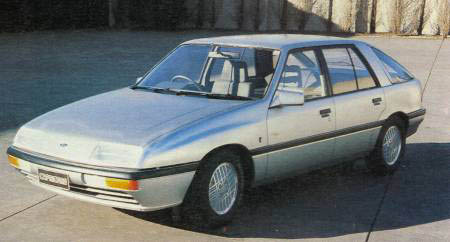
Ford’s engineers and stylists set about designing a smaller ‘Commodore-sized’ Falcon in both sedan and hatchback styles.


Code-named ‘Capricorn’, the car reached full clay and fibreglass model stage. The interior had been designed and, by late 1981, all it needed was final approval before going to the next stage of driveable prototypes.


At the same time, Ford was revamping the Falcon range of engines and introduced the alloy head and other improvements that kept the Falcon’s fuel economy on a par with the smaller Commodore. Falcon sales soared, Ford became No.1 in the market place and the Capricorn died!
So what did it look like? No pictures were kept. thanks to Ford corporate philosophy that any still-born project simply ceases to exist and all related materials are destroyed. But more than three years after this article was originally posted, we receive this from a mate...


It's an old pic, but the Ford badge is unmistakeable on something that could have worn any number of badges in the `80s. Wonder what a current Capricorn would look like...

Monday, November 27, 2006

Guilt

"When guilt rears its ugly head confront it, discuss it and let it go. The past is over. It is time to ask what can we do right, not what did we do wrong. Forgive yourself and move on." --Bernie S. Siegel

"I have made it a rule of my life never to regret and never to look back. Regret is an appalling waste of energy . . . you can’t build on it; it’s only good for wallowing in." -- Katherine Mansfield

"If we don't forgive ourselves for our mistakes, and others for the wounds they have inflicted upon us, we end up crippled with guilt. And the soul cannot grow under a blanket of guilt, because guilt is isolating, while growth is a gradual process of reconnection to ourselves, to other people, and to a larger whole." -- Joan Borysenko

"Light burdens borne far become heavy." -- French proverb

Eunice Customer Buys a Used Car Loaded with Hemp


Sunday Nov 26 2006, 12:30am PDT Atul


Off late many people have been stressing on the advantages of buying a second hand car over the new ones. Each time you set out to buy a new car you do ponder over buying a second hand one too . If the latter thought prevails in your mind, I have a serious suggestion for you people, along with scrutinizing other facets of the second hand car you opt to buy , do check the area under the back seat because you never know what might be in store for you .


A Eunice customer bought a used car and to his surprise, found $28,000 worth of marijuana buried under that cars’ back seat. He had many options to choose from, but he chose the right way and contacted the police with immediate affect.


The buyer of this Hooch’ie car revealed that he bought it from Hobbs. The Lea County Drug Task Force has started investigating the matter and refused to conjecture as to why the ‘stuff’ was found in the car.


The authority also appreciated the purchaser for taking a correct action under the circumstances. He may have taken a correct action but, the next time around , if any of you maps a used car deal , make sure you show that dexterity at the very first go instead of realizing later that you bought a wagon loaded with Hemp .


Via : TopSpeed

Sunday, November 26, 2006

The 25 Funniest Analogies (Collected by High School English Teachers)

I have to share these “funniest analogies” with you. They came in an e-mail from my sister. She got them from a cousin, who got them from a friend, who got them from… so they are circulating around. My apologies if you have already seen them.

The e-mail says they are taken from actual high school essays and collected by English teachers across the country for their own amusement. Some of these kids may have bright futures as humor writers. What do you think?

1. Her face was a perfect oval, like a circle that had its two sides gently compressed by a ThighMaster.
2. His thoughts tumbled in his head, making and breaking alliances like underpants in a dryer without Cling Free.
3. He spoke with the wisdom that can only come from experience, like a guy who went blind because he looked at a solar eclipse without one of those boxes with a pinhole in it and now goes around the country speaking at high schools about the dangers of looking at a solar eclipse without one of those boxes with a pinhole in it.
4. She grew on him like she was a colony of E. Coli, and he was room-temperature Canadian beef.
5. She had a deep, throaty, genuine laugh, like that sound a dog makes just before it throws up.
6. Her vocabulary was as bad as, like, whatever.
7. He was as tall as a six-foot, three-inch tree.
8. The revelation that his marriage of 30 years had disintegrated because of his wife’s infidelity came as a rude shock, like a surcharge at a formerly surcharge-free ATM machine.
9. The little boat gently drifted across the pond exactly the way a bowling ball wouldn’t.
10. McBride fell 12 stories, hitting the pavement like a Hefty bag filled with vegetable soup.
11. From the attic came an unearthly howl. The whole scene had an eerie, surreal quality, like when you’re on vacation in another city and Jeopardy comes on at 7:00 p.m. instead of 7:30.
12. Her hair glistened in the rain like a nose hair after a sneeze.
13. The hailstones leaped from the pavement, just like maggots when you fry them in hot grease.
14. Long separated by cruel fate, the star-crossed lovers raced across the grassy field toward each other like two freight trains, one having left Cleveland at 6:36 p.m. traveling at 55 mph, the other from Topeka at 4:19 p.m. at a speed of 35 mph.
15. They lived in a typical suburban neighborhood with picket fences that resembled Nancy Kerrigan’s teeth.
16. John and Mary had never met. They were like two hummingbirds who had also never met.
17. He fell for her like his heart was a mob informant, and she was the East River.
18. Even in his last years, Granddad had a mind like a steel trap, only one that had been left out so long it had rusted shut.
19. Shots rang out, as shots are wont to do.
20. The plan was simple, like my brother-in-law Phil. But unlike Phil, this plan just might work.
21. The young fighter had a hungry look, the kind you get from not eating for a while.
22. He was as lame as a duck. Not the metaphorical lame duck, either, but a real duck that was actually lame, maybe from stepping on a land mine or something.
23. The ballerina rose gracefully en Pointe and extended one slender leg behind her, like a dog at a fire hydrant.
24. It was an American tradition, like fathers chasing kids around with power tools.
25. He was deeply in love. When she spoke, he thought he heard bells, as if she were a garbage truck backing up.

A brief history of the Falcon's 40 years (to AU)


THE initial decision to launch an Australian-built Ford was made in 1955, when it was decided that Ford Australia would build the Zephyr locally from the ground up, rather than simply assemble kits that arrived by ship from Dagenham in the United Kingdom.


But in 1958, after a trip to the USA to view the Zephyr that was being redesigned for Australia, Ford Australia managing director Charles Smith decided that the car was not right for the local market.


He was then shown a mock-up of the Falcon that was being designed for the Canadian and American markets and decided that it was the car for Australia.


The Falcon made its debut with the XK in September 1960. At the time it was described as a "compact", as it was smaller than the popular family cars of the period.


The car and its successor, the XL, were based on a Canadian design, with some minor modifications for Australian conditions.

With the launch of the XM in 1964, the Falcon had more serious claims to being a car designed and engineered by Australians for Australian conditions.
Changes were made to the front and rear suspension, the braking system, clutch, rear axle, engine mounts and exhaust - all as a result of extensive research on the open road, the track and the dirt.


Ford Australia management went one step further with the launch of the XP Falcon in 1965. In an attempt to convince local fleet buyers of the robustness and durability of the Falcon, deputy managing director Bill Bourke conceived the XP Durability Run.


The bold scheme involved pushing five standard Falcons and a group of racing drivers to the limit around the demanding You Yangs Proving Ground. The goal was to clock 70,000 miles at an average speed per car of 70 miles per hour. Four of the five cars rolled, but after nine days driven at the limit, the five cars averaged a speed of 71.3 miles per hour.
That same year, the Falcon was named Wheels Car of the Year.


The first Falcon GT arrivesThe following year, the bigger, more powerful XR Falcon was launched with an entirely new shape. The new model incorporated more Australian design input than previous models and featured a V8 engine for the first time. The XR Falcon also was the first model to carry the legendary GT badge.


The XT Falcon saw more powerful V8s, a synchromesh gearbox, dual circuit brakes and a choice of two automatic transmissions. It was followed by the XW and XY, remarkable for the eminently collectable GTHO Phase II and III.


In 1971, with the launch of the XA, the Falcon became a uniquely Australian car. There was no longer a US equivalent, the car was designed specifically for the local market.
Three years earlier, local Ford designers traveled to the US and spent most of the summer of 1968 working on the Falcon clay model. The design impressed
Detroit, which soon after gave the go-ahead for a design centre at Broadmeadows, Victoria.
With the XB and XC came four-wheel disc brakes, four-barrel carburetors and an all-time classic Falcon, the Cobra. The XC also brought a famous 1-2 victory for Allan Moffat and Colin Bond at Bathurst in 1977.


The XD Falcon was the first to be designed in Australia from a clean piece of paper. Efficiency, interior space and weight reduction were the key elements of the new design. The car also featured a number of innovations, including a plastic fuel tank and plastic bumpers. Bucket seats were optional.


The following model, the XE, marked the introduction of electronic fuel injection and a Watts link coil-sprung rear-end. The car took Ford to number one in the market in 1982.
The XF was notable for the introduction of Ford’s engine management system, EEC-IV, which managed the spark timing and air-fuel mix of the engine more efficiently.


A new shape for Falcon came with the EA, which also boasted an all-new front suspension and geometry, similar to that used in the S-Class Mercedes. The new suspension was more durable than previous systems. Other advances included a four-speed automatic transmission, the high-security Tibbe locking system and a more fuel-efficient engine.


The EB and subsequent EB II offered handling improvements, the return of the V8 and ABS brakes for the first time on a mainstream Australian sedan. Security also was enhanced with the introduction of Smartlock.


The final facelift for the EA shape came with the ED, which offered more modern exterior colours, better side-impact crash protection and a host of under-the-bonnet changes to continue the refinement of the car’s handling.


August 1994 saw a new shape and an Australian Design Award for the EF Falcon in recognition of several engineering advances. The modified engine was smoother running, with improved torque and power and a new EEC-V engine management system developed through Formula One racing. A standard airbag, better ride and handling and significant safety advances completed the upgrade. The car also featured the world’s first airbag-compatible bull-bar.
The final facelift before the AU, the $40 million EL program, brought further ride and handling improvements, latest generation ABS and an improved steering feel.


The $700 million AU Falcon saw the introduction of Computer Aided Design and Engineering, allowing for significant advances in chassis stiffness, aerodynamics and directional stability.
The AU program also saw the debut of a sophisticated double wishbone independent rear suspension and variable cam timing on prestige models. The AU was also the first car in its class to offer air-conditioning and automatic transmission as standard features.


The AUII continued the Falcon tradition of innovation and value for money. When launched, it was the only car in its class to feature a standard passenger airbag, standard CD player, standard 16-inch wheels and ‘Scheduled Servicing’ to 60,000km included in the cost of the car.

Saturday, November 25, 2006

B series panels


I've just come across this site:


If you have a B Series Falcon, there's some great stuff!

DE-CLUTTER (PHYSICALLY AND EMOTIONALLY)

We've all heard about the bonuses of having a spring-clean. But what about the emotional baggage we all carry, too. Both physical and emotional clutter can drain your energy levels. Beyond what the Feng-Sui people have to say, there are studies that show that hanging on to clutter or relationships that subtract rather than add to our lives is unhealthy.

It can also make us feel incompetent. For example when we look into our garages or sheds and see stuff we bought because we thought it may make us happy, but we don’t have the time to use it, or we have to keep going to work to pay it off. Or we look into our wardrobes and see things we rarely wear. Or we look at the relationships we hold onto that white-ant our self esteem or the pain we get from frustrating obligations. However, the answer to de-cluttering is the same whether you're getting rid of physical or emotional baggage. First, you need to decide to deal with one type of clutter at a time and second, pick a small area first.

Physical
Don't be overwhelmed by how big the task is. Decide which room you are going to deal with first. Then start small; maybe a drawer in the kitchen, or if you start in your wardrobe – perhaps just look at winter clothes. Set aside a specific amount of time; for example half hour to an hour is a great starting point.

Emotional
Set aside time to identify the things that you do that drain you emotionally. Are there obligations you can reduce, associations you don’t get satisfaction from anymore, or relationships that you are hanging on to? Once you have identified them, the process of de-cluttering is the same. Start in one area and start small.

High speed crash


I've always wondered about the safety of electric carts, or more precisely the safety of those who use them. If you can't drive a car, then perhaps you shouldn't be driving at all.

Friday, November 24, 2006

Why? Why? Why?

Asking ourselves 'why?' helps us delve deeply into our main motives -- why we do what we do. This process helps us go deeper into our reasoning, habits and unconscious beliefs. Once we become aware of our underlying motives, we can choose to change them, if we wish. Regularly ask yourself, "Why am I ...?" Listen closely for the answer that surfaces in your mind, and write it down. Now look at your answer and ask why again. Continue with this process to reach the true source of your motivation.

Fingerprint verification


Fingerprints to Be Used for Random Identification
Thursday Nov 23 2006, 6:36am PDT Atul

The UK Police authorities are testing a new system that could help them save a lot of time that could be conducively used for other important tasks. Ten forces in UK and Wales are testing a handheld device that accumulates database of 6.5m prints ultimately storing millions of fingerprints.


Police Minister Tony McNulty cited:
The new technology will speed up the time it takes for police to identify individuals at the roadside, enabling them to spend more time on the frontline and reducing any inconvenience for innocent members of the public


The officers will scan the number plate of the vehicles using a special camera to confirm whether the car is subjected to any illegal stipulation. If any hiccup is detected , the drivers fingerprint will then be taken on this device for identity confirmation. In a normal course, the offender is arrested and taken to a police station for identity confirmation, which means the former is a much better and time saving option.


The police have confirmed that this device is accurate upto 95% and it will be solely used for the identification purpose. Until now, it has been used on a trail basis as no rules have been passed decreeing them as obligatory. Considering the time saving advantage of this device, I doubt the UK govt. will deny it , as it will give their officers more time to check their swelling Drug Trade, What say?

Thursday, November 23, 2006

Ford All Wheel Drive


By Staff ReportPublished: November 24, 2006 Print Email

Ford all-wheel drive vs. four-wheel drive

With the addition of the all-wheel-drive (AWD) Ford Fusion and Mercury Milan, Ford Motor Company is now offering affordable AWD technology to a whole new group of customers, bringing it to one of the largest volume segments in the industry.


Many of these new customers may wonder why they need AWD on their midsize sedan, especially if they live in a climate where the roads are never icy or snow covered.


“Many people think about the AWD system on the Ford Edge the same way they think of the four-wheel-drive (4WD) system on their F-150,” says Ashok Rodrigues, 4WD technical specialist for Ford Motor Company. “There’s been a lot of confusion in the industry as to how manufacturers use the terms 4WD and AWD.”


Rodrigues says there are three basic types of AWD/4WD systems, regardless of whether they’re based on front-drive or rear-drive vehicles. Those are part-time, center differential and on-demand.


Part-Time Four-Wheel Drive


Part-time systems are what most people commonly think of as 4WD. These rugged, traditional systems, found on trucks including the F-150 and Super Duty, feature a simple lock and unlock mechanism that locks the front wheels to the rear wheels. Four-wheel drive is engaged by the vehicle’s operator, usually by flipping a switch or pushing a button on the dash.
Part-time systems are almost always marketed with a low-range gear that’s used when maximum torque is needed, for such activities as extreme off-roading or for moving a heavy object.


“It’s pretty much a black or white operation,” says Rodrigues. “You either want four-wheel drive or you don’t.”


The benefits of this system are its ruggedness and the fact that it’s inexpensive. Four-wheel-drive vehicles are at their best pulling a boat out of the water or hauling a Bobcat back in the woods. The downside is that the system isn’t really adaptable to everyday driving.


“With a part-time system, you will inherently bind up when you go around corners,” says Rodrigues. “When cornering, the front wheels want to track a wider arc than the rear wheels. Because all four wheels are locked together physically, you simply can’t do that with part time. It is an inherent part of the design and is fully intended.”
Center Differential
The V-6 Mercury Mountaineer uses a center differential that constantly splits torque 40 percent to the front wheels and 60 percent to the rear wheels. Unlike the part-time system, the wheels themselves turn at different speeds, eliminating the binding that part-time systems exhibit when cornering.


Center differentials need some sort of clutch or limited-slip mechanism to control slip. For example, when the rear wheels begin to slip, the clutch mechanism applies brake torque to the rear axle, sending drive torque to the front axle and keeping the vehicle moving forward. Rodrigues says that traction control can also serve as the clutching mechanism, providing a cost-effective means of applying brakes to the spinning axle.


“The nice thing about a center differential is that it’s always sending that torque,” he says, “so you have a very nice refined driving performance. Some people really like those kinds of systems. But they can be heavy, expensive and, as the devices are generally purely mechanical, there simply aren't many tuning options.”


On-Demand All-Wheel Drive


The third type is the on-demand system. An on-demand system is always driving one axle and then drives the other axle as conditions demand. In the case of the Ford Fusion or Ford Edge, the front axle is the primary drive axle. For the Ford Explorer and Mercury Mountaineer, the rear axle is the primary drive axle.


Simple mechanical systems use a clutch to send torque to the secondary drive axle when the primary axle starts to slip. Today’s electronic systems — like those found on all Ford Motor Company cars as well as Ford Explorer and Expedition, the Lincoln Navigator and the V-8 Mercury Mountaineer — use a computer controller that monitors such things as steering angle, accelerator pedal position and engine speed to provide the precise amount of torque, front to rear, as needed.


“What’s really impressive about these systems is that they don’t just react to slip,” says Rodrigues. “They usually prevent that slip from occurring in the first place. By predicting slip and preventing it, the driver doesn’t feel the vehicle slipping and responding. The operation is seamless.”


He says on-demand systems create a smooth, confident driving feel in all weather conditions with much better traction. The systems also help balance and improve driving dynamics by sending torque to the secondary axle when it’s most appropriate for handling.


“On a normal front-drive vehicle, the front wheels have a limited amount of traction available to them,” says Rodrigues. “That traction has to be used for moving the car forward and for steering. If you use all of the torque to drive forward, you don’t have anything left to steer with, and vise versa. An AWD system off-loads some of that drive torque to the rear wheels. The harder you accelerate, the more of that torque that’s going to be redirected to the rear wheels, restoring the ability of the front wheels to steer the vehicle while providing an even higher level of acceleration.”


But he cautions that while these sophisticated AWD systems do help with acceleration, they won’t make the car stop any faster.


“Your traction is much better and your handling is much better,” says Rodrigues, “but AWD does not give you more braking power.”