This guy needs a job and decides to apply at the zoo. As it happened, their star attraction, a gorilla, had passed away the night before and they had carefully preserved his hide. They tell this guy that they'll pay him well if he would dress up in the gorillas skin and pretend to be the gorilla so people will keep coming to the zoo. Well, the guy has his doubts, but Hey! He needs the money, so he puts on the skin and goes out into the cage. The people all cheer to see him. He plays up to the audience and they just eat it up. This isn't so bad, he thinks, and he starts really putting on a show, jumping around, beating his chest and roaring, swinging around. During one acrobatic attempt, though, he loses his balance and crashes through some safety netting, landing square in the middle of the lion cage! As he lies there stunned, the lion roars. He's terrified and starts screaming, "Help, Help, Help!"
The lion races over to him, places his paws on his chest and hisses, "Shut up or we'll BOTH lose our jobs!"
Friday, June 08, 2007


Wednesday, June 06, 2007
Why we will always have books
“Computers will never take the place of books. You can't stand on a floppy disk to reach a high shelf. “ - Sam Ewing
Rock band
Doug had just formed his own rock band, and his little brother said one day,
“Doug, I wish you and your band could be on TV!”
“You think we’re good, eh?”
“Then I could turn you off!”
“Doug, I wish you and your band could be on TV!”
“You think we’re good, eh?”
“Then I could turn you off!”

Tuesday, June 05, 2007
The Critical Years: For Teachers, Middle School Is Test of Wills
….. Ruby Washington/The New York Times
Corinne Kaufman, a math teacher at Seth Low Intermediate School in Brooklyn, has spent 17 years working with middle school students, learning how to turn insults into teaching moments and head off fights. When a student at Seth Low Intermediate School loudly pronounced Corinne Kaufman a “fat lady” during a fire drill one recent day, Mrs. Kaufman, a 45-year-old math teacher, calmly turned around. “Voluptuous,” she retorted, then proceeded to define the unfamiliar term, cutting off the laughter and offering a memorable vocabulary lesson in the process.
Such are the survival skills Mrs. Kaufman has acquired over 17 years at Seth Low, a large middle school in Bensonhurst, Brooklyn: How to snuff out brewing fistfights before the first punch is thrown, how to coax adolescents crippled by low self-esteem into raising their hands, how to turn every curveball, even the biting insult, into a teachable moment. But not all middle school teachers can do it.
Faced with increasingly well-documented slumps in learning at a critical age, educators in New York and across the nation are struggling to rethink middle school, particularly in cities, where the challenges of adolescent volatility, spiking violence and lagging academic performance are more acute. As they do so, they are running up against a key problem: a teaching corps marked by high turnover, and often lacking expertise in both subject matter and the topography of the adolescent mind.
In New York City, the nation’s largest school system, middle school teachers account for 22 percent of the 41,291 teachers who have left the school system since 1999 even though they make up only 17 percent of the overall teaching force, according to the United Federation of Teachers. In Philadelphia, researchers found that 34.2 percent of new middle school teachers in one representative year quit after their first year, compared with 21.1 percent of elementary school teachers and 26.3 percent of high school teachers.
“There was a lot more anger and outbursts,” Christian Clarke, 29, a Bronx high school teacher, recalled of the students he encountered during his four years teaching middle school. “Twice as much time was spent on putting out fires; twice as much time was spent getting the class quiet. Twice as much time was spent on defusing anger in the kids.” A good middle school teacher needs to know how to channel such anger into class work, and whether inappropriate questions like “Are you gay?” (as a Seth Low student recently asked her math teacher) merit serious discussion or feigned deafness.
“You have to have a huge sense of humour and a small ego,” said Jason Levy, the principal of Intermediate School 339 in the Bronx. “There are some people who are born to do it and some who learn to do it, and there are some people who really shouldn’t do it.” Yet the preparation for these jobs is often inadequate. The Education Trust, a Washington-based advocacy group, has asserted that a “scandalously high” number of middle school classes are taught by teachers lacking even a college minor in their assigned subjects. Around the country, middle school teachers are often trained as elementary school generalists or as high school subject specialists, with little understanding of young adolescent psychology.
“We’re really in a malpractice kind of environment, where we’re preparing teachers for elementary classrooms and high school classrooms but not middle-grades classrooms,” said Peggy Gaskill, research chairwoman of the National Forum to Accelerate Middle-Grades Reform, an alliance of educators, researchers and others seeking to improve middle school education. Dr. Gaskill has found that while 46 states offer some sort of credential specifically for middle school teachers, only 24 require it.
Three years ago, New York State began offering a special middle school certification for fifth through ninth grade, for teachers whose training emphasizes young adolescent pedagogy and development. But it is not mandatory to teach in middle school, and so far, few have pursued it. Of New York City’s 13,296 middle school teachers, only 82 are certified as “middle school generalists.” Some policy makers fear that stricter credentialing requirements could further narrow the pool of potential middle school teachers.
Corinne Kaufman, a math teacher at Seth Low Intermediate School in Brooklyn, has spent 17 years working with middle school students, learning how to turn insults into teaching moments and head off fights. When a student at Seth Low Intermediate School loudly pronounced Corinne Kaufman a “fat lady” during a fire drill one recent day, Mrs. Kaufman, a 45-year-old math teacher, calmly turned around. “Voluptuous,” she retorted, then proceeded to define the unfamiliar term, cutting off the laughter and offering a memorable vocabulary lesson in the process.
Such are the survival skills Mrs. Kaufman has acquired over 17 years at Seth Low, a large middle school in Bensonhurst, Brooklyn: How to snuff out brewing fistfights before the first punch is thrown, how to coax adolescents crippled by low self-esteem into raising their hands, how to turn every curveball, even the biting insult, into a teachable moment. But not all middle school teachers can do it.
Faced with increasingly well-documented slumps in learning at a critical age, educators in New York and across the nation are struggling to rethink middle school, particularly in cities, where the challenges of adolescent volatility, spiking violence and lagging academic performance are more acute. As they do so, they are running up against a key problem: a teaching corps marked by high turnover, and often lacking expertise in both subject matter and the topography of the adolescent mind.
In New York City, the nation’s largest school system, middle school teachers account for 22 percent of the 41,291 teachers who have left the school system since 1999 even though they make up only 17 percent of the overall teaching force, according to the United Federation of Teachers. In Philadelphia, researchers found that 34.2 percent of new middle school teachers in one representative year quit after their first year, compared with 21.1 percent of elementary school teachers and 26.3 percent of high school teachers.
“There was a lot more anger and outbursts,” Christian Clarke, 29, a Bronx high school teacher, recalled of the students he encountered during his four years teaching middle school. “Twice as much time was spent on putting out fires; twice as much time was spent getting the class quiet. Twice as much time was spent on defusing anger in the kids.” A good middle school teacher needs to know how to channel such anger into class work, and whether inappropriate questions like “Are you gay?” (as a Seth Low student recently asked her math teacher) merit serious discussion or feigned deafness.
“You have to have a huge sense of humour and a small ego,” said Jason Levy, the principal of Intermediate School 339 in the Bronx. “There are some people who are born to do it and some who learn to do it, and there are some people who really shouldn’t do it.” Yet the preparation for these jobs is often inadequate. The Education Trust, a Washington-based advocacy group, has asserted that a “scandalously high” number of middle school classes are taught by teachers lacking even a college minor in their assigned subjects. Around the country, middle school teachers are often trained as elementary school generalists or as high school subject specialists, with little understanding of young adolescent psychology.
“We’re really in a malpractice kind of environment, where we’re preparing teachers for elementary classrooms and high school classrooms but not middle-grades classrooms,” said Peggy Gaskill, research chairwoman of the National Forum to Accelerate Middle-Grades Reform, an alliance of educators, researchers and others seeking to improve middle school education. Dr. Gaskill has found that while 46 states offer some sort of credential specifically for middle school teachers, only 24 require it.
Three years ago, New York State began offering a special middle school certification for fifth through ninth grade, for teachers whose training emphasizes young adolescent pedagogy and development. But it is not mandatory to teach in middle school, and so far, few have pursued it. Of New York City’s 13,296 middle school teachers, only 82 are certified as “middle school generalists.” Some policy makers fear that stricter credentialing requirements could further narrow the pool of potential middle school teachers.
Disagreement
A couple making plans for their vacation.
Wife: I am afraid the mountain air would disagree with me.
Husband: My Love, it wouldn’t dare!
Wife: I am afraid the mountain air would disagree with me.
Husband: My Love, it wouldn’t dare!
XY GS - badges
It is also worth noting that the GS was available on both the 200ci and 250ci six cylinder engines, as well as the 302ci and 351ci V8s.
When the 302ci V8 was fitted, the cars came with the V8 badge.
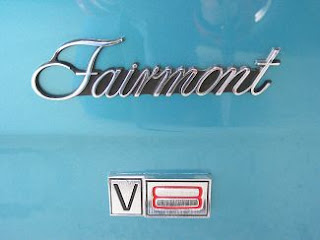
But when the 351ci V8 was fitted, the displacement was proudly announced, as seen on the black GS above, and the enlargement below.

When the 302ci V8 was fitted, the cars came with the V8 badge.

But when the 351ci V8 was fitted, the displacement was proudly announced, as seen on the black GS above, and the enlargement below.

Monday, June 04, 2007
Quotable quotes
"Each today, well-lived, makes yesterday a dream of happiness and each tomorrow a vision of hope. Look, therefore, to this one day, for it and it alone is life." - Sanskrit poem
Office help
A man with a piece of paper in his hand comes into an office where another man is sitting next to a shredding machine.
"Do you know how to operate this thing?" he asks. "I have an important paper here and I want to make sure this is done right."
"Sure," the other man answers. "Just put the paper in here and press this button."
The first man does so, saying, "Great. And where do the copies come out?"
"Do you know how to operate this thing?" he asks. "I have an important paper here and I want to make sure this is done right."
"Sure," the other man answers. "Just put the paper in here and press this button."
The first man does so, saying, "Great. And where do the copies come out?"
GS continued
It can be forgotten that the GS package did not necessarily always come with the driving lamps as shown with this lovely Bronze Wine XY with cream vinyl roof.

Or that it could be ordered with ‘plain’ Falcon 500s, and not just Fairmonts.


Or that it could be ordered with ‘plain’ Falcon 500s, and not just Fairmonts.

A higher perspective on time
"Be mindful of how you approach time. Watching the clock is not the same as watching the sun rise." - Sophia Bedford-Pierce
What would your soul consider a waste of time?
To a soul, the only real time is right NOW. Not the future or the past. It lives in connecting deeply with the rich experience of each moment. Through awareness we can be in touch with our authentic self and how it perceives all of the energies and guidance around and within us.
What would your soul consider a waste of time?
To a soul, the only real time is right NOW. Not the future or the past. It lives in connecting deeply with the rich experience of each moment. Through awareness we can be in touch with our authentic self and how it perceives all of the energies and guidance around and within us.
XY GS Part 2
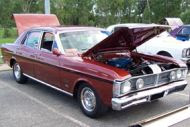
The GS stripe was available in a variety of colours, including orange, as on this Fairmont, which also has GT wheels and front spoiler.




Sunday, June 03, 2007
School needs matter most
By Jack Keating
The patterns of enrolments across Australian school sectors reported in The Age (February 27, 2007, "Parents shun state schools") reflect a trend that now spans a generation. Since the Whitlam Government released its Karmel report in 1975 and made substantial levels of funding available to non-government schools there has been a steady drift from government to non-government schools that averages about 0.4 per cent per year. The responses to this trend from governments and other stakeholders reflect a 30-year-old debate in Australia about public education and the funding of non-government schools. This debate has maintained a public perception of a stand-off between the government and non-government school sectors that has crippled any capacity for rational policy on these issues at the national and state levels.
Ownership of the schools should not matter as long as students have reasonable access to schools that will deliver a good quality education within a curriculum that meets public expectations. For example, the Netherlands and Belgium, both of which have strong public systems, have a majority of their schools enrolments in publicly funded church schools. The problem in Australia, and unlike the situation in most other OECD countries, is that despite public funding, non-government schools can be selective in their enrolments, through fees, scholarships and other means. Thus the long-standing fear in Australia is that the drift in enrolments will deprive government schools of their better-off and more scholastically capable students. This would lead to government schools being seen as residual places for students from poor household and students who are rejected from non-government schools because of their weak scholastic performances or behaviour.
There is some evidence for this fear. The recent growth in non-government enrolments has mainly been in the independent, non-Catholic sector, and the increased enrolments are strongly concentrated in students from wealthier families. However, these broad figures hide other patterns. The largest element of the non-government sector, Catholic schools, is relatively stable in its enrolment share, which is distributed fairly evenly across all income groups. The sector looks like, and to a large extent behaves like, a public sector, being mostly publicly funded, delivering the public curriculum and charging mostly low fees, and in some cases no fees.
If they were added to the government school enrolments in Australia, as they are in most other OECD countries, public education market share would grow to 85 per cent. On the other hand within the government sector, apart from the loss of some better-off students to the independent sector there are changing internal patterns of enrolments. In Victoria, there has been a significant migration of better-off students to large primary and secondary schools that achieve good results in tests and the VCE. Correspondingly there is a growing concentration of poorer students in small schools with weak results.
The trends are expressions of a robust school education market. As numerous surveys have shown, parents choose on the basis of their image of a good school, not the sector. Schools are aware that the surest way to achieve this image is to concentrate scholastic power among their enrolments. The temptation to use selection to achieve this is high. The problem is not the residualisation of the government school sector. A significant proportion of government schools do very well. The list of the schools that gained most entries into Melbourne and Monash universities, published in The Sunday Age (February 18, 2007) included six government and no Catholic schools.
However, there is strong evidence that the growing concentration of poorer students in small schools is a serious equity issue. As the OECD Program for International Student Assessment has shown, overall standards of Australian schooling are higher. However, we are weak on the equity front with large gaps between the high and low-performing students. A continued drift in enrolments segregated on the basis of wealth and scholastic levels will surely make us weaker. The current policy setting of many and possibly all state governments is to have their government schools out-compete the non-government schools for enrolment share, especially among the middle-class.
In going this way they have introduced more selective measures including selective entry schools and programs. Selection is zero sum and will only accelerate the social segregation. The immediate policy challenge is twofold. First there is a need to jettison old notions about public and private based on the school sectors. A public system is about using public funding to deliver to the public, irrespective of the ownership of the delivery agency.
Correspondingly, all schools in receipt of public funding, government and non-government should have both a moral and a contractual imperative of delivery for the public good. This principle should be the basis for new policy settings that are designed to encourage and reward schools in delivering quality education to an entire community and for all students, and for schools to work in partnership across the sectors. The most obvious focus for this would be a sub-region or municipality, as is the case in several European countries.
Second, there is a need to lessen the incentives for schools to engage in selective behaviours. In a market environment this cannot be achieved through regulation. Schools need to be rewarded for taking on the biggest challenges. This requires recognition of educational need, which provided the basis of the original Karmel report, which, sadly, has largely disappeared from education policy.
The patterns of enrolments across Australian school sectors reported in The Age (February 27, 2007, "Parents shun state schools") reflect a trend that now spans a generation. Since the Whitlam Government released its Karmel report in 1975 and made substantial levels of funding available to non-government schools there has been a steady drift from government to non-government schools that averages about 0.4 per cent per year. The responses to this trend from governments and other stakeholders reflect a 30-year-old debate in Australia about public education and the funding of non-government schools. This debate has maintained a public perception of a stand-off between the government and non-government school sectors that has crippled any capacity for rational policy on these issues at the national and state levels.
Ownership of the schools should not matter as long as students have reasonable access to schools that will deliver a good quality education within a curriculum that meets public expectations. For example, the Netherlands and Belgium, both of which have strong public systems, have a majority of their schools enrolments in publicly funded church schools. The problem in Australia, and unlike the situation in most other OECD countries, is that despite public funding, non-government schools can be selective in their enrolments, through fees, scholarships and other means. Thus the long-standing fear in Australia is that the drift in enrolments will deprive government schools of their better-off and more scholastically capable students. This would lead to government schools being seen as residual places for students from poor household and students who are rejected from non-government schools because of their weak scholastic performances or behaviour.
There is some evidence for this fear. The recent growth in non-government enrolments has mainly been in the independent, non-Catholic sector, and the increased enrolments are strongly concentrated in students from wealthier families. However, these broad figures hide other patterns. The largest element of the non-government sector, Catholic schools, is relatively stable in its enrolment share, which is distributed fairly evenly across all income groups. The sector looks like, and to a large extent behaves like, a public sector, being mostly publicly funded, delivering the public curriculum and charging mostly low fees, and in some cases no fees.
If they were added to the government school enrolments in Australia, as they are in most other OECD countries, public education market share would grow to 85 per cent. On the other hand within the government sector, apart from the loss of some better-off students to the independent sector there are changing internal patterns of enrolments. In Victoria, there has been a significant migration of better-off students to large primary and secondary schools that achieve good results in tests and the VCE. Correspondingly there is a growing concentration of poorer students in small schools with weak results.
The trends are expressions of a robust school education market. As numerous surveys have shown, parents choose on the basis of their image of a good school, not the sector. Schools are aware that the surest way to achieve this image is to concentrate scholastic power among their enrolments. The temptation to use selection to achieve this is high. The problem is not the residualisation of the government school sector. A significant proportion of government schools do very well. The list of the schools that gained most entries into Melbourne and Monash universities, published in The Sunday Age (February 18, 2007) included six government and no Catholic schools.
However, there is strong evidence that the growing concentration of poorer students in small schools is a serious equity issue. As the OECD Program for International Student Assessment has shown, overall standards of Australian schooling are higher. However, we are weak on the equity front with large gaps between the high and low-performing students. A continued drift in enrolments segregated on the basis of wealth and scholastic levels will surely make us weaker. The current policy setting of many and possibly all state governments is to have their government schools out-compete the non-government schools for enrolment share, especially among the middle-class.
In going this way they have introduced more selective measures including selective entry schools and programs. Selection is zero sum and will only accelerate the social segregation. The immediate policy challenge is twofold. First there is a need to jettison old notions about public and private based on the school sectors. A public system is about using public funding to deliver to the public, irrespective of the ownership of the delivery agency.
Correspondingly, all schools in receipt of public funding, government and non-government should have both a moral and a contractual imperative of delivery for the public good. This principle should be the basis for new policy settings that are designed to encourage and reward schools in delivering quality education to an entire community and for all students, and for schools to work in partnership across the sectors. The most obvious focus for this would be a sub-region or municipality, as is the case in several European countries.
Second, there is a need to lessen the incentives for schools to engage in selective behaviours. In a market environment this cannot be achieved through regulation. Schools need to be rewarded for taking on the biggest challenges. This requires recognition of educational need, which provided the basis of the original Karmel report, which, sadly, has largely disappeared from education policy.
Use your brain
A cannibal entered the meat market to buy something nice for dinner. The owner greeted him and told him to look around. The cannibal began to inspect the meat case and noticed the market specialized in brain.
Upon further inspection he noticed a marked disparity between the costs of brain meats. A carpenter's brain sells for $1.50 per pound. A plumber's brain sells for $2.25 per pound. He noticed with alarm that a politician's brain sells for $375.00 a pound. With not a little curiosity he asked the owner why the huge difference in price between the similar meats.
The owner responded with a deadpan look on his face, "Do you realize how many politicians it takes to get a pound of brains?"
Upon further inspection he noticed a marked disparity between the costs of brain meats. A carpenter's brain sells for $1.50 per pound. A plumber's brain sells for $2.25 per pound. He noticed with alarm that a politician's brain sells for $375.00 a pound. With not a little curiosity he asked the owner why the huge difference in price between the similar meats.
The owner responded with a deadpan look on his face, "Do you realize how many politicians it takes to get a pound of brains?"
XY GS
Once again the GS Rally Pack was available on the XY model. In addition to being available on the Falcon 500, Futura and Fairmont sedans, it was also now an option on the Falcon 500 and Fairmont wagon also.
The actual GS options remained the same including the GT dash featuring speedometer, tachometer, odometer, oil pressure, water temperature and fuel gauges, but some other items crept onto the general option list, most notably a sunroof and a stereo radio/tape player. For performance enthusiasts, the most important option was now a 250hp two barrel carburettor equipped Cleveland version of the 351ci V8. It may not have rivalled the 290hp GT, but it really wasn’t too far off now.

This is a lovely XY GS in Onyx Black showing the GS stripe terminating in the GS badge and the chromed XR/XT GT lookalike wheel covers


Here are close ups of the stylised GS badge and of the wheel cover.
The actual GS options remained the same including the GT dash featuring speedometer, tachometer, odometer, oil pressure, water temperature and fuel gauges, but some other items crept onto the general option list, most notably a sunroof and a stereo radio/tape player. For performance enthusiasts, the most important option was now a 250hp two barrel carburettor equipped Cleveland version of the 351ci V8. It may not have rivalled the 290hp GT, but it really wasn’t too far off now.

This is a lovely XY GS in Onyx Black showing the GS stripe terminating in the GS badge and the chromed XR/XT GT lookalike wheel covers


Here are close ups of the stylised GS badge and of the wheel cover.
Saturday, June 02, 2007
Quotable quotes
“We must not allow the clock and the calendar to blind us to the fact that each moment of life is a miracle and mystery” H.G. Wells
Thanks, Mum!
A young man was walking through a supermarket to pick up a few things when he noticed an old lady following him around. Thinking nothing of it, he ignored her and continued on. Finally he went to the checkout line, but she got in front of him. "Pardon me," she said, "I'm sorry if my staring at you has made you feel uncomfortable. It's just that you look just like my son, who just died recently."
"I'm very sorry," replied the young man, "is there anything I can do for you?"
"Yes," she said, "As I'm leaving, can you say 'Good bye, Mother'? It would make me feel so much better."
"Sure," answered the young man.
As the old woman was leaving, he called out, "Goodbye, Mother!" As he stepped up to the checkout counter, he saw that his total was $127.50. "How can that be?" He asked, "I only purchased a few things!"
"Your mother said that you would pay for her," said the clerk.
"I'm very sorry," replied the young man, "is there anything I can do for you?"
"Yes," she said, "As I'm leaving, can you say 'Good bye, Mother'? It would make me feel so much better."
"Sure," answered the young man.
As the old woman was leaving, he called out, "Goodbye, Mother!" As he stepped up to the checkout counter, he saw that his total was $127.50. "How can that be?" He asked, "I only purchased a few things!"
"Your mother said that you would pay for her," said the clerk.
XW GS
Available on the Falcon 500, Futura and Fairmont sedan, the GS added the following features; GS Rally stripes that ran from the front indicators to the middle of the rear wing and ended with the GS insignia and full wheel covers that were the same as the stainless steel wheel covers used on the XR and XT GT models. Inside, a three spoke, deep dished wooden rimmed steering wheel with rim squeeze horn and full dash instrumentation were the same as on the GT model.
From there the buyer could then run riot through the normal options list adding; bucket seats and sports console with four speed or T-Bar automatic, a 302ci 220hp V8, power disk brakes, air conditioning, tinted windscreen, vinyl roof; anything, in fact, that was available in the catalogue. Ford advertised the GS as - ‘Make up your own Grand Sport’ - and, while the car did not have the appeal of the GT, it did offer the cost conscious a distinctive alternative.


From there the buyer could then run riot through the normal options list adding; bucket seats and sports console with four speed or T-Bar automatic, a 302ci 220hp V8, power disk brakes, air conditioning, tinted windscreen, vinyl roof; anything, in fact, that was available in the catalogue. Ford advertised the GS as - ‘Make up your own Grand Sport’ - and, while the car did not have the appeal of the GT, it did offer the cost conscious a distinctive alternative.


Subscribe to:
Posts (Atom)