Sunday, January 18, 2009

Random family images


Don't speak to me before coffee.

Music soothes the savage beast

Recent investigation into the effects of music on the brain reveals that the brain loves music and that information travelling on musical notes is learned more quickly and better retained for speedy, accurate retrieval. But while the research also indicates that some children benefit more than others from music in the classroom, there has not been much study of how songs, chants, and lullabies influence learning. Songs, poems, chants, and rhymes, for example, made it possible for workmen in the Middle Ages to be organized to build great cathedrals. They have to also be able to assist all our students learn.

Saturday, January 17, 2009

Random family images


Even a plastic crown worth a fraction of a cent can bring entertainment for idiots.

Motorised madness


It seems that people will put a motor into anything - I think that the engineering skills are awesome. The safety of the occupants might leave a little to be desired in some cases, however.

Court Q&A

There is a book called Disorder in the Court. These are things people actually said in court, word for word, taken down and now published by court reporters - who had the torment of staying calm while these exchanges were actually taking place.
Some of these are excellent ...
Q: What is your date of birth?
A: July fifteenth.
Q: What year?
A: Every year.
Q: What gear were you in at the moment of the accident?
A: Gucci sweatshirt and Reeboks.

Q: So the date of conception (of the baby) was August 8th?
A: Yes.
Q: And what were you doing at that time?

Q: She had three children, right?
A: Yes.
Q: How many were boys?
A: None.
Q: Were there any girls?

Q: How was your first marriage terminated?
A: By death.
Q: By whose death was it terminated?

Q: Can you describe the individual?
A: He was about medium height and had a beard.
Q: Was this a male, or a female?

Q: Doctor, how many autopsies have you performed on dead people?
A: All my autopsies are performed on dead people.


Q: All your responses must be oral, OK? What school did you go to?
A: Oral.

Q: Do you recall the time that you examined the body?
A: The autopsy started around 8:30 p.m.
Q: And Mr. Dennington was dead at the time?
A: No, he was sitting on the table wondering why I was doing an autopsy on him.

Q: What was the first thing your husband said to you when he woke up that morning?
A: He said, "Where am I, Cathy?"
Q: And why did that upset you?
A: My name is Susan.

Q: Doctor, before you performed the autopsy, did you check for a pulse?
A: No.
Q: Did you check for blood pressure?
A: No.
Q: Did you check for breathing?
A: No.
Q: So, then it is possible that the patient was alive when you began the autopsy?
A: No.
Q: How can you be so sure, Doctor?
A: Because his brain was sitting on my desk in a jar.
Q: But could the patient have still been alive, nevertheless?
A: Yes, it is possible that he could have been alive and practicing law somewhere

Random family images


Given to us by my mother, this tree is a type of gum tree. It flowered in its first year and never fails to impress with its floral display.

Friday, January 16, 2009

Random family images


Kids today seem to have an alien outlook on their lives -creatures of entertainment, they are constantly engaged in "media" or sensory input. In the car, our girls often retreat into their iPods - we now have 3. When watching TV, they watch multiple programs simultaneously. I'm not saying it's wrong, just that as parents and teachers we need to understand and accommodate this disposition.

New vs old 7

Thursday, January 15, 2009

Random family images


This was the car that we recently traded on a newer one. It was awesome - comfortable, well appointed and quite rapid. It also got almost 700km out of a 68 litre tank on the highway. A lot of people maligned this model, but we loved it. Opinion is a powerful thing.

We've got four rooms

"There is an Indian Belief that everyone is in a house of four rooms: A physical, a mental, an emotional and a spiritual. Most of us tend to live in one room most of the time, but unless we go into every room everyday, even if only to keep it aired, we are not complete." -- Rumer Godden

Wednesday, January 14, 2009

Random family images


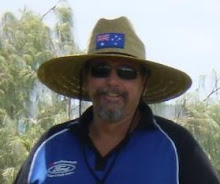
I'm very proud of our beautiful gorls. I miss my not beautiful beard.

Lottery win

A man gets home, runs into his house, slams the door and shouts, "Honey, I just won the lottery! Pack your bags!"
The wife says, "Great! What should I pack for? The ocean or the mountains?"
He says, "I don't care! Just be out by the end of the week!"

Tuesday, January 13, 2009

Random family images


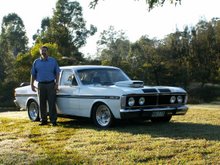
Our Car Club visited a private collection of cars. This is an icon for Ford in Australia - only four made, one was written off. Plus, there's a whole story of political intigue about the demise of supercars in Oz. These cars were at the centre of it.

New vs old 6

Monday, January 12, 2009

Random family images


One of the joys of living on acreage is the neighbours. We often have koalas quite close to the house, as well as a wallaby family and all manner of birds and lizards. The two metre carpet snake that shares the environs is a little creepy.

Support at work - not!


Don't ever take leave from work and go somewhere nice!

Sunday, January 11, 2009

Random family images


Friends - let's hope it stays that way.

Economist

A man died and his wife phoned the newspaper to place an obituary. She called the obituary department and said, "This is what I want to print: Bernie is dead." The man at the newspaper said, "But for $25 you are allowed to print six words." The woman answered, "OK. Then print: Bernie is dead. Toyota for sale."

Saturday, January 10, 2009

Random family images


Shot through the car window, this is a mountain near our house. I think it would be cool to have a house on top of it - the view would be awesome.

New vs old 5

Friday, January 09, 2009

Bowl me over


Recently we went bowling to help stave off the holiday blues. We had two games with good friends of ours and enjoyed the experience.

Lane bumpers are good - they probably add 50% onto your score - so everyone came away happy.

The girls also engaged in some video game action - media has to be in there somewhere!

Random family images


When we got to speedway, the water truck (affectionately called "Old Major") comes around to water the track. Our eldest runs down to the fence in the hope of getting a sprinkling. We should embrace the world view of the young.

Exercise Seen as Priming Pump for Students’ Academic Strides

Case grows stronger for physical activity's link to improved brain function. Vol. 27, Educatiop Week : Issue 23, Pages 14-15
By Debra Viadero

Seven or eight years ago, studies offered mixed results on the question of whether exercise can boost brain function in children and adolescents. Experts are beginning to contend, however, that the case is getting stronger. “There’s sort of no question about it now,” said Dr. John J. Ratey, a clinical associate professor of psychiatry at Harvard Medical School. “The exercise itself doesn’t make you smarter, but it puts the brain of the learners in the optimal position for them to learn.”

Range of Benefits

Dr. Ratey is the author of Spark: The Revolutionary New Science of Education and the Brain, a book published last month by Little, Brown and Co. It draws together emerging findings from neuroscientific, biomedical, and educational research that correlate exercise with a wide range of brain-related benefits—improving attention, reducing stress and anxiety, and staving off cognitive decline in old age, for example. The interest in documenting a link between exercise and learning in children and adolescents comes as trends in physical activity seem to point in the opposite direction. Studies suggest that, with 30 percent of the nation’s schoolchildren classified as overweight, childhood obesity is reaching epidemic proportions.

Proponents of the educational benefits of exercise maintain that the federal No Child Left Behind Act, which puts pressure on schools to raise students’ test scores in core academic subjects, is prompting some schools to cut back on time for physical education classes and recess. Nationwide, Dr. Ratey writes in his book, only 6 percent of schools now offer PE five days a week. “At the same time,” he adds, “kids are spending 5.5 hours a day in front of a screen of some sort—television, computer, or hand-held device.”

With his university colleague Darla M. Castelli, Mr. Hillman assessed the physical-fitness levels of 239 3rd and 5th graders from four Illinois elementary schools. Their findings published last year, in the Journal of Sport & Exercise Psychology, show that children who got good marks on two measures of physical fitness—those that gauge aerobic fitness and body-mass index—tended also to have higher scores on state exams in reading and mathematics. That relationship also held true regardless of children’s gender or socieconomic differences.

‘Bowled Over’

Another study published last year, involving 163 overweight children in Augusta, Ga., found, in addition, that the cognitive and academic benefits of exercise seemed to increase with the size of the dose. For that study, a cross-disciplinary research team randomly assigned children to one of three groups. One group received 20 minutes of physical activity every day after school. Another group got a 40-minute daily workout, and the third group got no special exercise sessions.

At Naperville Central High School, ball playing is used to keep students alert in a special literacy class.

—John Zich for Education Week

After 14 weeks, the children who made the greatest improvement, as measured by both a standardized academic test and a test that measured their level of executive function—thinking processes, in other words, that involve planning, organizing, abstract thought, or self-control—were those who spent 40 minutes a day playing tag and taking part in other active games designed by the researchers. The cognitive and academic gains for the 20-minutes-a-day group were half as large. “I was frankly bowled over by the results,” said Catherine L. Davis, the lead author of the study, a preliminary version of which was published in December in Research Quarterly for Exercise and Sport. “It’s like a staircase, which is considered strong evidence for causation,” added Ms. Davis, who is an associate professor of pediatrics at the Medical College of Georgia in Augusta.

PE Experiment

In the meantime, educators in Naperville District 203, a suburban district of 18,600 students just west of Chicago, have been conducting some informal experiments on their own. With advice from Dr. Ratey, the school instituted what is now called a “learning readiness” PE class where students such as Mr. Bray can choose from more than a dozen heart-pumping activities. The students wear heart monitors, which they check to maintain a heart rate of 160 to 190 beats a minute for 25-minute stretches at a time throughout the week. When the class started in the fall of 2004, it included about a dozen students who were targeted for extra help based on low test scores in reading and teacher recommendations. Reading teachers were also recruited to infuse a bit of literacy instruction into some of the activities. One game called for students to race around on scooters to match words with their definitions written on pieces of paper on the floor, said Paul Zientarski, the school’s instructional coordinator for physical education and health.

After their early-morning PE session, the students joined other struggling readers and writers in a special literacy class designed to give them extra academic help in those areas. At the end of one semester, Naperville educators found, students who took part in both the early-morning exercise program and the literacy class showed 1.34 of a year’s growth on standardized reading tests, according to Mr. Zientarski. The gain for the students in the literacy-only group, in comparison, was seven-tenths of a year. Naperville educators tried the same approach the following school year with an introductory algebra class for students having difficulty in mathematics and saw even more dramatic gains. Students who both exercised and took the extra-help math class increased their scores on a standardized algebra test by 20.4 percent. The gain for students in the control group was 3.87 percent, according to Mr. Zientarski.

The school did not get the same results, though, a year later when the “learning readiness” classes and the literacy classes were scheduled six hours apart. Students who had literacy lessons right after exercising did just as well, but improvements were smaller for students with afternoon literacy classes. That led Naperville Central’s guidance counsellors to recommend that all students schedule their toughest academic classes right after PE. “We now have three years of data showing what we have, and we really think we’re on to something,” Mr. Zientarski added. But district administrators would like to enlist university-based researchers to do more-formal studies before incorporating major scheduling changes districtwide. “We have so many different variables that could affect how we evaluate the course,” said Jody Wirt, the district’s associate superintendent for instruction. “Is it the class size? Or the teachers?”

Mental ‘Miracle-Gro’

Likewise, scientists are still not entirely sure how exercise primes the brain for learning. But, according to Dr. Ratey, they have some good ideas. Laboratory studies in mice and humans, for instance, show that exercise prompts the brain to produce greater amounts of a protein called brain-derived neurotrophic factor or BDNF, which Dr. Ratey likes to call “Miracle-Gro” for the brain. It encourages brain cells to sprout synapses, which are crucial to forming the connections the brain needs to make in order to learn. It also strengthens cells and protects them from dying out. Other research also suggests that exercise plays a role in neurogenesis, the production of new brain cells, in middle-aged and older adults and in laboratory animals.

“There’s no way to say for sure that improves learning capacity for kids, but it certainly seems to correlate to that,” Dr. Ratey said. What seems to continue to be important, though, is what gets put in those brain cells—in other words, whether students are given complex learning fodder to practice and master. It’s also not likely, Dr. Ratey said, that just any physical education curriculum will produce the kinds of benefits that Naperville saw with its “learning readiness” classes. At the instigation of former physical education teacher Phil Lawler, the Naperville district has been at the forefront of a national movement for the “new PE,’’ a philosophy that promotes teaching students how to be fit and lead healthy lives, rather than focusing on sports skills and game rules.

“No more getting picked last for basketball. No more climbing ropes or playing dodgeball,” said Mr. Lawler, who now works for a Kansas City, Mo.-based foundation, called PE4Life, that trains teachers and promotes the concept nationwide. Mr. Lawler and Mr. Zientarski, for instance, began using heart-rate monitors with all their classes more than a decade ago. They also raised money to install climbing walls and ropes courses in their schools and brought in kayaks and sophisticated exercise equipment that incorporates video games and virtual-reality technology to make exercise more engaging for students.

Traditional sports are still taught, but the games, such as three-on-three basketball, take place in smaller groups, Mr. Lawler said. “This isn’t just a few PE teachers with a wild idea anymore,” he said. “It’s combining what should go on in a quality physical education program with some of the highest-quality research in the world in neuroscience and cognitive science.”

Thursday, January 08, 2009

Vauxhall National Meet


Last weekend the Vauxhalls came to town as part of thier annual national meetting. I was blown away at the build quality and diversity of the cars. However, I was not surprised by the passion of the people - very similar to that of our local Ford Club members.

I even met two people from my home town. One of them was telling me about the cars he had. I asked him, "How many cars do you have?"

He replied, "One to an acre."

I gave in and asked, "How many acres dow you have?"

With a straight face he replied, "135."

Random family images


We love going to speedway - it's close to home and a cheap family night out. Plus, with three of us being petrol heads, 75% of the family is happy. Our youngest informed me yesterday that she hates cars... I have work to do.

ATM wars

MAN:
1) Pull up to machine
2) Wind window down
3) Insert ATM card, enter PIN
4) Retrieve cash
5) Drive away

WOMAN:
1) Pull up to machine
2) Open door (too far away from machine)
3) Search through all of the 112 compartments in handbag for ATM card
4) Do make up, apply lipstick, fix hair
5) Insert Card
6) Remove card
7) Insert card the correct way up
8) Search for piece of paper with PIN on it
9) Enter PIN
10) Enter correct PIN
11) Retrieve cash, put in bag
12) Drive off
13) Reverse back to machine
14) Retrieve card
15) Drive three miles away
16) Release hand-brake

Wednesday, January 07, 2009

Random family images

With so many cameras in our family now, I thought I'd include some random images - why not?


First cab off the rank is our intrepid pooch, Bella. Long suffering, very patient pooch. How the kids got her to sit in here amazes and eludes me...

New vs old 4

Tuesday, January 06, 2009

New Years Eve

Many thanks to all who attended our little shindig - the spirit of the evening was awesome. Having people still in the pool at 2am was great - nice to see people enjoy it as much as we do.

Also, by the images (thanks, mate) there's many drinks in people's hands - what does that say, I wonder?

:)

My wife enjoyed two swims during the evening. I've never seen her dive in, or swim in her clothes, so thanks to the two people who encouraged her to partake in those swims.


May each day be better than the one before it,
May it be devoid of tears,
May it be filled with fun and laughter,
And just the right amount of beers.
May there be no pain or suffering,
May it bring all that you please,
May it be filled with the odd surprise,
Like a penguin covered in cheese.

Cheers

Monday, January 05, 2009

Teacher: “why are you always late for school?”
Student: “ because you always ring the bell before I get here!

Random family images


Happiness is a spot in the sun and something to bite.

Sunday, January 04, 2009

Saturday, January 03, 2009

School 1960 vs. School 2007

Scenario: Johnny and Mark get into a fistfight after school.

1960 - Crowd gathers. Mark wins. Johnny and Mark shake hands and end up mates.
2007 - Police are called, Armed Response Unit arrives and arrests Johnny and Mark. Mobiles with video of fight confiscated as evidence. They are charged with assault, ASBOs are taken out and both are suspended even though Johnny started it. Diversionary conferences and parent meetings conducted. Video shown on 6 internet sites.

Scenario: Jeffrey won't sit still in class, disrupts other students.

1960 - Jeffrey is sent to the principal's office and given 6 of the best. Returns to class, sits still and does not disrupt class again.

2007 - Jeffrey is given huge doses of Ritalin. Counselled to death. Becomes a zombie. Tested for ADD. School gets extra funding because Jeffrey has a disability. Drops out of school.

Scenario: Billy breaks a window in his neighbour's car and his Dad gives him the slipper.

1960 - Billy is more careful next time, grows up normal, goes to college, and becomes a successful businessman.

2007 - Billy's dad is arrested for child abuse. Billy is removed to foster care and joins a gang. Psychologist tells Billy's sister that she remembers being abused herself and their dad goes to prison. Billy's mum has an affair with the psychologist. Psychologist gets a promotion.

Scenario: Mark, a college student, brings cigarettes to school .

1960 - Mark shares a smoke with the school principal out on the smoking area.

2007 - Police are called and Mark is expelled from School for drug possession. His car is searched for drugs and weapons.


Scenario: Johnny takes apart leftover firecrackers, puts them in a model plane paint bottle and blows up an anthill.

1960 - Ants die.

2007 - MI5 and police are called and Johnny is charged with perpertrating acts of terrorism. Teams investigate parents, siblings are removed from the home, computers are confiscated, and Johnny's dad goes on a terror watch list and is never allowed to fly again.

Scenario: Johnny falls during break and scrapes his knee. His teacher, Mary, finds him crying, and gives him a hug to comfort him.

1960 - Johnny soon feels better and goes back to playing.

2007 - Mary is accused of being a sexual predator and loses her job. She faces three years in prison. Johnny undergoes five years of therapy. Becomes gay.

Friday, January 02, 2009

Plea

A pick pocket was pronounced guilty and sentenced to 8 months jail term with an option of $200 fine by the judge. His defense lawyer knowing that his client could not pay the fine, pleaded with the judge asking; “Your honor, my client can only afford $50, but if you allow him a few minutes in the crowd …"

Thursday, January 01, 2009

New vs old 2


And a Happy New Year to everyone!