Monday, December 11, 2006

1933, and the arrival of the little Fords


SIX of the new cars that rolled out of Ford’s Geelong plant in June 1933 were very significant as they heralded the beginning of a long association with Ford of Britain and Ford’s entry into the light car market.


The six cars were Model Y 4-door sedans (named Fordor in Fordspeak), powered by a 23 horsepower, 4-cylinder engine.


The little Fords were virtually scaled down models of the larger V8s and provided Ford Australia with a larger range for its customers.


And of course, in typical Aussie fashion, Ford Australia devised utility and van versions built on the car chassis.

Sunday, December 10, 2006

Symbol of hope

N. Phila.’s Stanton Elementary wins a national honour for finding what students need and helping them succeed. By Martha Woodall , The Philadelphia Inquirer : Inquirer Staff Writer - 30 October 2006

An elementary school in the heart of North Philadelphia has grabbed the national spotlight for dramatically improving its test scores. The initial jumps were so large the Philadelphia school district verified them by having some students retake the tests. Over four years, the number of fifth graders scoring at the highest level - advanced - soared from 1.2 percent in math and reading to 42.1 percent in math and 29.8 percent in reading.

How did M. Hall Stanton Elementary School do it? "It's all about challenging people to move to the next level," Principal Barbara Adderly said. Adderly inspired her staff to carry out her vision to boost student achievement using test data to identify struggling students and improved teaching methods to help them. The school, which was among the district's lowest-performers in 2002, has met the standards of the federal No Child Left Behind Act for the last three years. Stanton, where 86 percent of the students come from low-income families, challenges academic research that links family income with academic success.

For Education Trust, a nonprofit that seeks to improve education for minorities and low-income students, Stanton "is a symbol of urban educational promise." Stanton is "proof positive that through hard work and a laser-like focus on curriculum and instruction, schools serving even the most disadvantaged students can see dramatic improvement in student learning," said Daria Hall, senior policy analyst at the trust. "Stanton shows what's possible," Paul Vallas, the district's chief executive officer, said last week.

Adderly, a hands-on principal who is rarely in her office, was assigned to Stanton for the 2002-03 school year. The school was one of 21 of the lowest-performing schools selected by the School Reform Commission for extra help and money. Adderly made immediate changes. "The kids were out of control," she said. Adderly reorganized the school, dividing it into three academies, each with kindergarten through sixth grade.

To upgrade instruction, she tapped two of the school's best teachers to be math and literacy leaders and to coach other teachers. Every day, the coaches and Adderly work with teachers from a different grade and brainstorm how to help struggling students. Because many students also come to school with family, emotional and behavioural problems, Adderly set up three meetings a week to deal with them.

For those meetings, Adderly introduced videotaping to capture students' classroom behaviour. The tapes are shown when counselors, parents and teachers meet to devise plans to help. But a key component of the Stanton turnaround is using test data to determine whether students are learning. "You can't teach them if you don't assess," Adderly tells teachers.

There's nothing new about some of Adderly's ideas. Many are practiced in the district and across the country. But Adderly has elevated the use of data so it is now part of the school culture. On hallway and classroom walls, there are graphs and multicoloured bar charts showing test results. "Children need to know where they have to go," Kathleen Shallow, the school's literacy leader, said. "So if they are looking at the assessment line in their room and they see a star, they know this is where they need to be."

Christina Taylor, the math leader, said teachers also used the data to critique themselves. "If you taught it wrong the first time, and the kids didn't get it, you don't want to teach it the same way again," she said. Student Shakeeya Addison, 10, takes the testing in stride. "There are a lot of tests, and sometimes they're hard," she said. "But once you think about it, if the teacher has taught it before, then we get it right." The fifth grader says she likes to learn and especially enjoys spending 30 minutes every day reading. "School is also fun," she said. "My teacher is very nice. She helps us a lot."

One afternoon last week, Stanton's three first-grade teachers gathered in a first-floor room. Each teacher carried a plastic file case with test results for his or her class. Adderly came up with the idea for these "diagnostic tool kits" this year. She believes the ready information will help teachers focus on struggling students.

They gather in a large conference room, where colour-coded index cards on the walls show at a glance how well Stanton's 487 students are doing so far this year. The cards are placed on an assessment line showing reading levels. The cards will be moved as children advance. "These kids are going to be fine," Adderly said during last week's meeting, referring to first graders testing at grade level or above. But several cards were clustered at the low end of the line. "You have this troop of kids right here who are going to be struggling," Adderly warned.

The teachers talked about individual students who were having trouble connecting letters with their sounds. They brainstormed ways to help them, including using magnetic letters and a computer game. Teacher Andrea Boris described how she gets her students to review the sounds of letters even while they are eating breakfast.

"I'll just pick a random letter and say, 'What's this letter?' " she said. "I'll call on somebody. It takes not even a minute." Stanton's structured approach and its relentless focus on data and improved instruction can be daunting, especially for new teachers. "At Stanton, there is not a minute that is not covered by something," said Janet Sato, a first-grade teacher who joined the staff this fall. "They have certain ways to do things, and it is already set. It's like a game plan. You just go." Last week, two other new teachers wept in front of Adderly, saying they had doubts they could make it at Stanton. Adderly calmed them and told them she realized she demands a lot.

But she knows what Stanton is up against. From her office, Adderly has an unobstructed view of a neighbourhood with boarded-up homes and vacant properties. Fewer than half of the adults in the neighbourhood graduated from high school. "The children live the way they live, and some live in pretty dire circumstances," she said. "But we can't dwell on that because we can't change it. So when we come here, we have to dwell on that which is going to move our kids. I think that has made a tremendous difference, too."

Quotable quotes

There are so many people out there who will tell you that you can't. What you've got to do is turn around and say, 'I can. Watch me.'" --Layne Beachley, Australian champion surfer

Hitler’s Car To Get the Highest Price Ever


Finally, things seem to be going well for Adolph Hitler with a rare 1939 sports car that was commissioned by Adolf Hitler on the verge of commanding the highest price ever paid for an automobile.


The price is expected to touch as high as $12 million, reports said.Reportedly, when in 1933 Hitler became the Chancellor of Germany, he offered as much as 500,000 reichmark to a company to design a race car so that he could put on show Germany’s technological advancement.


It was Mercedes-Benz that had landed the job of putting the best in German design to put on display, but Ferdinand Porsche, who worked with Auto Union (now Audi), could get the finances to put the car together. And the car came into being.For the next few years, the car was modified into the 1939 Auto Union D-Type. And here it is today about to get fetch a high price for its owners.

Saturday, December 09, 2006

In Quest for Speed, Books Are Lost on Children

by Valerie Strauss

Washington Post Staff Writer Tuesday, October 24, 2006;

Your fourth-grader is galloping through Lois Lowry's utopian novel "The Giver," and you marvel at her reading speed. Stop marveling. Most likely she has little idea what the book actually means. In many classrooms around the country, teachers are emphasizing, and periodically testing, students' reading fluency, the current buzzword in reading instruction. The problem is that speed isn't the only element to fluency, educators said. Key elements are also accuracy and expressiveness.

"The food was delectable" is different from "the food was detestable," and Shakespeare should not sound like a chemistry textbook. It is a complicated process teaching students to recognize enough words and read at a consistent rate so they can spend their time concentrating on meaning rather than decoding, educators said. And when tackling a book such as "The Giver," one that deals with a boy's discovery that his utopian world comes at the expense of the stifling of intellectual and emotional freedom, meaning is critical.

"Fluent readers are readers who know how to dig into a book and pull out just what they are looking for -- whether it is information, a part with strong language, a part with good character development, or just a chance to read for fun," said Susan Marantz, a longtime teacher now at a suburban school in Columbus, Ohio. Yet a combination of politics, insufficient teacher development and an inherent difficulty in capturing all aspects of fluency have led to questionable instruction practices, according to Richard Allington, a reading researcher and University of Tennessee professor who first wrote about the importance of fluency in the early 1980s.

Many students are asked by teachers to reread the same passages over and over -- often with constant interruptions from the teacher. And some struggling readers are given books -- including textbooks -- that are above their reading level and soon become a source of frustration. "You can make any adult a disfluent reader by giving them books that are too hard and jump in and interrupt them a lot," Allington said. "What do you think it does to kids?"
As a result, some kids are motivated to read only to beat a test clock, he and other researchers said.

"Are kids responding well to fluency exercises?" asked Kylene Beers, a senior reading researcher at Yale University's School Development Program and chairwoman of the National Adolescent Literacy Coalition. "The more important question to ask is: Are teachers focusing on all three parts of fluency?" Beers, vice president-elect of the National Council of Teachers of English, wrote in an e-mail. "When fluency is only about building automaticity (and therefore speed), then some [teachers] do mistakenly believe that the point of reading is fast decoding. That's no more the best measure of a skilled reader than fast driving is the best measure of skilled driver."

Quotable quotes

“Besides learning to see, there is another art to be learned -- not to see what is not.” -- Maria Mitchell

Princess Diana’s Crashed Limousine to Be Sold for £1million


Vishal,Solan, INDIA Dec 6 2006, 1:33 pm GMT

Princess Diana, 36, and her friend Dodi Fayed, 42, were killed in Paris along with chauffeur Henri Paul when their Mercedes crashed in the Pont d’Alma tunnel. The case was closed in 1999 until then the wrecked car was a subject of investigation for the cause of accident. It was reported that French owner Jean Francois Musa rented the car to Mohamed al Fayed father of Dodi Fayed. The wrecked Mercedes limousine is currently in a police pound in southeast London and will be sold by the owner for £1million!


I wonder who would pay this much for a car that is of no use. The only reason I can guess behind the deal is that the car is related to a great historical event, and of course, Princess Diana.


Friday, December 08, 2006

Slow Dance

The following inspirational poem which was written by a teenager with cancer for her doctor. Some of us may have read this before, but it’s message is one for us all to ponder when we consider what is really important in our lives…..

SLOW DANCE
Have you ever watched kids on a merry go round?
Or listened to the rain slapping on the ground?
Or ever followed a butterfly’s erratic flight?
Or gazed at the sun into the fading night?
You better slow down.
Don’t dance too fast.
Time is short. The music won’t last.

Do you run through each day on the fly?
When you ask “How are you?”
Do you hear the reply?
When the day is done, do you lie in your bed
With the next hundred chores running through your head?
You’d better slow down – don’t dance too fast.
Time is short. The music won’t last.

Ever told your child, “We’ll do it tomorrow”?
And in your haste, not seen his sorrow?
Ever lost touch, let a good friendship die,
Cause you never had time to call and say “Hi.”
You’d better slow down – don’t dance too fast.
Time is short. The music won’t last.

When you run so fast to get somewhere
You miss half the fun of getting there.
When you worry and hurry through your day,
It is like an unopened gift…… thrown away.

Life is not a race. Do take it slower.
Hear the music, before the song is over.

Quotable quotes

"Do not fear going forward slowly; fear only to stand still." --Chinese proverb

Wade Cams

Wade Cams are specialists in the camshaft grinding industry with over 4,500 standard and modified profiles to suit Truck, Bus, Classic, Vintage, Street, Hot Rod and Dragsters including an extensive range of Motorcycle profiles. Wade Cams also provide Marine, Aviation, Industrial and Agricultural Camshaft Regrinding including Heavy Diesel Haulage, Locomotive, Power Generator Engine & Diesel Pump Regrinding.

Wade Cams has served the engine reconditioning industry for 41 years. Their highly sophisticated computer based cam profile measurement equipment together with computer designed and generated camshaft profiles guarantee the highest standards.

Wade Cams specialists services also include camshaft lobe rebuilding, including hard-face overlay, rocker re-radiusing, lifter refacing and hard-facing.

Find them at wadecams.com

Thursday, December 07, 2006

Working Wellness Into the Teaching Life

Everyone likes the idea of leading a more healthful lifestyle that includes eating nutritious food, exercising, and reducing stress. Many of us, in fact, think of the benefits of those very habits as we speed past the gym in our cars while gulping down coffee and a rushed breakfast. Teachers -- who must be “on” all day -- have little control over large portions of their schedules, and are being pressured to demonstrate more and better results, often shoulder yet additional stress. But instead of reaching for another brownie and cappuccino and becoming one with the couch, you can improve your health and outlook with just a little daily maintenance.

STRESS AND THE GREAT ENERGY DRAIN

A survey in a January 2004 article in NEA Today – Stressed Out - reported that 88 percent of teachers experience moderate to high levels of stress. And teachers, who traditionally are dedicated, “giving” people who often put others' needs before their own, often don’t recognize the toll stress takes on their overall health. The stress sources, include overloaded classes, lack of parental support, increased scrutiny, a rise in accountability, the growing job pressures and workload in light of educational reform, role conflict, overload, insufficiency of resources, and low self-efficacy.

IDENTIFYING STRESS

The first step in relieving stress is assessing a person’s ability to cope, Dr. Thompson said, and coping begins with an appraisal of the perceived stressor. Educators can choose to take either a problem-focused or an emotion-focused approach to relieving stress, she continued. “Being emotion-focused means that educators will turn to programs designed to reduce or eliminate the emotional impact of the stressor,” according to Dr. Thompson, professor and director of Educators/Teacher Stress Institute . These can include strategies such as engaging in exercise, relaxation techniques, and perspective building.

Other educators would rather focus on eliminating the stressor, that is, to take a problem-focused approach, she noted. Those educators could engage in developing action plans and problem-solving approaches.

Administrators can help their faculty by first being aware that a portion of their own stress is directly related to teacher stress, Dr. Thompson noted. “Leading a stressed staff poses a challenge, impacts school climate, and impedes student achievement,” she said. In addition, administrators need to develop an awareness of stressors within the educational system, recognize when their teachers are stressed, and use effective management strategies to reduce stress.

1932, and the first V8 arrives


IT was in 1932 that Henry Ford stunned the automotive world by launching a mass-produced, affordable car fitted with a 65 horsepower V8 engine.


Ford Australia released the same model a few months later on August 25. The Model B was already available with a 4-cylinder engine so the new car was called the Model 18.
Priced from 327 pounds, the car was an enormous improvement over the 4 and 6-cylinder models available at the time.


However, its launch coincided with the start of the Great Depression and sales were affected badly by the economic crash.


Ford sold only 740 in 1932 and 608 in 1933 before the launch of the Model 40, which boosted sales by a further 1229 in that year.


Sales literature boasted of 65 horsepower and 65 miles an hour performance. Prospective buyers were urged to "watch the Ford V8 surge to the front in traffic" and wonder at its "flashing acceleration

Wednesday, December 06, 2006

TV catch phrases

NEW YORK (AP) -- Sometimes it takes only a word, or just a few, to become immortalized in television history.

The TV Land cable network has compiled a list of the 100 greatest catchphrases in TV, from the serious -- Walter Cronkite's nightly signoff "And that's the way it is" -- to the silly: "We are two wild and crazy guys!"

The network will air a countdown special, "The 100 Greatest TV Quotes & Catch Phrases," over five days starting December 11.

"We have found that television is such a huge part of baby boomers' DNA that it makes sense that so much of America's pop culture jargon has come from TV," said Larry Jones, TV Land president. (What were your favorites? Click here and find out.)

The greatest number of moments, 26, come from the 1970s. TV Land identified nine moments from this decade. Ten are from commercials, and 28 from comedies, including six from "Saturday Night Live."

In alphabetical order, TV Land's list:
- "Aaay" (Fonzie, "Happy Days")
- "And that's the way it is" (Walter Cronkite, "CBS Evening News")
- "Ask not what your country can do for you ..." (John F. Kennedy)
- "Baby, you're the greatest" (Jackie Gleason as Ralph Kramden, "The Honeymooners")
- "Bam!" (Emeril Lagasse, "Emeril Live")
- "Book 'em, Danno" (Steve McGarrett, "Hawaii Five-O")
- "Come on down!" (Johnny Olson, "The Price is Right")
- "Danger, Will Robinson" (Robot, "Lost in Space")
- "De plane! De plane!" (Tattoo, "Fantasy Island")
- "Denny Crane" (Denny Crane, "Boston Legal")
- "Do you believe in miracles?" (Al Michaels, 1980 Winter Olympics)
- "D'oh!" (Homer Simpson, "The Simpsons")
- "Don't make me angry ..." (David Banner, "The Incredible Hulk")
- "Dyn-o-mite" (J.J., "Good Times")
- "Elizabeth, I'm coming!" (Fred Sanford, "Sanford and Son")
- "Gee, Mrs. Cleaver ..." (Eddie Haskell, "Leave it to Beaver")
- "God'll get you for that" (Maude, "Maude")
- "Good grief" (Charlie Brown, "Peanuts" specials)
- "Good night, and good luck" (Edward R. Murrow, "See It Now")
- "Good night, John Boy" ("The Waltons")
- "Have you no sense of decency?" (Joseph Welch to Sen. McCarthy)
- "Heh heh" (Beavis and Butt-head, "Beavis and Butthead")
- "Here it is, your moment of Zen" ("The Daily Show")
- "Here's Johnny!" (Ed McMahon, "The Tonight Show")
- "Hey now!" (Hank Kingsley, "The Larry Sanders Show")
- "Hey HEY hey!" (Dwayne Nelson, "What's Happening!!")
- "Hey hey HEEY!" (Fat Albert, "Fat Albert")
- "Holy (whatever), Batman!" (Robin, "Batman")
- "Holy crap!" (Frank Barone, "Everybody Loves Raymond")
- "Homey don't play that!" (Homey the Clown, "In Living Color")
- "How sweet it is!" (Jackie Gleason, "The Jackie Gleason Show")
- "How you doin'?" (Joey Tribbiani, "Friends")
- "I can't believe I ate the whole thing" (Alka Seltzer ad)
- "I know nothing!" (Sgt. Schultz, "Hogan's Heroes")
- "I love it when a plan comes together" (Hannibal, "The A-Team")
- "I want my MTV!" (MTV ad)
- "I'm Larry, this is my brother Darryl ..." (Larry, "Newhart")
- "I'm not a crook ..." (Richard Nixon)
- "I'm not a doctor, but I play one on TV" (Vicks Formula 44 ad)
- "I'm Rick James, bitch!" (Dave Chappelle as Rick James, "Chappelle's Show")
- "Is that your final answer?" (Regis Philbin, "Who Wants to Be a Millionaire")
- "It keeps going and going and going ..." (Energizer Batteries ad)
- "It takes a licking ..." (Timex ad)
- "Jane, you ignorant slut" (Dan Aykroyd to Jane Curtin, "Saturday Night Live")
- "Just one more thing ..." (Columbo, "Columbo")
- "Let's be careful out there" (Sgt. Esterhaus, "Hill Street Blues")
- "Let's get ready to rumble!" (Michael Buffer, various sports events)
- "Live long and prosper" (Spock, "Star Trek")
- "Makin' whoopie" (Bob Eubanks, "The Newlywed Game")
- "Mom always liked you best" (Tommy Smothers, "The Smothers Brothers Comedy Hour")
- "Never assume ..." (Felix Unger, "The Odd Couple")
- "Nip it!" (Barney Fife, "The Andy Griffith Show")
- "No soup for you!" (The Soup Nazi, "Seinfeld")
- "Norm!" ("Cheers")
- "Now cut that out!" (Jack Benny, "The Jack Benny Program")
- "Oh, my God! They killed Kenny!" (Stan and Kyle, "South Park")
- "Oh, my nose!" (Marcia Brady, "The Brady Bunch")
- "One small step for man ..." (Neil Armstrong)
- "Pardon me, would you have any Grey Poupon?" (Grey Poupon ad)
- "Read my lips: No new taxes!" (George H.W. Bush)
- "Resistance is futile" (Picard as Borg, "Star Trek: The Next Generation")
- "Say good night, Gracie" (George Burns, "The Burns & Allen Show")
- "Schwing!" (Mike Myers and Dana Carvey as Wayne and Garth, "Saturday Night Live")
- "Senator, you're no Jack Kennedy" (Lloyd Bentsen to Dan Quayle)
- "Silly rabbit, Trix are for kids" (Trix cereal ad)
- "Smile, you're on 'Candid Camera' " ("Candid Camera")
- "Sock it to me" ("Rowan & Martin's Laugh-In")
- "Space, the final frontier ..." (Capt. Kirk, "Star Trek")
- "Stifle!" (Archie Bunker, "All in the Family")
- "Suit up!" (Barney Stinson, "How I Met Your Mother")
- "Tastes great! Less filling!" (Miller Lite beer ad)
- "Tell me what you don't like about yourself" (Dr. McNamara and Dr. Troy, "Nip/Tuck")
- "That's hot" (Paris Hilton, "The Simple Life")
- "The thrill of victory, the agony of defeat" (Jim McKay, "ABC's Wide World of Sports")
- "The tribe has spoken" (Jeff Probst, "Survivor")
- "The truth is out there" (Fox Mulder, "The X-Files")
- "This is the city ..." (Sgt. Joe Friday, "Dragnet")
- "Time to make the donuts" ("Dunkin' Donuts" ad)
- "Two thumbs up" (Siskel & Ebert, "Siskel & Ebert")
- "Up your nose with a rubber hose" (Vinnie Barbarino, "Welcome Back, Kotter")
- "We are two wild and crazy guys!" (Steve Martin and Dan Aykroyd as Czech playboys, "Saturday Night Live")
- "Welcome to the O.C., bitch" (Luke, "The O.C.")
- "Well, isn't that special?" (Dana Carvey as the Church Lady, "Saturday Night Live")
- "We've got a really big show!" (Ed Sullivan, "The Ed Sullivan Show")
- "Whassup?" (Budweiser ad)
- "What you see is what you get!" (Geraldine, "The Flip Wilson Show")
- "Whatchoo talkin' 'bout, Willis?" (Arnold Drummond, "Diff'rent Strokes")
- "Where's the beef?" (Wendy's ad)
- "Who loves you, baby?" (Kojak, "Kojak")
- "Would you believe?" (Maxwell Smart, "Get Smart")
- "Yabba dabba do!" (Fred Flintstone, "The Flintstones")
- "Yada, yada, yada" ("Seinfeld")
- "Yeah, that's the ticket" (Jon Lovitz as the pathological liar, "Saturday Night Live")
- "You eeeediot!" (Ren, "Ren & Stimpy")
- "You look mahvelous!" (Billy Crystal as Fernando, "Saturday Night Live")
- "You rang?" (Lurch, "The Addams Family")
- "You're fired!" (Donald Trump, "The Apprentice")
- "You've got spunk ..." (Lou Grant, "The Mary Tyler Moore Show")

John Goss specials


Who is John Goss?


John Goss is a two times Bathurst 1000 winner who Ford Australia honored in 1975 by creating a limited run of XB Falcon Hardtops to commemorate his 1974 Bathurst win. John Goss was an early pioneer of the Falcon hardtop while others chose to stick with the less refined, but track proven XY Falcons.


The 1974 Bathurst win was an unexpected win for Ford. By this time the Holden Toranas were at their peak, with the factory cars of Brock and Bond four seconds faster in qualifying than the privateer entered XA GT of John Goss.


With heavy rain falling on the track, and the Toranas expiring around them, John Goss and Kevin Bartlett crossed the line to win after over seven hours behind the wheel.


John Goss' long time sponsor during his racing days was McLeod Ford from Rockdale, Sydney. In the late 70s dealers were keen to be associated with winning drivers and rumour has it that the idea for the JGS began with McLeod Ford. Max McLeod was well known for adding innovative features to cars on his lot. His "Horn Cars" certainly attracted attention even though some designs were not to everyone's taste.


What is a John Goss Special?


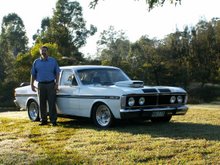
John Goss Specials were based on an XB Falcon 500 Hardtop 302ci with the GS Rally Pack added. This included a GT dash and steering wheel, GT style '12 Slotter' wheels, GT style bonnet with lockdowns, and GT side vents. Colour choice was limited to either Apollo Blue over white or Emerald Fire (green) over white Actual production numbers of these cars were never released by Ford, but media reports of the day place the total numbers of John Goss Specials produced at somewhere between 260 and 800.


Tuesday, December 05, 2006

Quotable quotes

A word of encouragement during a failure is worth more than an hour of success.
Anon.

300,000 Children in U.S. Found to Have Autism

by Shankar Vedantam Washington Post Staff Writer Friday, May 5, 2006;

About 300,000 American children have been diagnosed as having autism, according to the first comprehensive national surveys of the developmental disorder. Boys were four times more likely than girls to have the disorder, which is characterized by verbal, social and emotional problems. White families with higher incomes were also more likely to report having children with the disorder, a fact that federal experts said probably reflected unequal access to medical services.

The new data came in two surveys released yesterday by researchers at the Centers for Disease Control and Prevention, who said the numbers matched the range found by earlier studies that looked at smaller groups of people.

Autism has been dogged by controversy for more than a decade after what appeared to be a sharp increase in diagnoses in the 1990s. Many experts believe the increase reflects changes in diagnostic criteria adopted in 1994, increased public awareness of the problem, and the difficulties in telling apart a number of overlapping conditions that fall under an umbrella known as autism spectrum disorders. The new surveys show that Hispanics have a much lower autism rate than whites, but experts said that this probably reflected differences in access to care.

"This does provide important results on the need to consider autism may be under-diagnosed in certain populations," said Laura Schieve, an epidemiologist at the National Center on Birth Defects and Developmental Disabilities, at a teleconference organized by the CDC.

Schieve and José Cordero, director of the birth defects center, said both surveys showed some differences in autism prevalence by age group -- with children ages 6 to 11 more likely to be diagnosed than those ages 4 to 5. However, they said the differences were not statistically meaningful and could not address whether the decision to phase out the mercury-based preservative from children's vaccines in 1999 had led to a leveling off or fall in autism diagnoses.

Cordero said it was far more likely that the age-group differences in prevalence reflected the fact that many children are not diagnosed until they enter school and teachers recognize the problem. That means the number of diagnoses among the 4-to-5-year-olds in the surveys could rise as they enter school.

Goldstein said the racial and class differences in diagnoses reflected the fact that getting a diagnosis often requires that parents be effective advocates, at least in the years before children arrive in school.

"It's not like leukemia or a broken bone where a diagnosis will be made no matter what your social class is," said Goldstein, who is also a board member at Autism Speaks, an advocacy group focused on research and awareness. "You have to be an advocate."

Peter Bell, chief executive of the Cure Autism Now Foundation, an advocacy group, said the fact that some children do not get diagnosed before they reach school is troubling. Early diagnoses, he said, allow for early interventions, which are more effective.

Who built the first utility - where - when...


by Gary Warner


The story of the utility truck or coupé utility– the ute – began in 1932, when a letter was received by Ford Australia’s plant at Geelong, Victoria. It was written by a farmer’s wife who’d had enough of riding to church in the farm truck and arriving in saturated clothing;
‘Why don’t you build people like us a vehicle to go to church in on a Sunday, and which can carry our pigs to market on Mondays?’ her letter asked.


Bank managers at the time would lend money to farmers to buy a farm truck, but not a passenger car, hence the plea from one very fed up woman!


It arrived on the desk of managing director Hubert French who, instead of dictating a polite dismissal, passed the letter on to sales manager Scott Inglis.


He in turn showed it to plant superintendent Slim Westman, and the two of them took it to Ford Australia’s design department, which in 1932 consisted of one man…


Lewis Thornet Bandt was 22 years old and had already been singled out for bigger things with Ford.


Interviewed shortly before his death in 1987, Bandt recalled the moment when Westman and Inglis came to him with the letter.


The brochure for the first utility


"The whole thing had already started to germinate," said Bandt.
"Westman quite rightly reckoned that if we cut down a car and put a tray on the back, the whole thing would tear in half once there was weight in the back.


"I told him I would design it with a frame that came from the very back pillar, through to the central pillars, near the doors. I would arrange for another pillar to further strengthen that weak point where the cabin and tray joined. I said to Westman `Boss, them pigs are going to have a luxury ride around the city of Geelong!’ "


Bandt began by sketching the coupé utility on a 10 metre blackboard, depicting a front view as well as side and rear elevations. When they were seen by Westman some weeks later, he told Bandt to build two prototypes.


On a wheelbase of 112 inches, with a rear tray that was 5ft 5ins long and had a payload of 1200 pounds, they were the first vehicles to also offer a comfortable all-weather cabin.
On first sight of the prototypes, Scott Inglis authorised a startup production run of 500 vehicles. Westman asked for – and got - £10,000 for tooling, and the first coupé utilities rolled off the Geelong assembly line in 1934.


Born out of a woman’s frustration with car designs of the day, the enclosed cab utility was initially regarded as a luxury. But the `ute’ was quickly accepted as a necessity of bush life, and won recognition around the world as the ideal farmer’s or tradesman’s vehicle.


Epilogue:Lewis Thornet Bandt remained with Ford Australia until his retirement in 1976, after 48 years with the company. His career included designing long-range fuel tanks for Spitfire and Thunderbolt fighter planes in WW2, design innovations for the UK-sourced Ford Zephyr, the 1967 Australian Ford Fairlane, and the never-approved Falcon convertible, of which six were built outside Ford in 1962.


Eleven years into his retirement, Bandt died on March 18, 1987, in an accident near Geelong between a sand truck and the vintage Ford ute that Bandt had rebuilt for himself (rego number UT 001, pictured above). This talented Australian is survived by the legacy of his design, which wins new friends around the world every day.


Source/Bubliography;Ford Australia Public Relations, and A History of the Ford Motor Company in Australia, by Geoff Easdown.Published 1987 by Golden Press Pty Ltd.

Monday, December 04, 2006

Getting down to essentials

"Besides the noble art of getting things done, there is the noble art of leaving things undone. The wisdom of life consists in the elimination of non-essentials." -- Lin Yutang

Do you feel a desire to simplify your life?

If you say ‘yes,’ then set an intention to reduce the demands, stimuli, interruptions and busyness in your life. We each have the power to do this – we simply have to begin to say ‘no’ to those activities that don’t directly serve what we want for our lives.

Everyone of this planet deserves to have some free time to think, relax and have fun. If you long for this, begin now to clear your plate and allow a new level of experience to happen in your life. Take charge. Eliminate time wasters. Make some decisions about what matters to you.

"The ability to simplify means to eliminate the unnecessary so that the necessary may speak." -- Hans Hofmann

xw-xy gt pre purchase suggestions

Rust wise , check the following
*Boot Gutter
*Both sides lower rear window
*Sills inners & outers
*Torque Box behind front Bumper Bar
*Roof Gutters
*Dog Leg area inner & outer*
Plate section just behind front wheels on the inner gaurd
*Under the dash with a torch up in both sides.
*Bottom of A & B pillars
*Across the back of the fuel tank behind the Bumper .
*Around the back area of the rear wheel arches
*Inner & Outer of the lower rear 1/4
*All door corners & Lower front gaurds
*Around the Rear wheel Arches
*Under the Battery Tray area
*Across the front Edge(Seam)of the Firewall

Other things to look at would be to make sure that the shell is definately a 54H shell , things to look at are
*351 Radiator support (check for spot welds & Bracing in the top)
*Crossmember in the top has a stepped down plate instead of a flat plate.
*Factory dual exhaust Hangers on the rear .
*XW has a Extra tab with a spring to hold the left side handbrake cable above the muffler , Tab is spot welded in the Centre seat belt area under the car.
*check to make sure that the floor shift hole is Oxy cut out & look to make sure that it is to correct size .
*check firewall for 6cylinder accellerator bracket holes & also kickdown cable holes.
*Check position of rear door light switchesMechanical check these areas
*Check engine number to ID plate .
*Check for D-Block , Cleveland only
*Check gearbox casting dates & codes for correct fitment into these models .
*Check diff codes for the same above.
*Check inlet & exhaust manifold date codes .
*Check dizzy & carby date codes
*Check rear leaf springs should be 5 or 6 Leaf

Sunday, December 03, 2006

Food for Thought

I dreamed I stood in a studio
And watched two sculptors there,
The clay they used was a young child's mind
And they fashioned it with care.

One was a teacher; the tools being used
Were books and music and art,
One a parent with a guiding hand
And a gentle, loving heart.

Day after day the teacher toiled
With touch that was deft and sure,
While the parent laboured just as hard
And polished and smoothed it o'er.

When at last their task was doneT
hey were proud of what they had wrought,
For the things they had moulded into the child
Could neither be sold nor bought.

A nd both agreed they would have failed
If they had worked alone;
For behind the parent stood the school
And behind the teacher, the home.