How do we do this in a busy life? We set our priorities. Perhaps it means giving up a TV program or using a coffee break to grab a few moments of solitude. Perhaps we have to ask our partner, relative or neighbour to give us 30 minutes of time away from the kids. If we really want something, we can make it happen.
"Learn to pause... or nothing worthwhile will catch up to you." ….Doug King
Monday, March 12, 2007

Golf joke
After hitting his 7th ball into the water on the 4th hole, a father turns to his son and says, "It takes a lot of balls to play golf the way I do."
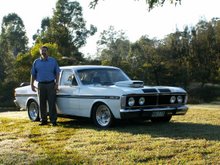
XA GT - RPO83

Due to the “Supercar” furore and the late decision to cancel the production of the Phase IV, Ford had a lot of special parts lying around, but with no car to put them on. In 1973, Ford decided it was time to retire the aging Phase III from the racing programme and start running the new XAGT models. However, if they were to be a force at Bathurst that year, they needed to homologate a number of performance parts. The solution was Regular Production Option (RPO) No. 83.
To meet the homologation requirements, Ford produced a total of just 250 XA GT “Specials” – including both sedan and hardtop versions – but did so very quietly and with no official press release, to avoid any negative public and political comment. In fact RPO 83 was a nil cost option, with the sedan costing $5087 and the hardtop $5203.
Externally, these cars were indistinguishable from standard GT’s. From the driver’s seat, the only tell-tale sign was the inclusion of a manual choke. However, when you lifted the bonnet, the major components of the RPO 83 option became apparent. The specials received the 780 cfm Holley carburettor and the fabricated extractor system originally destined for the Phase IV. Not so obvious was the modified sump, which although not the special “eared” sump of the Phase IV, did include additional baffles to help minimise oil surge.
While Ford refused to acknowledge that the cars produced more power, they did concede that the modifications were designed to improve mid-range torque. Road testers at the time indicated that the performance of the XA GT “Specials” was a dramatic improvement over the standard models, suggesting that the modifications provided an additional 30 to 40 bhp over the standard rating of 300 bhp.
The additional power and torque enabled the new cars to come close to the Phase III in terms of outright performance, with quarter mile times in the high 14’s (as opposed to mid 15’s) and a top speed of 140 mph (as opposed to 130 mph) being suggested.
Although quite a few of the RPO 83s were also fitted with power steering, everything else – spring ratings, transmission, diff, etc. – was the same as on the standard GTs. This also included the brakes and contrary to reports written in some more popular magazines, no production XA GT (including RPO 83s) came out with rear wheel disc brakes. The only XA GT I know of that was fitted with rear disc brakes was one of the race cars which had them fitted illegally. Interestingly enough, this car actually went through scrutineering without the rear discs being detected and it was only the fact that the car broke an axle and shed a wheel during the race, that the rear disc set-up became known to all and sundry.
While the majority of the cars were sold to people in the know, quite a number were also sold to buyers who knew nothing about the special significance of their vehicles. I believe that these buyers could have been forgiven for being a little confused when people were criticising the XA GTs for not being as quick as their XW or XY counterparts.
Today the RPO 83 is a much sort after model and brings a hefty price premium over the standard XA GT. The only major problem is finding one for sale.
No Parking Allowed!
By Matthew C. Horne, motivational speaker and leading authority in maximizing human potential and self- development. He is also the president of Optimum Success International and author of "A Massive Dose of Motivation”
My company motto is Your Best Life Possible Awaits You. I say this because your human potential is always beyond your past successes and failures. Your best life possible is what you're capable of living if your vision for your life is beyond the good and bad of your past.
Looking back when your future awaits you is what keeps people parked in life. Parking is an enemy to your limitless possibilities, and will undoubtedly keep you grounded in life. Anything which enters your life and forces you to swing the momentum away from your dream is what forces you to park.
I've made the vow to lose myself in my dream this year. I know that if I lose myself in my dream, then it will begin to make decisions for me which are in accordance with the actualization of my dream.
Your dream, when it consumes you, forms a protective barrier which sets off an alarm when anything poses a detriment to it! So, if you're immersed in your dream, then it becomes difficult to park because the momentum is pulling you in the direction of it constantly, and combating the hindering forces of mediocrity which want to steal your greatness.
Immersing yourself in your dream keeps you looking and moving forward at all times. This is why my favourite book says "Where there is no vision the people perish." Why? Our nature is to surpass any current standing, good or bad, and evolve into the divine beings we are. This occurs as we press towards different marks in life. Forget the good and bad of the past and press.
Never fear failure at the onset of any endeavour. We become discouraged in life when we fall short of our various marks, but if you look back you'll see clearly that every endeavour showed you things about yourself which are pivotal for you functioning at the level you are currently at. You never just stumble into situations in life; you're strategically placed into them with the design that they'll introduce you to some facet of yourself which is in accordance with the true you.
Any situation in life, if viewed correctly, will serve you and not be a deterrent if viewed with an optimistic perspective. There's good and bad in every situation in life. It's just a matter of the perspective you take when viewing the past which determines whether you park, or see the good and allow it to accelerate you towards your vision.
This day, this month, this year, this lifetime, fixate your own NO PARKING sign on your heart, and everything in your life will move you in the direction of your best life possible!
My company motto is Your Best Life Possible Awaits You. I say this because your human potential is always beyond your past successes and failures. Your best life possible is what you're capable of living if your vision for your life is beyond the good and bad of your past.
Looking back when your future awaits you is what keeps people parked in life. Parking is an enemy to your limitless possibilities, and will undoubtedly keep you grounded in life. Anything which enters your life and forces you to swing the momentum away from your dream is what forces you to park.
I've made the vow to lose myself in my dream this year. I know that if I lose myself in my dream, then it will begin to make decisions for me which are in accordance with the actualization of my dream.
Your dream, when it consumes you, forms a protective barrier which sets off an alarm when anything poses a detriment to it! So, if you're immersed in your dream, then it becomes difficult to park because the momentum is pulling you in the direction of it constantly, and combating the hindering forces of mediocrity which want to steal your greatness.
Immersing yourself in your dream keeps you looking and moving forward at all times. This is why my favourite book says "Where there is no vision the people perish." Why? Our nature is to surpass any current standing, good or bad, and evolve into the divine beings we are. This occurs as we press towards different marks in life. Forget the good and bad of the past and press.
Never fear failure at the onset of any endeavour. We become discouraged in life when we fall short of our various marks, but if you look back you'll see clearly that every endeavour showed you things about yourself which are pivotal for you functioning at the level you are currently at. You never just stumble into situations in life; you're strategically placed into them with the design that they'll introduce you to some facet of yourself which is in accordance with the true you.
Any situation in life, if viewed correctly, will serve you and not be a deterrent if viewed with an optimistic perspective. There's good and bad in every situation in life. It's just a matter of the perspective you take when viewing the past which determines whether you park, or see the good and allow it to accelerate you towards your vision.
This day, this month, this year, this lifetime, fixate your own NO PARKING sign on your heart, and everything in your life will move you in the direction of your best life possible!
One vs Ten
A Taliban was sitting in a cave when he hears over a dune the voice of one American solider: "One American solider is better then 10 Taliban fighters" so the Taliban angry sent over ten of his high-ranking soldiers. After a lot of gun fire and yelling and screams of agony the Taliban heard the voice again.
"One American solider is better then 100 Taliban fighters"
So the Taliban sends over 100 of his highest ranked soldiers sure of victory. After a lot of gun fire and yelling and screams of agony the Taliban heard the voice again. "One American solider is better then 1000 Taliban fighters"
So the Taliban sent his toughest, meanest, personal guards over the dune. After hundreds of bullets fired, and explosions and the screaming and crying, it was over.
The Taliban now wondering what happened goes over the dune where he finds a wounded Taliban solider who says "don't send anymore men it's really a trap there is really two of them!"
"One American solider is better then 100 Taliban fighters"
So the Taliban sends over 100 of his highest ranked soldiers sure of victory. After a lot of gun fire and yelling and screams of agony the Taliban heard the voice again. "One American solider is better then 1000 Taliban fighters"
So the Taliban sent his toughest, meanest, personal guards over the dune. After hundreds of bullets fired, and explosions and the screaming and crying, it was over.
The Taliban now wondering what happened goes over the dune where he finds a wounded Taliban solider who says "don't send anymore men it's really a trap there is really two of them!"


Sunday, March 11, 2007
Perfectionism
“We have the need to be accepted and to be loved by others, but we cannot accept and love ourselves. The more self-love we have, the less we will experience self-abuse. Self-abuse comes from self-rejection, and self-rejection comes from having an image of what it means to be perfect and never measuring up to that ideal. Our image of perfection is the reason we reject ourselves the way we are, and why we don't accept others the way they are.” - Don Miguel Ruiz
“The maxim ‘Nothing but perfection’ may be spelled ‘Paralysis.’” - Winston Churchill
“After enough mirror gazing, we all develop our ‘cosmic sense of humour.’ We no longer try to be perfect, or try to get all our work done in time. We become content with whatever life brings. Just to deal with what comes up without crucifying ourselves or others is enough of a challenge.” - Paul Ferrini
“Good enough never is.” - Debbi Fields
“The maxim ‘Nothing but perfection’ may be spelled ‘Paralysis.’” - Winston Churchill
“After enough mirror gazing, we all develop our ‘cosmic sense of humour.’ We no longer try to be perfect, or try to get all our work done in time. We become content with whatever life brings. Just to deal with what comes up without crucifying ourselves or others is enough of a challenge.” - Paul Ferrini
“Good enough never is.” - Debbi Fields
Mushroom
A mushroom walks into a bar; the bartender says to him, "sorry, we don’t serve your kind here!" The mushroom replies, "WHY? I'm a fun-gi" (fun-guy)
XA GT - A New Direction


In December 1971, production of the all new ‘Australian’ designed XA range of Falcons commenced and in keeping with tradition, a GT was included in the model range. Changes from the previous model were dramatic, with totally new and much sleeker body work covering only a mildly revised floor pan and mechanicals. Externally and internally, the XAGT was completely different from its predecessors in the way it looked and felt. Gone was the blunt, hard-edged styling that was first introduced with the XR range, being replaced with a much softer and smoother aerodynamic package.
Whilst the new model maintained the 111 in. wheelbase of the XY, the new XAs included increases in overall length (1.9 in.), width (1.2 in.), front track (1.6 in.), rear track (1.5 in.) and weight (14 lbs.). The only dimensional decreases, were to the overall height (1.9 in.) and ground clearance (0.75 in.).
To help distinguish the XAGT from other models in the range, the designers added functional bonnet scoops, fake air intakes on the front guards, bonnet blackouts and a black accent line that ran along the sills, over the guards and around the back of the car to include the rear indicator assemblies. In standard form, the quarter window was also removed, however you could order your car with quarter vents, if you liked.
As with the exterior, the interior also came in for some dramatic changes. Initially noticeable was the new wrap around style dash, which gave the driver the impression of sitting in the cockpit of a plane. The instrument panel was dominated by the large 140 MPH speedo and 8000 RPM tacho, with ancillary gauges for fuel, oil pressure, water temperature and battery charge located above. The new seats were of a high-backed design, which gave greater support and provided a built-in headrest.
Whilst the new model maintained the 111 in. wheelbase of the XY, the new XAs included increases in overall length (1.9 in.), width (1.2 in.), front track (1.6 in.), rear track (1.5 in.) and weight (14 lbs.). The only dimensional decreases, were to the overall height (1.9 in.) and ground clearance (0.75 in.).
To help distinguish the XAGT from other models in the range, the designers added functional bonnet scoops, fake air intakes on the front guards, bonnet blackouts and a black accent line that ran along the sills, over the guards and around the back of the car to include the rear indicator assemblies. In standard form, the quarter window was also removed, however you could order your car with quarter vents, if you liked.
As with the exterior, the interior also came in for some dramatic changes. Initially noticeable was the new wrap around style dash, which gave the driver the impression of sitting in the cockpit of a plane. The instrument panel was dominated by the large 140 MPH speedo and 8000 RPM tacho, with ancillary gauges for fuel, oil pressure, water temperature and battery charge located above. The new seats were of a high-backed design, which gave greater support and provided a built-in headrest.
Mechanically, the XAGT was almost identical to the XYGT when it was introduced, using the same fully imported 351 4V cleveland engine, although the 302 and 351 2V Cleveland V8 engines being put into the lesser models, were now being locally manufactured. Gearbox and differential combinations also remained the same, as did the front disc/rear drum setup, although the XAs now incorporated the brake proportioning valve setup previously found on the Phase II & III GTHOs. In keeping with the changes to the appearance and to help take advantage of the wider track, the suspension settings were softened to give a ride that was both less harsh and quieter.
The standard 16 gallon fuel tank found in the XY range was increased to 17.5 gallons for the XA, with the 36 gallon unit still being an option for the XAGT only. Standard wheels for the XAGT returned to the ‘12 slot’ design previously found on the early XWGTs but now being manufactured by ROH here in Australia. Tyres were still the ER 70 x 14 HR size Dunlop SP Sport (Aquajets) radial ply tyres. As with the XY Ford also continued the “Sports Road Wheels” as an option.
While the overall performance figures for the new GT were much the same as it’s predecessor, with a top speed of (122-129 MPH) and quarter mile times (15.1-15.8 sec.) there was actually an improvement over the XYGT in the 0-100 MPH tests, with the XAGT recording times around a second quicker (18.7-19.2 sec). Testers of the day put this improvement down to the new slippery shape.
The standard 16 gallon fuel tank found in the XY range was increased to 17.5 gallons for the XA, with the 36 gallon unit still being an option for the XAGT only. Standard wheels for the XAGT returned to the ‘12 slot’ design previously found on the early XWGTs but now being manufactured by ROH here in Australia. Tyres were still the ER 70 x 14 HR size Dunlop SP Sport (Aquajets) radial ply tyres. As with the XY Ford also continued the “Sports Road Wheels” as an option.
While the overall performance figures for the new GT were much the same as it’s predecessor, with a top speed of (122-129 MPH) and quarter mile times (15.1-15.8 sec.) there was actually an improvement over the XYGT in the 0-100 MPH tests, with the XAGT recording times around a second quicker (18.7-19.2 sec). Testers of the day put this improvement down to the new slippery shape.
The XAGT – HARDTOP
If the public were impressed with the new four door version of the XAGT, the two door version really knocked their socks off. Not since the XM-XP Falcon range had Ford produced a two door Falcon, however with the success of the Monaro and Charger, Ford needed a competitor to gain needed sales.
Dimensionally, the two door was the same as the four door, except for three areas; height (2 in. lower), width (3 in. wider) and weight (15 lbs. heavier). The extra width came at the rear wheel arches, which were aching for a decent set of wide wheels and tyres. Following the demise of the Phase IV, this was obviously going to be the weapon of choice for all Ford drivers.
If the public were impressed with the new four door version of the XAGT, the two door version really knocked their socks off. Not since the XM-XP Falcon range had Ford produced a two door Falcon, however with the success of the Monaro and Charger, Ford needed a competitor to gain needed sales.
Dimensionally, the two door was the same as the four door, except for three areas; height (2 in. lower), width (3 in. wider) and weight (15 lbs. heavier). The extra width came at the rear wheel arches, which were aching for a decent set of wide wheels and tyres. Following the demise of the Phase IV, this was obviously going to be the weapon of choice for all Ford drivers.
Cosmetically, there was little difference – apart from the obvious – between the two models, however the rear of the hardtop was sharply chopped and tail lights were of a recessed design. Production of the XAGTs commenced in December 1971 for the four door models and July 1972 for the two door models, with production for both ceasing in September 1973. Total production of XAGTs was 2759, with 891 of these being hardtops.
Saturday, March 10, 2007
Later Globes

Later Bathurst Globes, those offered as Option 54 on XBs, and those fitted to XC Cobras, all had the larger - 2.75 inch - centre hub holes, and required a larger centre cap with a much less ‘domed’ appearance and smaller screw ‘tabs’.
Taken from Catholic school exam papers
1. IN THE FIRST BOOK OF THE BIBLE, GUINESSIS. GOD GOT TIRED OF CREATING THE WORLD SO HE TOOK THE SABBATH OFF.
2. ADAM AND EVE WERE CREATED FROM AN APPLE TREE. NOAH'S WIFE WAS JOAN OF ARK. NOAH BUILT AND ARK AND THE ANIMALS CAME ON IN PEARS.
3. THE JEWS WERE A PROUD PEOPLE AND THROUGHOUT HISTORY THEY HAD TROUBLE WITH UNSYMPATHETIC GENITALS.
4. SAMPSON WAS A STRONGMAN WHO LET HIMSELF BE LED ASTRAY BY A JEZEBEL LIKE DELILAH.
5. SAMSON SLAYED THE PHILISTINES WITH THE AXE OF THE APOSTLES.
6. MOSES LED THE JEWS TO THE RED SEA WHERE THEY MADE UNLEAVENED BREAD WHICH IS BREAD WITHOUT ANY INGREDIENTS.
7. THE EGYPTIANS WERE ALL DROWNED IN THE DESSERT. AFTERWARDS, MOSES WENT UP TO MOUNT CYANIDE TO GET THE TEN COMMANDMENTS.
8. THE FIRST COMMANDMENTS WAS WHEN EVE TOLD ADAM TO EAT THE APPLE.
9. THE SEVENTH COMMANDMENT IS THOU SHALT NOT ADMIT ADULTERY.
10. MOSES DIED BEFORE HE EVER REACHED CANADA . THEN JOSHUA LED THE HEBREWS IN THE BATTLE OF GERITOL.
11. THE GREATEST MIRICLE IN THE BIBLE IS WHEN JOSHUA TOLD HIS SON TO STAND STILL AND HE OBEYED HIM.
12. DAVID WAS A HEBREW KING WHO WAS SKILLED AT PLAYING THE LIAR. HE FOUGHT THE FINKELSTEINS, A RACE OF PEOPLE WHO LIVED IN BIBLICAL TIMES.
13. SOLOMON, ONE OF DAVIDS SONS, HAD 300 WIVES AND 700 PORCUPINES.
14. WHEN MARY HEARD SHE WAS THE MOTHER OF JESUS, SHE SANG THE MAGNA CARTA.
15. WHEN THE THREE WISE GUYS FROM THE EAST SIDE ARRIVED THEY FOUND JESUS IN THE MANAGER.
16. JESUS WAS BORN BECAUSE MARY HAD AN IMMACULATE CONTRAPTION.
17. ST. JOHN THE BLACKSMITH DUMPED WATER ON HIS HEAD.
18. JESUS ENUNCIATED THE GOLDEN RULE, WHICH SAYS TO DO UNTO OTHERS BEFORE THEY DO ONE TO YOU. HE ALSO EXPLAINED A MAN DOTH NOT LIVE BY SWEAT ALONE.
19. IT WAS A MIRICLE WHEN JESUS ROSE FROM THE DEAD AND MANAGED TO GET THE TOMBSTONE OFF THE ENTRANCE.
20. THE PEOPLE WHO FOLLOWED THE LORD WERE CALLED THE 12 DECIBELS.
21. THE EPISTELS WERE THE WIVES OF THE APOSTLES.
22. ONE OF THE OPPOSSUMS WAS ST. MATTHEW WHO WAS ALSO A TAXIMAN.
23. ST. PAUL CAVORTED TO CHRISTIANITY, HE PREACHED HOLY ACRIMONY WHICH IS ANOTHER NAME FOR MARRAIGE.
24. CHRISTIANS HAVE ONLY ONE SPOUSE. THIS IS CALLED MONOTONY.
2. ADAM AND EVE WERE CREATED FROM AN APPLE TREE. NOAH'S WIFE WAS JOAN OF ARK. NOAH BUILT AND ARK AND THE ANIMALS CAME ON IN PEARS.
3. THE JEWS WERE A PROUD PEOPLE AND THROUGHOUT HISTORY THEY HAD TROUBLE WITH UNSYMPATHETIC GENITALS.
4. SAMPSON WAS A STRONGMAN WHO LET HIMSELF BE LED ASTRAY BY A JEZEBEL LIKE DELILAH.
5. SAMSON SLAYED THE PHILISTINES WITH THE AXE OF THE APOSTLES.
6. MOSES LED THE JEWS TO THE RED SEA WHERE THEY MADE UNLEAVENED BREAD WHICH IS BREAD WITHOUT ANY INGREDIENTS.
7. THE EGYPTIANS WERE ALL DROWNED IN THE DESSERT. AFTERWARDS, MOSES WENT UP TO MOUNT CYANIDE TO GET THE TEN COMMANDMENTS.
8. THE FIRST COMMANDMENTS WAS WHEN EVE TOLD ADAM TO EAT THE APPLE.
9. THE SEVENTH COMMANDMENT IS THOU SHALT NOT ADMIT ADULTERY.
10. MOSES DIED BEFORE HE EVER REACHED CANADA . THEN JOSHUA LED THE HEBREWS IN THE BATTLE OF GERITOL.
11. THE GREATEST MIRICLE IN THE BIBLE IS WHEN JOSHUA TOLD HIS SON TO STAND STILL AND HE OBEYED HIM.
12. DAVID WAS A HEBREW KING WHO WAS SKILLED AT PLAYING THE LIAR. HE FOUGHT THE FINKELSTEINS, A RACE OF PEOPLE WHO LIVED IN BIBLICAL TIMES.
13. SOLOMON, ONE OF DAVIDS SONS, HAD 300 WIVES AND 700 PORCUPINES.
14. WHEN MARY HEARD SHE WAS THE MOTHER OF JESUS, SHE SANG THE MAGNA CARTA.
15. WHEN THE THREE WISE GUYS FROM THE EAST SIDE ARRIVED THEY FOUND JESUS IN THE MANAGER.
16. JESUS WAS BORN BECAUSE MARY HAD AN IMMACULATE CONTRAPTION.
17. ST. JOHN THE BLACKSMITH DUMPED WATER ON HIS HEAD.
18. JESUS ENUNCIATED THE GOLDEN RULE, WHICH SAYS TO DO UNTO OTHERS BEFORE THEY DO ONE TO YOU. HE ALSO EXPLAINED A MAN DOTH NOT LIVE BY SWEAT ALONE.
19. IT WAS A MIRICLE WHEN JESUS ROSE FROM THE DEAD AND MANAGED TO GET THE TOMBSTONE OFF THE ENTRANCE.
20. THE PEOPLE WHO FOLLOWED THE LORD WERE CALLED THE 12 DECIBELS.
21. THE EPISTELS WERE THE WIVES OF THE APOSTLES.
22. ONE OF THE OPPOSSUMS WAS ST. MATTHEW WHO WAS ALSO A TAXIMAN.
23. ST. PAUL CAVORTED TO CHRISTIANITY, HE PREACHED HOLY ACRIMONY WHICH IS ANOTHER NAME FOR MARRAIGE.
24. CHRISTIANS HAVE ONLY ONE SPOUSE. THIS IS CALLED MONOTONY.
EVER WONDER
- Why the sun lightens our hair, but darkens our skin?-
- Why women can't put on mascara with their mouth closed?-
- Why don't you ever see the headline "Psychic Wins Lottery"?-
- Why is "abbreviated" such a long word?-
- Why is it that doctors call what they do "practice"?-
- Why is it that to stop Windows 98, you have to click on "Start"?-
- Why is lemon juice made with artificial flavor, and dishwashing liquid- made with real lemons?-
- Why is the man who invests all your money called a broker?-
- Why is the time of day with the slowest traffic called rush hour?-
- Why isn't there mouse-flavored cat food?-
- When dog food is new and improved tasting, who tests it?-
- Why didn't Noah swat those two mosquitoes?-
- Why do they sterilize the needle for lethal injections?-
- You know that indestructible black box that is used on airplanes? Why- don't they make the whole plane out of that stuff?-
- Why don't sheep shrink when it rains?-
- Why are they called apartments when they are all stuck together?-
- If con is the opposite of pro, is Congress the opposite of progress?-
- If flying is so safe, why do they call the airport the terminal?
- Why women can't put on mascara with their mouth closed?-
- Why don't you ever see the headline "Psychic Wins Lottery"?-
- Why is "abbreviated" such a long word?-
- Why is it that doctors call what they do "practice"?-
- Why is it that to stop Windows 98, you have to click on "Start"?-
- Why is lemon juice made with artificial flavor, and dishwashing liquid- made with real lemons?-
- Why is the man who invests all your money called a broker?-
- Why is the time of day with the slowest traffic called rush hour?-
- Why isn't there mouse-flavored cat food?-
- When dog food is new and improved tasting, who tests it?-
- Why didn't Noah swat those two mosquitoes?-
- Why do they sterilize the needle for lethal injections?-
- You know that indestructible black box that is used on airplanes? Why- don't they make the whole plane out of that stuff?-
- Why don't sheep shrink when it rains?-
- Why are they called apartments when they are all stuck together?-
- If con is the opposite of pro, is Congress the opposite of progress?-
- If flying is so safe, why do they call the airport the terminal?

Friday, March 09, 2007
Some school ideas to consider:
1.Rave Reading Reviews – Staff members chose books they remember reading at primary school and write reviews. Post their pictures next to their reviews in the main hallway for a couple of weeks. Then, in order to tease students to read their teachers' reviews, why not ask kids to answer questions about who said what about which book.
2. Individual student goal setting - Each student's picture is taken and placed on the veranda outside each classroom . It remains there for the length of time of their current unit of work. Students and their teachers set individual program goals at the start of every term and check at the end of the term to see if these have been achieved.
2. Individual student goal setting - Each student's picture is taken and placed on the veranda outside each classroom . It remains there for the length of time of their current unit of work. Students and their teachers set individual program goals at the start of every term and check at the end of the term to see if these have been achieved.
You Don't Need to Be a Weatherman...
It was two o'clock in the morning and a husband and wife were asleep, when suddenly the phone rang. The husband picked up the phone and said, "Hello? ... How the heck do I know? What am I, the weather man?" -- and promptly slammed the phone down.
His wife rolls over and asks, "Who was that?"
The husband replies, I don’t know. Some guy who wanted to know if the coast was clear."
His wife rolls over and asks, "Who was that?"
The husband replies, I don’t know. Some guy who wanted to know if the coast was clear."
XW GT - The Super Roo


Following the sales success of both the XR and XT GTs, Ford Australia decided that the GT would continue in its upcoming model and in May 1969, production of the XW GT - flagship of the XW Falcon range - commenced. However the new GT was a far cry from the relatively subdued XT GT.
The new model was much bolder and meaner looking, with a new front and rear end treatment, a large range of striking colours, blackouts around the doors and on the bonnet, bonnet scoop, driving lights, chrome strips, badges on the guards and boot lid, a big wide stripe down each side and a decal of a V8 powered kangaroo burning rubber, described as the Super Roo. The new GT certainly made an impact and was not the type of car for those looking for anonymity.
Mechanically, the 302 cu.in. V8 in the XT GT was initially replaced by the larger and more powerful 351 cu.in. version of the Windsor motor. This increase in size, along with compression being raised from 10 to 1, to 10.7 to 1, increased engine power from 230 HP at 4800 rpm to 290 HP at 4800 rpm and torque from 310 lbs/ft at 3800 rpm to 385 lbs/ft at 3800 rpm. To handle the extra power and torque, the XW GT received the venerable Ford 9 inch limited slip diff, running 3.25:1 gears. As with the XT GT, automatic transmission was also available in the XW GT, however the stronger FMX auto replaced the C4 auto of the previous model.
With the growing importance of the Bathurst race, a number of other changes were made to improve the XW GTs race winning potential. These included stiffer suspension, 11.25 in. ventilated front disc brakes and an enormous 36 gallon fuel tank - obviously to minimise fuel stops in the great race. Wheels and tyres were also upgraded to 6.0 in. wide Kelsey Hayes riveted ‘12 slot’ rims running ER 70 x 14 HR Dunlop SP or Olympic ‘Wide Ride’ radial ply tyres.
Although these changes made the new GT a much more performance oriented vehicle than it’s predecessor, the XW GTs increased weight ensured that its top speed (125-130 MPH) and quarter mile times (15.5-16.0 sec.) were very similar to those of the XT GT. Only in the 0-100 MPH times (20.3-20.9 sec) did the XW GT show its potential, being around 3 sec. quicker than the XT GT.
It is generally accepted that Windsor powered XW GTs were produced up until the end of February 1970, with total production up to this point being 1268 vehicles. The exact change over date for the Cleveland engine is however unclear and some may have continued into March 1970. At a cost of only $4250 incl. tax, the new GT was considered by ‘Wheels’ magazine, to be “the best performance bargain in Australia”.
As good as the new model was, the factory wanted something better to race at Bathurst and so an even more potent version - the XW GTHO - was developed.
THE GTHO
Production of the XW GTHO - with HO standing for Handling Option (not High Output) - commenced in July 1969. Changes from the standard model included replacing the cast iron inlet manifold and Autolite 450 cfm carburettor with a Ford (Buddy Bar) aluminium inlet manifold and 600cfm Holley carburettor (similar to the one used on the 390 Mustang GT), a bigger cam, heavy duty alternator, a 3 in. tailshaft, bigger front sway bar and a rear sway bar. For marketing reasons, Ford still claimed only 290 bhp for the GTHO - the same as for the standard XW GT, even though it was obviously more powerful. So special was the GTHO, that Ford gave it a different model number (18939) compared to the standard GT (18938). Interestingly, this convention was not carried through to the Phase 3, with the XY GT and HO of that year, having the same model number. More about the vagaries of model numbers for a later issue.
Although top speed for the GTHO (130 MPH) was similar to the standard model, how it got there was a vast improvement over the GT. The quarter mile times (14.4-15.0 sec.) show a dramatic improvement over the GT, with the 0-100 MPH times (16.7-16.8 sec) confirming its acceleration capabilities.
Having produced a 1-2-3 victory at the Sandown 3 Hour race only weeks before, great things were expected of the GTHO at Bathurst, on that first weekend in October. Everything looked good in practice and qualifying. The Geoghegan brothers took pole position with a time of 2:48.9 sec. - nearly 8 sec. faster than in 1968 - and the GTHOs were able to reach 136 MPH down Conrod Straight, compared to 130 MPH for the Monaros.
Unfortunately history shows that even the best laid plans can often go astray. Apart from a massive accident on the first lap, where Bill Brown rolled his GTHO coming off the top Skyline, the main thing that stopped a Ford victory on the day of the big race, was the selection of untried Goodyear racing rubber by the Ford works racing team manager Al Turner. A non-factory GTHO driven by running XAS Michelins almost took out the race and finished 2nd by only 44 seconds.
Where the Monaros were lapping in 2:55s, the GTHOs were lapping in 2:52s. Interestingly, Ford - quick to try to negate the effect of their loss to Holden - ran an advertising campaign which showed a photo of destroyed Goodyear tyres in front of a GTHO having its rear tyres replaced and with the caption "We were a little deflated".
Production of Windsor powered GTHOs stopped in December 1969 with a total of around 260 being built - making them one of the rarest GTs. Cost of the GTHO was only $4495 - just $245 more than the standard model - to ensure that it was still eligible for Class D ($3100-$4500) at Bathurst. If ‘Wheels’ considered the GT to be a bargain, then the GTHO must have been a steal.
Unfortunately, the original GTHO will always be remembered as the car that lost Bathurst, even though it was a winner on the road. Such was the demand for the GTHO, that in early 1970 - prior to the introduction of the Phase 2, Ford produced around 57 GTHOs using the Phase 1 running gear, but with a standard ‘Cleveland’ 351 4V engine. Commonly refereed to as Phase 11/2s, these are some of the rarest of the full production GTs.
The CLEVELAND
The ‘Cleveland’ designation for the 351 cu. in. motor fitted to XW GTs built from March 1970, comes from the location of the engine plant where they were originally assembled; Cleveland, Ohio, in the USA. (Windsor motors were assembled in
Windsor, Ontario, in Canada) Although having the same capacity, bore and stroke as the 351W, the 351C was a completely different motor, with completely different characteristics. Where the ‘Windsor’ was designed to be very robust and torquey, the 4V ‘Cleveland’ as used in the GT was designed more with outright performance (horsepower) in mind. Revised sizing of journals and extra large intake and exhaust valves and ports enabled the new motor to rev a lot harder than the previous one.
Mechanically, the 351C had an increased compression ratio of 11 to 1, provided peak power of 300 BHP at 5400 rpm (10 BHP more than the 351W at 600 RPM higher) and peak torque of 380 lbs/ft at 3400 rpm (5 lbs/ft less than the 351W at 400 RPM lower). With the extra power Ford decided to lower the diff ratio from, 3.25:1 to 3.00:1.
Apart from the engine, the only other obvious changes were to the tachometer (increased from 6000 RPM to 8000 RPM) and the oil pressure gauge (increased from 80 psi to 100 psi). Although initially fitted with the Kelsey Hayes riveted ‘12 slot’ rims, in May 1970 Ford introduced the Kelsey Hayes riveted ‘5 slot’ rims, still running ER 70 x 14 HR Dunlop SP or Olympic ‘Wide Ride’ radial ply tyres. Performance of the Cleveland powered XW GTs was similar to the Windsor powered ones. Although the change in diff ratios ensured a slightly higher top speed (130-135 MPH) for the Cleveland powered XW GTs, it also meant that acceleration figures remained fairly similar..
Having commenced in March, production of the Cleveland powered XW GTs continued on until some time in October 1970, with total production up to this point being around 1019 vehicles. With the production of XY falcons commencing in September 1970, it is interesting to note that some of the late XWs were fitted with XY radiator support panels whilst some early XYs were fitted with XW radiator support panels.
With the failure of the XW GTHO (Phase I) to win at Bathurst in 1969 (although not the fault of the car), Ford decided to go all out in developing its new Bathurst weapon, the Cleveland powered XW GTHO (Phase II).
THE GTHO (Phase II)
Production of the XW GTHO (Phase II) commenced in June 1970. Changes from the standard model included modifying the cast iron inlet manifold and replacing the Autolite 450 cfm carburettor with a Ford 750cfm Holley carburettor, a fairly lumpy solid cam with coresponding upgrades to the valve train, heavy duty alternator, a 31/2 in. tailshaft with larger universal joints, bigger front sway bar and a rear sway bar, revised front and rear spring rates, unique upper control arm and spindle to provide an increased front track, 31 spline close ratio gearbox, 3.50:1 diff with nodular iron housing and 31 spline axles and 21/2 in. wide and finned rear drums. For marketing reasons, Ford still claimed only 300 bhp for the GTHO - the same as for the standard Cleveland XW GT, even though it was much more powerful.
Even with the lower diff ratio, top speed for the new GTHO was improved (135-144 MPH). Although acceleration for the new GTHO was also a vast improvement over the standard GT the quarter mile times provided by the testers of the day were fairly inconsistent (14.2-15.2 sec.). Interestingly, these figures along with the 0-100 MPH times (16.7 sec) were almost identical to those of the Phase I. In fact the Phase I was equally as good as the Phase II in many respects, much to the surprise I’m sure, of a lot of you.
BATHURST 1970
Although Moffat provided a win in the Sandown 250 race only weeks before, mechanical problems plagued the rest of the HOs entered and this lack of reliability of the new HO provided some concern to the Ford camp in the lead up to Bathurst. But they should not have worried, as the mountain is a place where the Fords excel. As in 1969, everything looked good in practice and qualifying. The new GTHOs filled the first three positions on the grid, with Moffat taking pole with a time of of 2min 49.0sec.; surprisingly slower than Geoghegan’s time of 2 min 48.9sec. in 1969.
With the experience of 1969 behind them and no untried Goodyear racing rubber the factory GTHOs driven by Moffat and McPhee, ran faultlessly all day and although having a good battle with the XU-1 Toranas of Bond and Chivas, were able to make it a Ford 1-2 victory. Moffat also set a new Class E race lap record of 2 min 55.0sec, again slower than his Class D race lap record of 2 min 52.1sec set in the Phase I.
Official records indicate that production of the proper Phase II GTHOs stopped in October 1970 with a total of around 292 (not including the Phase 11/2’s) being built. Cost of the Phase II was only $4790 - just $425 more than the standard model.
With the push towards total performance, production racing wasn’t the only area of motor sport that Ford was interested in. With Ian (Pete) Geoghegan and Moffat having had a great deal of success in touring class racing with their Mustangs, Ford decided to develop their own car for improved production. The car that we all know of as the Geoghegan Super Falcon, actually started life as an XW GTHO. Two cars were originally built, with one for use by Moffat (see photos).
As can be seen from the picture of the engine bay, with the fuel injection pipes sticking up, this was a car that meant business. Ford spent a lot of money developing these cars, and although they proved to be very quick, they were unfortunately also a little unreliable.
Whilst the original GTHO will always be remembered as the car that lost Bathurst, the Phase II was the one that restored the faith in the Ford hierarchy of the benefits that could be achieved from an involvement in motorsport - “Win on Sunday, Sell on Monday”.
With success at the mountain and a new model (XY) being released to the public with rave reviews (especially the ‘Shaker’ XYGT), Ford could do no wrong. As good as the Phase I and II had been, Ford had something better waiting in the wings. In late 1970, the first XYGT buyers had the opportunity to get a taste for what was to come. They could order, as a $425 option, a Phase II engine for their XYGT. Now that would have been an interesting proposition.
The new model was much bolder and meaner looking, with a new front and rear end treatment, a large range of striking colours, blackouts around the doors and on the bonnet, bonnet scoop, driving lights, chrome strips, badges on the guards and boot lid, a big wide stripe down each side and a decal of a V8 powered kangaroo burning rubber, described as the Super Roo. The new GT certainly made an impact and was not the type of car for those looking for anonymity.
Mechanically, the 302 cu.in. V8 in the XT GT was initially replaced by the larger and more powerful 351 cu.in. version of the Windsor motor. This increase in size, along with compression being raised from 10 to 1, to 10.7 to 1, increased engine power from 230 HP at 4800 rpm to 290 HP at 4800 rpm and torque from 310 lbs/ft at 3800 rpm to 385 lbs/ft at 3800 rpm. To handle the extra power and torque, the XW GT received the venerable Ford 9 inch limited slip diff, running 3.25:1 gears. As with the XT GT, automatic transmission was also available in the XW GT, however the stronger FMX auto replaced the C4 auto of the previous model.
With the growing importance of the Bathurst race, a number of other changes were made to improve the XW GTs race winning potential. These included stiffer suspension, 11.25 in. ventilated front disc brakes and an enormous 36 gallon fuel tank - obviously to minimise fuel stops in the great race. Wheels and tyres were also upgraded to 6.0 in. wide Kelsey Hayes riveted ‘12 slot’ rims running ER 70 x 14 HR Dunlop SP or Olympic ‘Wide Ride’ radial ply tyres.
Although these changes made the new GT a much more performance oriented vehicle than it’s predecessor, the XW GTs increased weight ensured that its top speed (125-130 MPH) and quarter mile times (15.5-16.0 sec.) were very similar to those of the XT GT. Only in the 0-100 MPH times (20.3-20.9 sec) did the XW GT show its potential, being around 3 sec. quicker than the XT GT.
It is generally accepted that Windsor powered XW GTs were produced up until the end of February 1970, with total production up to this point being 1268 vehicles. The exact change over date for the Cleveland engine is however unclear and some may have continued into March 1970. At a cost of only $4250 incl. tax, the new GT was considered by ‘Wheels’ magazine, to be “the best performance bargain in Australia”.
As good as the new model was, the factory wanted something better to race at Bathurst and so an even more potent version - the XW GTHO - was developed.
THE GTHO
Production of the XW GTHO - with HO standing for Handling Option (not High Output) - commenced in July 1969. Changes from the standard model included replacing the cast iron inlet manifold and Autolite 450 cfm carburettor with a Ford (Buddy Bar) aluminium inlet manifold and 600cfm Holley carburettor (similar to the one used on the 390 Mustang GT), a bigger cam, heavy duty alternator, a 3 in. tailshaft, bigger front sway bar and a rear sway bar. For marketing reasons, Ford still claimed only 290 bhp for the GTHO - the same as for the standard XW GT, even though it was obviously more powerful. So special was the GTHO, that Ford gave it a different model number (18939) compared to the standard GT (18938). Interestingly, this convention was not carried through to the Phase 3, with the XY GT and HO of that year, having the same model number. More about the vagaries of model numbers for a later issue.
Although top speed for the GTHO (130 MPH) was similar to the standard model, how it got there was a vast improvement over the GT. The quarter mile times (14.4-15.0 sec.) show a dramatic improvement over the GT, with the 0-100 MPH times (16.7-16.8 sec) confirming its acceleration capabilities.
Having produced a 1-2-3 victory at the Sandown 3 Hour race only weeks before, great things were expected of the GTHO at Bathurst, on that first weekend in October. Everything looked good in practice and qualifying. The Geoghegan brothers took pole position with a time of 2:48.9 sec. - nearly 8 sec. faster than in 1968 - and the GTHOs were able to reach 136 MPH down Conrod Straight, compared to 130 MPH for the Monaros.
Unfortunately history shows that even the best laid plans can often go astray. Apart from a massive accident on the first lap, where Bill Brown rolled his GTHO coming off the top Skyline, the main thing that stopped a Ford victory on the day of the big race, was the selection of untried Goodyear racing rubber by the Ford works racing team manager Al Turner. A non-factory GTHO driven by running XAS Michelins almost took out the race and finished 2nd by only 44 seconds.
Where the Monaros were lapping in 2:55s, the GTHOs were lapping in 2:52s. Interestingly, Ford - quick to try to negate the effect of their loss to Holden - ran an advertising campaign which showed a photo of destroyed Goodyear tyres in front of a GTHO having its rear tyres replaced and with the caption "We were a little deflated".
Production of Windsor powered GTHOs stopped in December 1969 with a total of around 260 being built - making them one of the rarest GTs. Cost of the GTHO was only $4495 - just $245 more than the standard model - to ensure that it was still eligible for Class D ($3100-$4500) at Bathurst. If ‘Wheels’ considered the GT to be a bargain, then the GTHO must have been a steal.
Unfortunately, the original GTHO will always be remembered as the car that lost Bathurst, even though it was a winner on the road. Such was the demand for the GTHO, that in early 1970 - prior to the introduction of the Phase 2, Ford produced around 57 GTHOs using the Phase 1 running gear, but with a standard ‘Cleveland’ 351 4V engine. Commonly refereed to as Phase 11/2s, these are some of the rarest of the full production GTs.
The CLEVELAND
The ‘Cleveland’ designation for the 351 cu. in. motor fitted to XW GTs built from March 1970, comes from the location of the engine plant where they were originally assembled; Cleveland, Ohio, in the USA. (Windsor motors were assembled in
Windsor, Ontario, in Canada) Although having the same capacity, bore and stroke as the 351W, the 351C was a completely different motor, with completely different characteristics. Where the ‘Windsor’ was designed to be very robust and torquey, the 4V ‘Cleveland’ as used in the GT was designed more with outright performance (horsepower) in mind. Revised sizing of journals and extra large intake and exhaust valves and ports enabled the new motor to rev a lot harder than the previous one.
Mechanically, the 351C had an increased compression ratio of 11 to 1, provided peak power of 300 BHP at 5400 rpm (10 BHP more than the 351W at 600 RPM higher) and peak torque of 380 lbs/ft at 3400 rpm (5 lbs/ft less than the 351W at 400 RPM lower). With the extra power Ford decided to lower the diff ratio from, 3.25:1 to 3.00:1.
Apart from the engine, the only other obvious changes were to the tachometer (increased from 6000 RPM to 8000 RPM) and the oil pressure gauge (increased from 80 psi to 100 psi). Although initially fitted with the Kelsey Hayes riveted ‘12 slot’ rims, in May 1970 Ford introduced the Kelsey Hayes riveted ‘5 slot’ rims, still running ER 70 x 14 HR Dunlop SP or Olympic ‘Wide Ride’ radial ply tyres. Performance of the Cleveland powered XW GTs was similar to the Windsor powered ones. Although the change in diff ratios ensured a slightly higher top speed (130-135 MPH) for the Cleveland powered XW GTs, it also meant that acceleration figures remained fairly similar..
Having commenced in March, production of the Cleveland powered XW GTs continued on until some time in October 1970, with total production up to this point being around 1019 vehicles. With the production of XY falcons commencing in September 1970, it is interesting to note that some of the late XWs were fitted with XY radiator support panels whilst some early XYs were fitted with XW radiator support panels.
With the failure of the XW GTHO (Phase I) to win at Bathurst in 1969 (although not the fault of the car), Ford decided to go all out in developing its new Bathurst weapon, the Cleveland powered XW GTHO (Phase II).
THE GTHO (Phase II)
Production of the XW GTHO (Phase II) commenced in June 1970. Changes from the standard model included modifying the cast iron inlet manifold and replacing the Autolite 450 cfm carburettor with a Ford 750cfm Holley carburettor, a fairly lumpy solid cam with coresponding upgrades to the valve train, heavy duty alternator, a 31/2 in. tailshaft with larger universal joints, bigger front sway bar and a rear sway bar, revised front and rear spring rates, unique upper control arm and spindle to provide an increased front track, 31 spline close ratio gearbox, 3.50:1 diff with nodular iron housing and 31 spline axles and 21/2 in. wide and finned rear drums. For marketing reasons, Ford still claimed only 300 bhp for the GTHO - the same as for the standard Cleveland XW GT, even though it was much more powerful.
Even with the lower diff ratio, top speed for the new GTHO was improved (135-144 MPH). Although acceleration for the new GTHO was also a vast improvement over the standard GT the quarter mile times provided by the testers of the day were fairly inconsistent (14.2-15.2 sec.). Interestingly, these figures along with the 0-100 MPH times (16.7 sec) were almost identical to those of the Phase I. In fact the Phase I was equally as good as the Phase II in many respects, much to the surprise I’m sure, of a lot of you.
BATHURST 1970
Although Moffat provided a win in the Sandown 250 race only weeks before, mechanical problems plagued the rest of the HOs entered and this lack of reliability of the new HO provided some concern to the Ford camp in the lead up to Bathurst. But they should not have worried, as the mountain is a place where the Fords excel. As in 1969, everything looked good in practice and qualifying. The new GTHOs filled the first three positions on the grid, with Moffat taking pole with a time of of 2min 49.0sec.; surprisingly slower than Geoghegan’s time of 2 min 48.9sec. in 1969.
With the experience of 1969 behind them and no untried Goodyear racing rubber the factory GTHOs driven by Moffat and McPhee, ran faultlessly all day and although having a good battle with the XU-1 Toranas of Bond and Chivas, were able to make it a Ford 1-2 victory. Moffat also set a new Class E race lap record of 2 min 55.0sec, again slower than his Class D race lap record of 2 min 52.1sec set in the Phase I.
Official records indicate that production of the proper Phase II GTHOs stopped in October 1970 with a total of around 292 (not including the Phase 11/2’s) being built. Cost of the Phase II was only $4790 - just $425 more than the standard model.
With the push towards total performance, production racing wasn’t the only area of motor sport that Ford was interested in. With Ian (Pete) Geoghegan and Moffat having had a great deal of success in touring class racing with their Mustangs, Ford decided to develop their own car for improved production. The car that we all know of as the Geoghegan Super Falcon, actually started life as an XW GTHO. Two cars were originally built, with one for use by Moffat (see photos).
As can be seen from the picture of the engine bay, with the fuel injection pipes sticking up, this was a car that meant business. Ford spent a lot of money developing these cars, and although they proved to be very quick, they were unfortunately also a little unreliable.
Whilst the original GTHO will always be remembered as the car that lost Bathurst, the Phase II was the one that restored the faith in the Ford hierarchy of the benefits that could be achieved from an involvement in motorsport - “Win on Sunday, Sell on Monday”.
With success at the mountain and a new model (XY) being released to the public with rave reviews (especially the ‘Shaker’ XYGT), Ford could do no wrong. As good as the Phase I and II had been, Ford had something better waiting in the wings. In late 1970, the first XYGT buyers had the opportunity to get a taste for what was to come. They could order, as a $425 option, a Phase II engine for their XYGT. Now that would have been an interesting proposition.
Thursday, March 08, 2007
Problems
"If you start to think the problem is “out there”, stop yourself. That thought is the problem.” Stephen Covey
Cowpoke (no, not Brokeback Mountain...)
Read this from Readers Digest a long time ago: One day a Cowpoke riding the plains, came upon a warrior with his head down on the ground with his ear on a wagon track, the warrior looked up at the cowpoke and said" Wagon with two horses, one black, one white, man with beard drive, smoke pipe, women ride, wear blue dress with bonnet" the cowpoke looks at the warrior and said" you mean you can tell me all that just by listening to a wagon track? The warrior looked up and replied, "No! Run over me half hour ago...
XT GT


Following the huge success of the XR GT, Ford decided to continue the GT model in the new XT range in 1968. With the new model however, came a number of changes to try to give the XT GT greater appeal. The first major change was a range of colours to choose from, unlike the XR GT, which was generally available in one colour only (apart from the exceptions noted previously). The main colours available were Polar White, Zircon Green, Candy-Apple Red and GT Gold, however unusual colours such as Springtime Yellow, Brambles Red and Stratosphere Grey are also known to exist. The other major change, was the availability of an automatic option, to try to appeal to a broader range of buyers.
Mechanically, the 289 cu.in. V8 in the XR GT was replaced by the larger and more powerful 302 cu.in. model. This increase in size, along with compression being raised from 9.8 to 1, to 10 to 1, increased engine power from 225 HP at 4800 rpm to 230 HP at 4800 rpm and torque from 305 lbs/ft at 3200 rpm to 310 lbs/ft at 3800 rpm.
Other changes included an increase in rim width to 6.0” with 185x14 Olympic GT or Michelin XAS radials, fine tuning to the suspension setup and a 3.0 to 1 limited slip diff - the XR GT having a 2.93 to 1 non-limited slip diff. Although these changes appear minor, the new GT proved to be far gutsier than it’s predecessor, but with a refinement in road manners, previously lacking.
Externally, driving lights were added to the front, the GT stripe was made thinner and was raised to the mid-line of the car and the tail section was given additional chrome moulds. All in all, this was a much more attractive package. Buyers obviously agreed, with 1415 XT GT’s being sold over a seventeen month period from February 1968 to June 1969.
Internally, the Fairmont based cabin received only minor changes from its predecessor, with the charcoal colour scheme of the XR GT being replaced by black. Stewart Warner instruments were again used, but made to resemble the standard model gauges. The Hurst style manual gear shifter was replaced with a fairly short Ford item and a revised steering wheel with thicker spokes replaced the previous version.
Again, performance figures for the XT GT varied from road test to road test, however top speeds indicated were generally around 125 MPH, whilst the best standing quarter mile time given, was 15.8 sec, same as the XR GT. All these improvements did come at a price. Cost of the new GT was $4,050 (inc. tax), excluding any optional extras.
Bathurst was not kind to the XT GT. Although an XT GT was leading with only 15 laps to go, overheating problems and a blown piston caused by a holed radiator, allowed the Monaros to win. In actual fact, the first Falcon GT home was an XR GT. The XT GTs did however achieve international recognition in the London to Sydney marathon. A three car works team led by Harry Firth, finished 3rd, 6th and 8th outright, allowing Ford Australia to take out the coveted team prize.
Mechanically, the 289 cu.in. V8 in the XR GT was replaced by the larger and more powerful 302 cu.in. model. This increase in size, along with compression being raised from 9.8 to 1, to 10 to 1, increased engine power from 225 HP at 4800 rpm to 230 HP at 4800 rpm and torque from 305 lbs/ft at 3200 rpm to 310 lbs/ft at 3800 rpm.
Other changes included an increase in rim width to 6.0” with 185x14 Olympic GT or Michelin XAS radials, fine tuning to the suspension setup and a 3.0 to 1 limited slip diff - the XR GT having a 2.93 to 1 non-limited slip diff. Although these changes appear minor, the new GT proved to be far gutsier than it’s predecessor, but with a refinement in road manners, previously lacking.
Externally, driving lights were added to the front, the GT stripe was made thinner and was raised to the mid-line of the car and the tail section was given additional chrome moulds. All in all, this was a much more attractive package. Buyers obviously agreed, with 1415 XT GT’s being sold over a seventeen month period from February 1968 to June 1969.
Internally, the Fairmont based cabin received only minor changes from its predecessor, with the charcoal colour scheme of the XR GT being replaced by black. Stewart Warner instruments were again used, but made to resemble the standard model gauges. The Hurst style manual gear shifter was replaced with a fairly short Ford item and a revised steering wheel with thicker spokes replaced the previous version.
Again, performance figures for the XT GT varied from road test to road test, however top speeds indicated were generally around 125 MPH, whilst the best standing quarter mile time given, was 15.8 sec, same as the XR GT. All these improvements did come at a price. Cost of the new GT was $4,050 (inc. tax), excluding any optional extras.
Bathurst was not kind to the XT GT. Although an XT GT was leading with only 15 laps to go, overheating problems and a blown piston caused by a holed radiator, allowed the Monaros to win. In actual fact, the first Falcon GT home was an XR GT. The XT GTs did however achieve international recognition in the London to Sydney marathon. A three car works team led by Harry Firth, finished 3rd, 6th and 8th outright, allowing Ford Australia to take out the coveted team prize.
Wednesday, March 07, 2007
T2: Togetherness and Teamwork
Any good coach will tell you: "Sometimes you win, sometimes you lose, sometimes it rains." No, wait, that's from the movie Bull Durham, but it might be an accurate quote from a good coach. What a great coach will tell you is that the team excelled; the coach made simple moves to allow the players to demonstrate their superiority, and together they got the job done.
TOGETHER. THAT'S THE KEY WORD
In today's schools, our challenges are more complex and intricate than ever before. This we know. Similarly, our knowledge about instruction, curriculum design, assessments, multiple learning styles, brain functioning, and school structures is complicated, comprehensive and, frankly, exhausting. It's too much for us to take on solo. Thus the importance of togetherness and teamwork. Quotes such as "many hands make light work," "two heads are better than one," and "it takes a village to raise a child" could not be more apropos than they are in today's schoolhouses. We need each other.
There is a Kilimanjaro-sized mountain of research (that's right, 19,340 feet of it) supporting the creation of teams and the development of learning organizations to propel our schools forward in the pursuit of greatness, higher levels of learning, and increased efficiency. It's so clear, so obvious, and so commonsensical that any arguments to the contrary are null, void, moot, and nonsensical. So let's move on. Together. The first step of successful teamwork is the establishment of teams, which makes sense even if you can't spell Kilimanjaro.
HOW ARE TEAMS ESTABLISHED?
Teams come into being in one of two ways: they are preordained or ordained. Preordained teams fall from the sky in perfect formation because that's the way they were meant to be, like grade-level teams (elementary), core subject teams (middle school), and departments (high school). There is a gravitational pull in every school that sorts teams into their primary spots.
We call these A Teams, and every staff member belongs to one.
Ordained teams are the ones that we as principals and school leaders establish. We see the need, we notice the relationships, we perceive the connections, and we put these folks together. These can be vertical teams, cross-department teams, or any of a million other varieties of compilations with common characteristics.
We call these B Teams, and every staff member should belong to one of these too. B Teams offer balance and perspective.
WHAT DO WE DO WITH OUR TEAMS?
This may sound as if it's not well thought-out, but trust me as I provide four simple words of advice: Let them work together. It's really that simple, too. Build time into the regular contracted schedule for teams -- A Teams and B Teams -- to meet and work collaboratively (defined by yours truly as "work done in partnership with a common goal"), and create repeated opportunities for true collaboration to occur. There is a Grand Canyon-length list (that's right, 217 miles) of ways to establish built-in teacher collaboration time. That can be done by using substitutes, specialists, altered bell schedules, bus delays, common prep periods, stipends, or other carrots. We just need to be creative and talk with our peers about setting it up. As principals, it is our job to set it up.
"What a great coach will tell you is that the team excelled; the coach made simple moves to allow the players to demonstrate their superiority, and together they got the job done.”
Then we need to honour that time. Away with the impromptu staff meetings, the emergency pull-outs, the rearranged schedules, and the other interruptions that we "can't avoid." If collaboration is so necessary and helpful for teachers, let's treat it that way and, well, let them work together.
SETTING GOALS
Nothing is more frustrating than a team with no goals. Sports teams have it easy: their goal -- winning the championship -- is built in. Are our goals in schools as easy to identify? The tricky part is that each individual teacher will have goals that sit upon three different hierarchical layers…
· School-wide goals. These should be obvious, but they're not. It takes time to isolate and elucidate an all-systems goal. The questions we ask of the staff during the process should include --- What is non-negotiable to us?--- What will we do no matter what?--- What do we expect to accomplish through our work?--- What is our "Hedgehog Concept"? (Jim Collins, in Good to Great, defines this as the clarity and drive with which the organization will produce long-term results.)
· A Team and B Team goals. These (preordained and ordained) teams have their own challenges, their own focal points, and their own interests. Their goals, while aligning with the school-wide, hedgehog-concept goal, will likewise have a particular slant. This is good, and this is where the real action is. If the teams have focus and clarity of vision, they can move mountains. (Vesuvius, for example, which, according to dated rocks, is at least 300,000 years old).
· ndividual goals. As unique and special human beings, every member of the teaching staff brings different experiences, preferences, training, strengths, weaknesses, and vices to the job. It is our responsibility to work with each individual to connect the dots between the school-wide goal, the team goals, and the needs of that individual to belong, improve, and perform within those frameworks. So individuals have their own, duly related goals.
FLUID GOALS
In reference to goals, we have all heard the acronym SMART -- Specific, Measurable, Attainable, Results-oriented, and Timebound. We know what the terms mean, but the one that frequently muddles our goal-setting process is the T. Timebound. In the school setting, our mindset is to assign designated lengths of time to goals -- often a full 10-month school year. The problem there is that, though tidy for record-keeping purposes, rarely is there a goal that requires precisely 10 months of development, work, support, tinkering, evaluating, and revamping to be successfully achieved. Effective goals are unique, fluid, flexible, and shifting. If an A Team only needs to drill deeply into problem-solving strategies for six weeks to complement the school-wide "Math Hub" goal, then let them work together for six weeks, analyze their results, and extend or select a new goal. There are more goals buried in the nether-lands of poor time-framing than there are bodies adorned with concrete boots at the bottom of Lake Tahoe (and that is a lot, according to local legends).
The true issue is the development of individuals, teams, and teaching staffs to better meet the needs of our students. We, as school leaders, can demonstrate that we share those goals, and that we have the flexibility and with-it-ness to allow for teams to chart their own course and navigate their own waters, even if they flow like the Sebaskachu River in central Labrador (which meanders like crazy but follows one undeniable hedgehog concept: gravity).
TOGETHER. THAT'S THE KEY WORD
In today's schools, our challenges are more complex and intricate than ever before. This we know. Similarly, our knowledge about instruction, curriculum design, assessments, multiple learning styles, brain functioning, and school structures is complicated, comprehensive and, frankly, exhausting. It's too much for us to take on solo. Thus the importance of togetherness and teamwork. Quotes such as "many hands make light work," "two heads are better than one," and "it takes a village to raise a child" could not be more apropos than they are in today's schoolhouses. We need each other.
There is a Kilimanjaro-sized mountain of research (that's right, 19,340 feet of it) supporting the creation of teams and the development of learning organizations to propel our schools forward in the pursuit of greatness, higher levels of learning, and increased efficiency. It's so clear, so obvious, and so commonsensical that any arguments to the contrary are null, void, moot, and nonsensical. So let's move on. Together. The first step of successful teamwork is the establishment of teams, which makes sense even if you can't spell Kilimanjaro.
HOW ARE TEAMS ESTABLISHED?
Teams come into being in one of two ways: they are preordained or ordained. Preordained teams fall from the sky in perfect formation because that's the way they were meant to be, like grade-level teams (elementary), core subject teams (middle school), and departments (high school). There is a gravitational pull in every school that sorts teams into their primary spots.
We call these A Teams, and every staff member belongs to one.
Ordained teams are the ones that we as principals and school leaders establish. We see the need, we notice the relationships, we perceive the connections, and we put these folks together. These can be vertical teams, cross-department teams, or any of a million other varieties of compilations with common characteristics.
We call these B Teams, and every staff member should belong to one of these too. B Teams offer balance and perspective.
WHAT DO WE DO WITH OUR TEAMS?
This may sound as if it's not well thought-out, but trust me as I provide four simple words of advice: Let them work together. It's really that simple, too. Build time into the regular contracted schedule for teams -- A Teams and B Teams -- to meet and work collaboratively (defined by yours truly as "work done in partnership with a common goal"), and create repeated opportunities for true collaboration to occur. There is a Grand Canyon-length list (that's right, 217 miles) of ways to establish built-in teacher collaboration time. That can be done by using substitutes, specialists, altered bell schedules, bus delays, common prep periods, stipends, or other carrots. We just need to be creative and talk with our peers about setting it up. As principals, it is our job to set it up.
"What a great coach will tell you is that the team excelled; the coach made simple moves to allow the players to demonstrate their superiority, and together they got the job done.”
Then we need to honour that time. Away with the impromptu staff meetings, the emergency pull-outs, the rearranged schedules, and the other interruptions that we "can't avoid." If collaboration is so necessary and helpful for teachers, let's treat it that way and, well, let them work together.
SETTING GOALS
Nothing is more frustrating than a team with no goals. Sports teams have it easy: their goal -- winning the championship -- is built in. Are our goals in schools as easy to identify? The tricky part is that each individual teacher will have goals that sit upon three different hierarchical layers…
· School-wide goals. These should be obvious, but they're not. It takes time to isolate and elucidate an all-systems goal. The questions we ask of the staff during the process should include --- What is non-negotiable to us?--- What will we do no matter what?--- What do we expect to accomplish through our work?--- What is our "Hedgehog Concept"? (Jim Collins, in Good to Great, defines this as the clarity and drive with which the organization will produce long-term results.)
· A Team and B Team goals. These (preordained and ordained) teams have their own challenges, their own focal points, and their own interests. Their goals, while aligning with the school-wide, hedgehog-concept goal, will likewise have a particular slant. This is good, and this is where the real action is. If the teams have focus and clarity of vision, they can move mountains. (Vesuvius, for example, which, according to dated rocks, is at least 300,000 years old).
· ndividual goals. As unique and special human beings, every member of the teaching staff brings different experiences, preferences, training, strengths, weaknesses, and vices to the job. It is our responsibility to work with each individual to connect the dots between the school-wide goal, the team goals, and the needs of that individual to belong, improve, and perform within those frameworks. So individuals have their own, duly related goals.
FLUID GOALS
In reference to goals, we have all heard the acronym SMART -- Specific, Measurable, Attainable, Results-oriented, and Timebound. We know what the terms mean, but the one that frequently muddles our goal-setting process is the T. Timebound. In the school setting, our mindset is to assign designated lengths of time to goals -- often a full 10-month school year. The problem there is that, though tidy for record-keeping purposes, rarely is there a goal that requires precisely 10 months of development, work, support, tinkering, evaluating, and revamping to be successfully achieved. Effective goals are unique, fluid, flexible, and shifting. If an A Team only needs to drill deeply into problem-solving strategies for six weeks to complement the school-wide "Math Hub" goal, then let them work together for six weeks, analyze their results, and extend or select a new goal. There are more goals buried in the nether-lands of poor time-framing than there are bodies adorned with concrete boots at the bottom of Lake Tahoe (and that is a lot, according to local legends).
The true issue is the development of individuals, teams, and teaching staffs to better meet the needs of our students. We, as school leaders, can demonstrate that we share those goals, and that we have the flexibility and with-it-ness to allow for teams to chart their own course and navigate their own waters, even if they flow like the Sebaskachu River in central Labrador (which meanders like crazy but follows one undeniable hedgehog concept: gravity).
Subscribe to:
Posts (Atom)